


Drug-Induced Conditioned Place Preference and Its Practical Use in Substance Use Disorder Research
- PMID: 33132862
- PMCID: PMC7550834
- DOI: 10.3389/fnbeh.2020.582147
Drug-Induced Conditioned Place Preference and Its Practical Use in Substance Use Disorder Research
Abstract
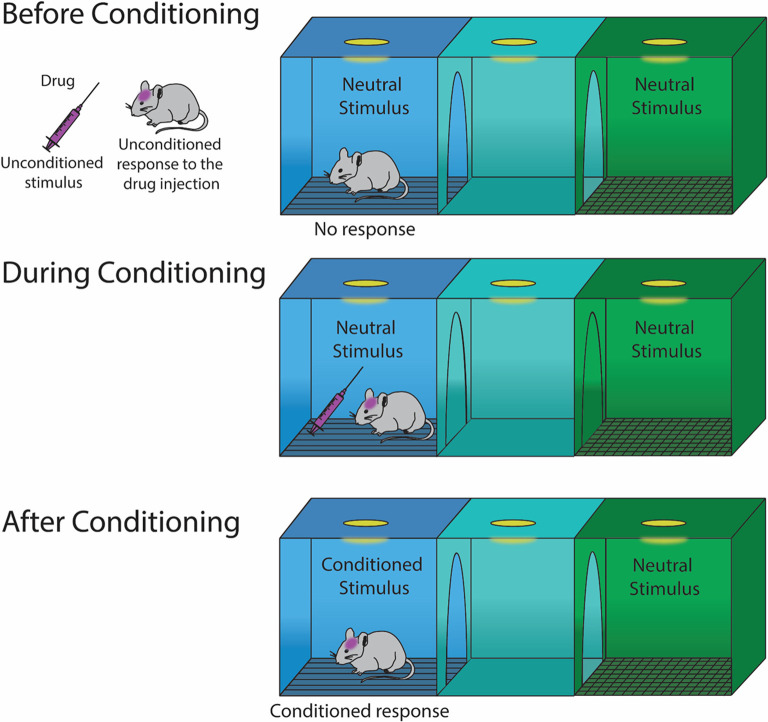
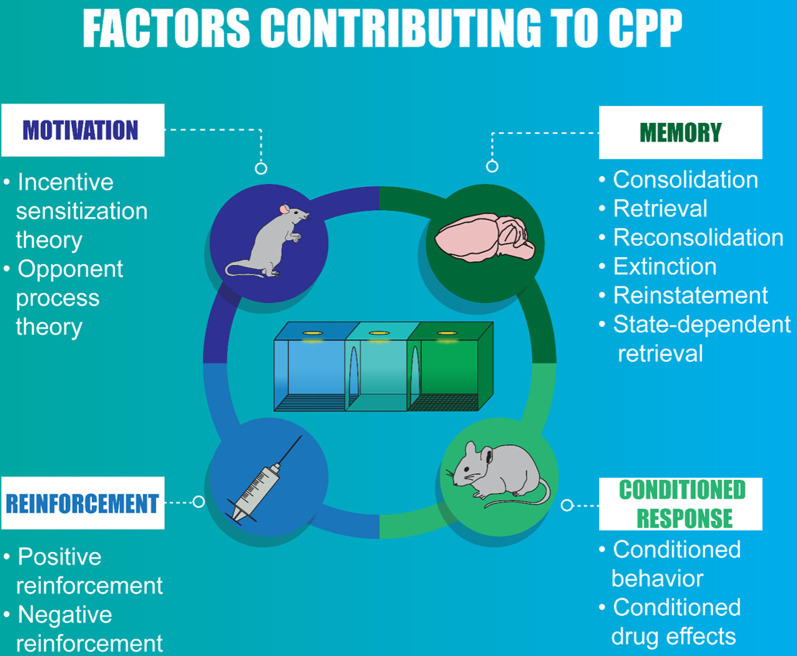
The conditioned place preference (CPP) paradigm is a well-established model utilized to study the role of context associations in reward-related behaviors, including both natural rewards and drugs of abuse. In this review article, we discuss the basic history, various uses, and considerations that are tied to this technique. There are many potential takeaway implications of this model, including negative affective states, conditioned drug effects, memory, and motivation, which are all considered here. We also discuss the neurobiology of CPP including relevant brain regions, molecular signaling cascades, and neuromodulatory systems. We further examine some of our prior findings and how they integrate CPP with self-administration paradigms. Overall, by describing the fundamentals of CPP, findings from the past few decades, and implications of using CPP as a research paradigm, we have endeavored to support the case that the CPP method is specifically advantageous for studying the role of a form of Pavlovian learning that associates drug use with the surrounding environment.
Keywords: CPP; addiction; addiction-like behavior; conditioned place preference; drug reward; drugs of abuse; rodent model; substance use disorder.
Copyright © 2020 McKendrick and Graziane.
Figures
References
-
- Akbarabadi A., Niknamfar S., Vousooghi N., Sadat-Shirazi M. S., Toolee H., Zarrindast M. R. (2018). Effect of rat parental morphine exposure on passive avoidance memory and morphine conditioned place preference in male offspring. Physiol. Behav. 184, 143–149. 10.1016/j.physbeh.2017.11.024 - DOI - PubMed
Publication types
LinkOut - more resources
Full Text Sources
Miscellaneous
