


Expanded Newborn Screening Program in Slovenia using Tandem Mass Spectrometry and Confirmatory Next Generation Sequencing Genetic Testing
- PMID: 33133282
- PMCID: PMC7583424
- DOI: 10.2478/sjph-2020-0032
Expanded Newborn Screening Program in Slovenia using Tandem Mass Spectrometry and Confirmatory Next Generation Sequencing Genetic Testing
Abstract
Introduction: In the last two decades, the introduction of tandem mass spectrometry in clinical laboratories has enabled simultaneous testing of numerous acylcarnitines and amino acids from dried blood spots for detecting many aminoacidopathies, organic acidurias and fatty acid oxidation disorders. The expanded newborn screening was introduced in Slovenia in September 2018. Seventeen metabolic diseases have been added to the pre-existing screening panel for congenital hypothyroidism and phenylketonuria, and the newborn screening program was substantially reorganized and upgraded.
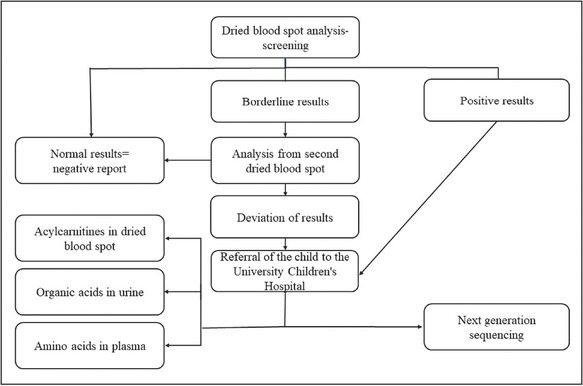
Methods: Tandem mass spectrometry was used for the screening of dried blood spot samples. Next-generation sequencing was introduced for confirmatory testing. Existing heterogeneous hospital information systems were connected to the same laboratory information system to allow barcode identification of samples, creating reports, and providing information necessary for interpreting the results.
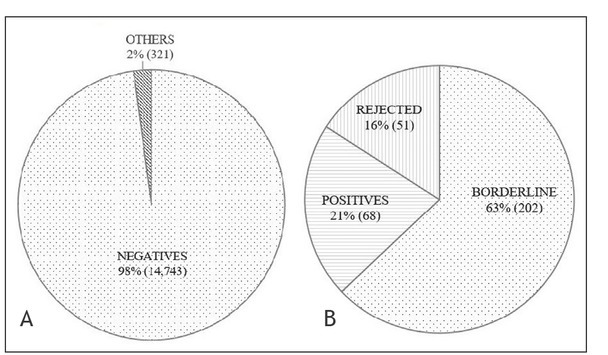
Results: In t he first y ear of t he expanded newborn screening a total of 15,064 samples w ere screened. Four patients were confirmed positive with additional testing.
Conclusions: An expanded newborn screening program was successfully implemented with the first patients diagnosed before severe clinical consequences.
Uvod: Uporaba tandemske masne spektrometrije je v zadnjih dvajsetih letih močno vplivala na diagnostiko vrojenih bolezni presnove, saj omogoča sočasno merjenje številnih acilkarnitinov in aminokislin iz posušenega madeža krvi in s tem prepoznavo različnih aminoacidopatij, organskih acidurij in motenj v metabolizmu maščobnih kislin. Program razširjenega presejanja novorojencev je bil v Sloveniji uveden septembra 2018. Obstoječemu programu presejanja kongenitalne hipotiroze in fenilketonurije je bilo dodanih 17 novih bolezni presnove, ob tem so bile vpeljane določene organizacijske spremembe.
Metode: Analiza vzorca posušenega madeža krvi poteka s tandemsko masno spektrometrijo. Za potrditveno testiranje je bila vpeljana metoda sekvenciranja naslednje generacije. Obstoječi heterogeni bolnišnični informacijski sistemi so bili povezani v enotni laboratorijski informacijski sistem, kar omogoča kodno identifikacijo vzorca, oblikovanje izvidov in dostop do vseh podatkov, potrebnih za interpretacijo izvida.
Rezultati: V prvem letu razširjenega presejanja novorojencev je bilo pregledanih 15.064 vzorcev. Z dodatnimi potrditvenimi testi je bila bolezen potrjena pri štirih bolnikih.
Zaključki: Razširjeno presejanje novorojencev je bilo uspešno vzpostavljeno. Prvi bolniki so bili prepoznani, diagnoza jim je bila postavljena pred pojavom kliničnih znakov.
Keywords: IEM; MS/ MS; NBS; NGS; inborn errors of metabolism; newborn screening; next-generation sequencing; tandem mass spectrometry.
© 2020 Barbka Repič Lampret, Žiga Iztok Remec, Ana Drole Torkar, Mojca Žerjav Tanšek, Andraz Šmon, Vanesa Koračin, Vanja Čuk, Daša Perko, Blanka Ulaga, Ana Marija Jelovšek, Maruša Debeljak, Jernej kovač, Tadej Battelino, Urh Grošelj, published by Sciendo.
Conflict of interest statement
Conflicts of interest The authors declare that no conflicts of interest exist.
Figures
References
-
- Howell RR, Terry S, Tait VF, Olney R, Hinton CF, Grosse S. CDC grand rounds: newborn screening and improved outcomes. MMWR. 2012;61(21):390–3. et al. - PubMed
-
- Šmon A, Lampret Repič B, Žerjav Tanšek M. XXXVI. Derčevi dnevi. Ljubljana: Katedra za pediatrijo, Medicinska fakulteta, Univerza v Ljubljani; 2018. 2018. Razširjeno presejanje novorojencev v Sloveniji. et al. Jun 1–2.
LinkOut - more resources
Full Text Sources
Research Materials
Miscellaneous