


Molecular phylogenetic and genetic variability of Fasciola gigantica in Kermanshah province, western Iran with an overview to understand haplotypes distribution in Asia and Africa
- PMID: 33133464
- PMCID: PMC7597793
- DOI: 10.30466/vrf.2019.98547.2350
Molecular phylogenetic and genetic variability of Fasciola gigantica in Kermanshah province, western Iran with an overview to understand haplotypes distribution in Asia and Africa
Abstract
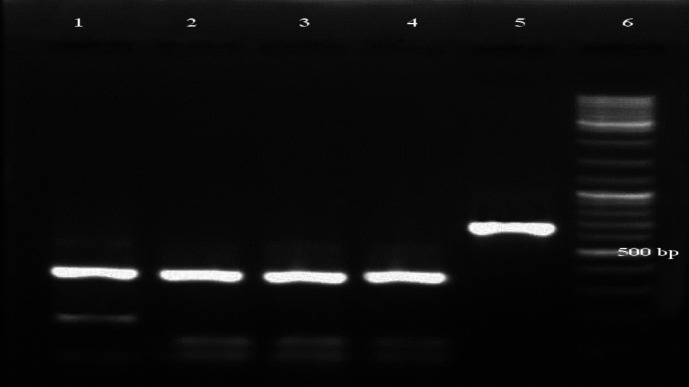
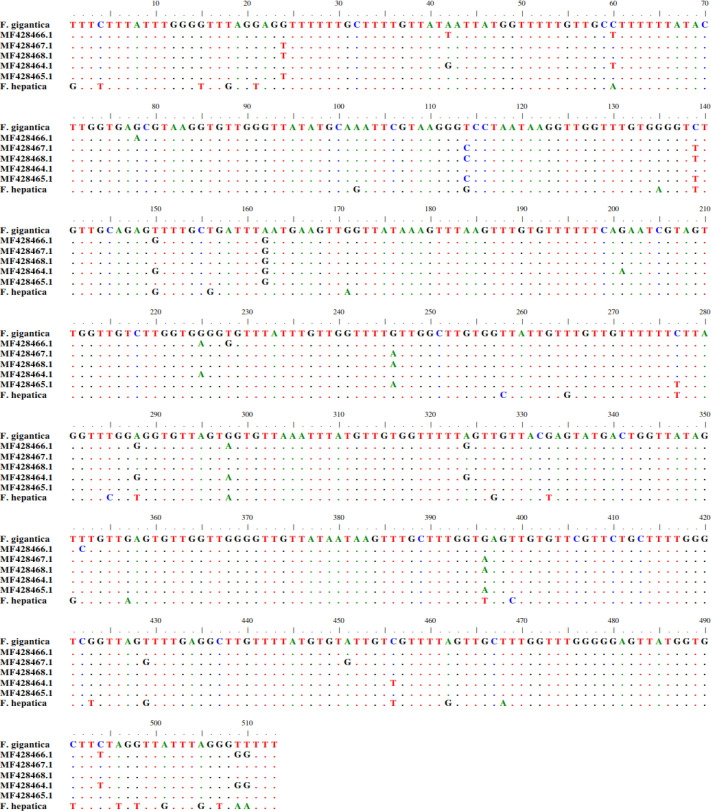
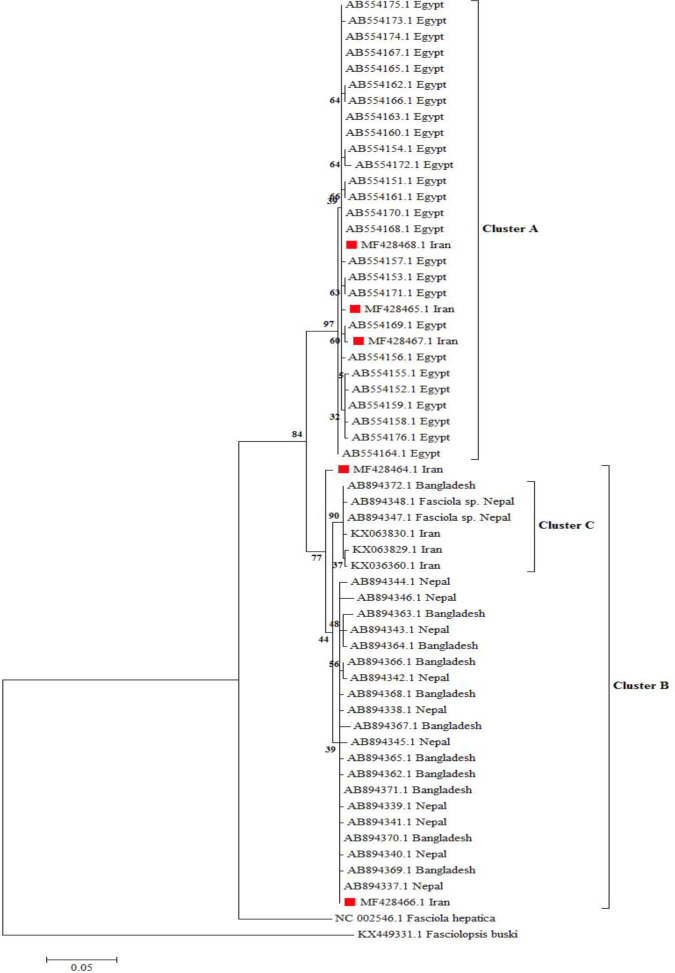
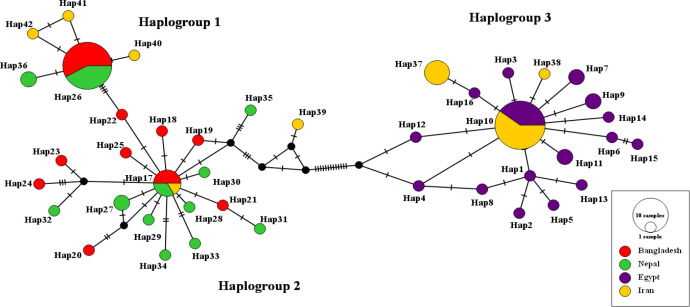
Over the last decade, diagnostic tools to detect and differentiate Fasciola species have improved, but our understanding of the distribution of haplotypes and population structure of this parasite is less clear. This study was designed to survey this gap in the F. gigantica epidemiology in Kermanshah province, western Iran from 2015 to 2017. Sixty-eight Fasciola isolates were collected from slaughterhouses from this province. We evaluated the PCR-RFLP assay of the ITS1 genes for the identification of Fasciola species using the RsaI enzyme. After Fasciola species identification, the partial sequence of mitochondrial NADH dehydrogenase subunit 1 (ND1) gene of F. gigantica was used for subsequent construction of the phylogenetic tree and network analysis. Based on the PCR-PRFLP profile, one (6.25%) of sheep isolates and 19 (39.60%) of cattle isolates were detected as F. gigantica, whereas 93.75% of sheep isolates, 60.40% of cattle isolates and all of the goat isolates were F. hepatica. In the 20 analyzed flukes, five ND1 haplotypes were detected. Statistically significant genetic differentiation was demonstrated between the Iran population and all the other populations. Evidence is presented for the existence of two well-separated populations: African and West Asian gigantica flukes and East Asian gigantica flukes. Genetic relationships among haplotypes were associated with geographical divisions. Also, our results have heightened our knowledge about the genetic diversity of F. gigantic, providing the first evidence for the existence of two well-separated populations of this parasite.
Keywords: Fasciola; Genotyping; Iran; Kermanshah; NADH dehydrogenase subunit 1.
© 2020 Urmia University. All rights reserved.
Figures

References
-
- Bozorgomid A, Rouhani S, Fasihi Harandi M, et al. Genetic diversity and distribution of Fasciola hepatica haplotypes in Iran: Molecular and phylogenetic studies. Vet Parasitol Reg Stud Reports. 2020:100359. - PubMed
-
- Mas-Coma S, Bargues MD, Valero M. Fascioliasis and other plant-borne trematode zoonoses. Int J Parasitol. 2005;35(11-12):1255–1278. - PubMed
-
- Rokni MB, Lotfy WM, Ashrafi K, et al. Neglected tropical diseases-Middle East and North Africa. Vienna, Austria: Springer ; 2014. Fasciolosis in the MENA region; pp. 59–90.
-
- Sahba GH, Arfaa F, Farahmandian I, et al. Animal fascioliasis in Khuzestan, southwestern Iran. J Parasitol. 1972;58(4):712–716. - PubMed
LinkOut - more resources
Full Text Sources
Miscellaneous