


Effects of grape and pomegranate waste extracts on poultry carcasses microbial, chemical, and sensory attributes in slaughterhouse
- PMID: 33133564
- PMCID: PMC7590302
- DOI: 10.1002/fsn3.1840
Effects of grape and pomegranate waste extracts on poultry carcasses microbial, chemical, and sensory attributes in slaughterhouse
Abstract
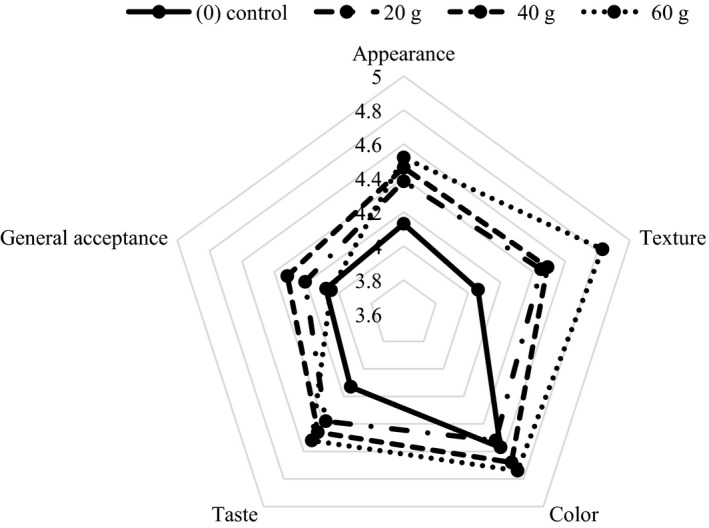
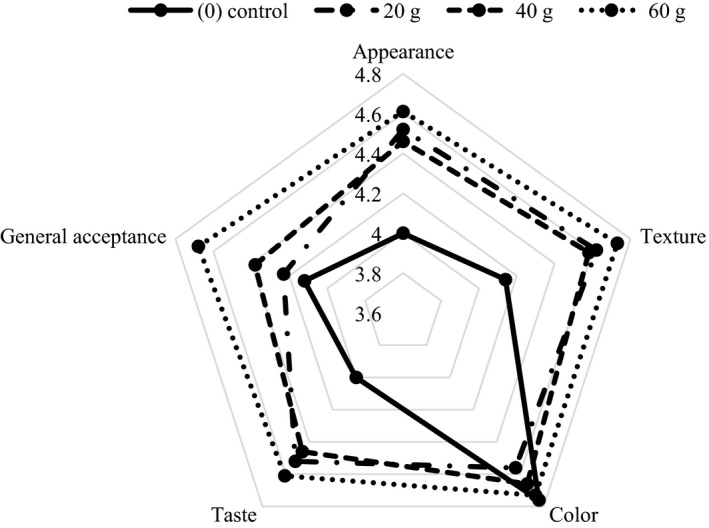
Contamination of poultry carcasses is considered as a critical point in the evaluation of poultry meat safety. The present study aimed at determining the decontamination effects of natural antimicrobial derived from grape waste extract and pomegranate waste extract (GWE and PWE) on poultry carcasses in a slaughterhouse. Poultry carcasses were treated in chiller with concentrations of 0, 2, 4 and 6% of pomegranate and grape waste extracts. Pomegranate and grape waste extracts contained 432.20 and 328.43 mg GAE/g total phenolic compounds. These extracts showed significant antimicrobial effect on the main poultry bacteria in vitro. On the first day of cold storage, significant reduction in total bacterial counts (p < .05) was observed in treated carcasses. After 3 days of storage time, total bacteria, Staphylococcus aureus, and Escherichia coli reduced significantly (p < .05) compared to untreated samples. At sixth and ninth days of storage time, significant reduction in total volatile nitrogen (TVN), total bacteria counts, Staphylococcus aureus, coliforms, and Escherichia coli were observed. Sensory attributes in treated carcasses with PWE and GWE have been enhanced significantly compared to untreated during acceptable shelf time (p < .05). Based on the results, pomegranate and grape waste extracts can be used to preserve and improve the shelf life of the poultry carcasses close to the standard range until the ninth day of storage. Application of pomegranate and grape waste extracts in slaughterhouse could be considered as an environmentally, natural and safe decontamination intervention in integral food safety system.
Keywords: decontamination; grape; pomegranate; poultry; slaughterhouse; waste.
© 2020 The Authors. Food Science & Nutrition published by Wiley Periodicals LLC.
Conflict of interest statement
None declared.
Figures
References
-
- Abtahi, H. , Ghazavi, A. , & Karimi, M. (2011). Antimicrobial activities of ethanol extract of black grape. African Journal of Microbiology Research, 5(25), 4446–4448. 10.5897/AJMR11.041 - DOI
-
- Adámez, J. D. , Samino, E. G. , Sánchez, E. V. , & González‐Gómez, D. (2012). In vitro estimation of the antibacterial activity and antioxidant capacity of aqueous extracts from grape‐seeds (Vitis vinifera L.). Food Control, 24(1–2), 136–141.
-
- Akhavan, H. , Barzegar, M. , Weidlich, H. , & Zimmermann, B. F. (2015). Phenolic compounds and antioxidant activity of juices from ten Iranian pomegranate cultivars depend on extraction. Journal of Chemistry, 2015, 1–7. 10.1155/2015/907101 - DOI
-
- Badee, A. Z. M. , Moawd, R. K. , ElNoketi, M. M. , & Gouda, M. M. (2013). Improving the quality and shelf‐life of refrigerated chicken meat by marjoram essential oil. Journal of Applied Sciences Research, 9, 5718–5729.
LinkOut - more resources
Full Text Sources
