


Can conventional urodynamic variables help to predict the necessity of overactive bladder symptomatic therapy in women after transobturator tape surgery?
- PMID: 33133659
- PMCID: PMC7587482
- DOI: 10.5173/ceju.2020.0186
Can conventional urodynamic variables help to predict the necessity of overactive bladder symptomatic therapy in women after transobturator tape surgery?
Abstract
Introduction: The aim of this study was to find out if there are any conventional urodynamic (UDS) variables that would help to predict the necessity of overactive bladder (OAB) symptomatic therapy in women after transobturator tape surgery (TOT).
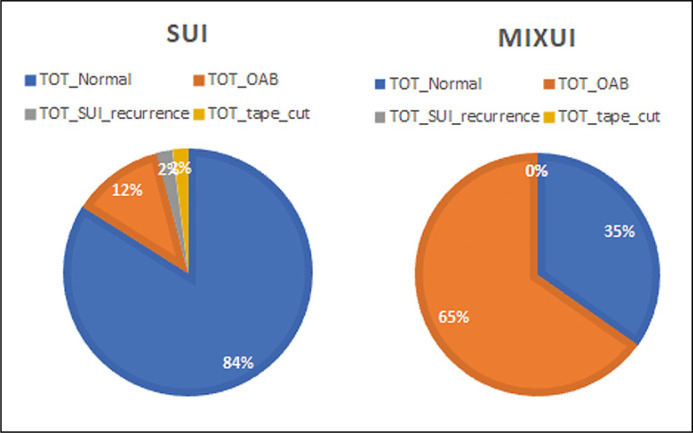
Material and methods: A total of 487 females after TOT were enrolled in this retrospective study. Inclusion criteria (UDS before surgery, follow-up visit within 2-6 month after TOT) were met in 169 women. Based on patient history, questionnaires and physical examination, two groups were distinguished: pure stress urinary incontinence (SUI) and stress-predominant mixed urinary incontinence (MixUI). A statistical analysis was performed including age and UDS variables. T-test was used for continuous data and Chi-squared test for categorical data. Combinations of these factors were analyzed using binary logistic regression and surgery outcome as the target variable.
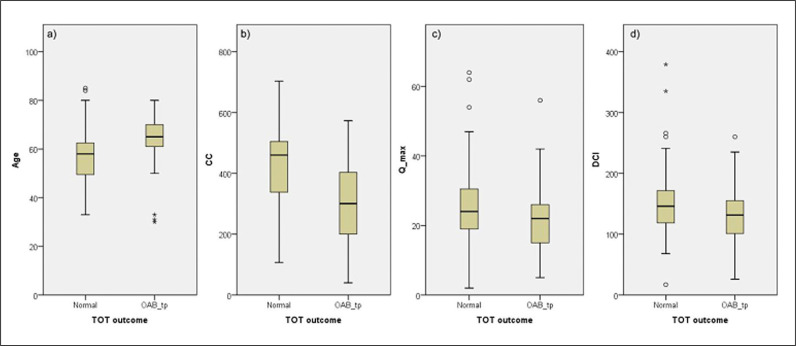
Results: Significant correlations between the probability of a need for OAB therapy after TOT were observed with age (higher age increases OAB therapy necessity, p <0.001) and such UDS variables as cystometric capacity (CC) p <0.001; maximum flow rate (Qmax) p <0.001; detrusor contractility index (DCI) p <0.015 - higher value decreased the need for OAB therapy. Critical limit for these values: 60 years for age, 300 ml for CC, 15 ml/s for Qmax, but no specific value for DCI was observed. Binary logistic regression showed that the UI Group (p <0.01) and CC (p = 0.01) allow correctly classify 78.9% of TOT outcome (increased CC and SUI group are factors for TOT normal outcome).
Conclusions: UI group, age, CC, Qmax, DCI can help to predict the necessity of OAB symptomatic therapy in women after TOT.
Keywords: female; overactive bladder therapy; transobturator tape surgery; urinary incontinece; urodynamics.
Copyright by Polish Urological Association.
Conflict of interest statement
The authors declare no conflicts of interest.
Figures
References
-
- Yamanishi T, Sakakibara R, Uchiyama T, Hirata K. Role of urodynamic studies in the diagnosis and treatment of lower urinary tract symptoms. Urol Sci. 2011;22:120–128.
LinkOut - more resources
Full Text Sources
Miscellaneous