


Disentangling community-level changes in crime trends during the COVID-19 pandemic in Chicago
- PMID: 33134029
- PMCID: PMC7590992
- DOI: 10.1186/s40163-020-00131-8
Disentangling community-level changes in crime trends during the COVID-19 pandemic in Chicago
Abstract
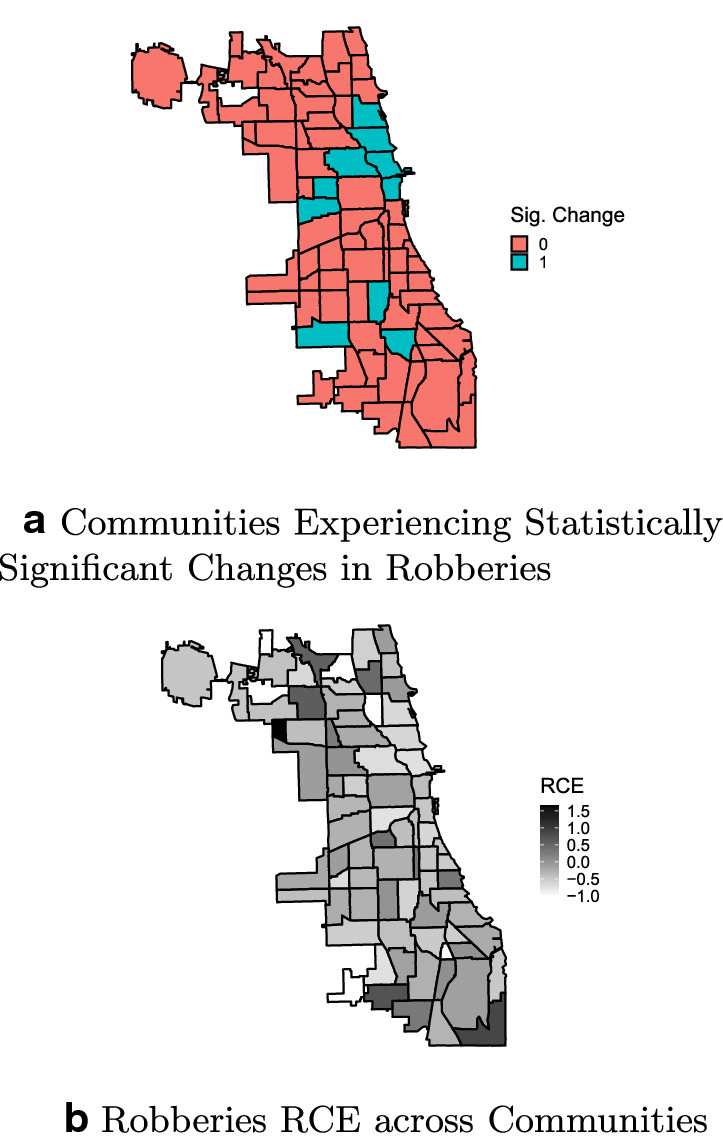
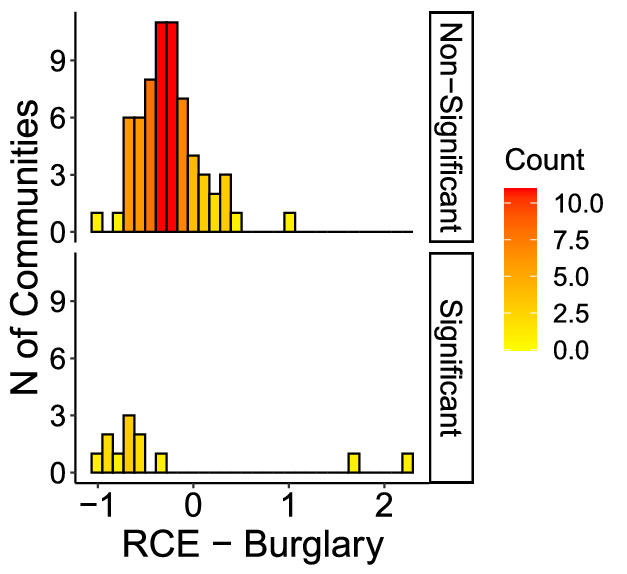
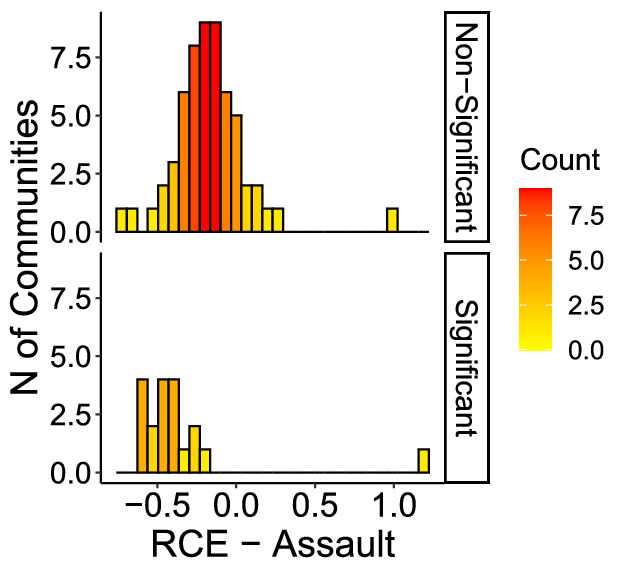
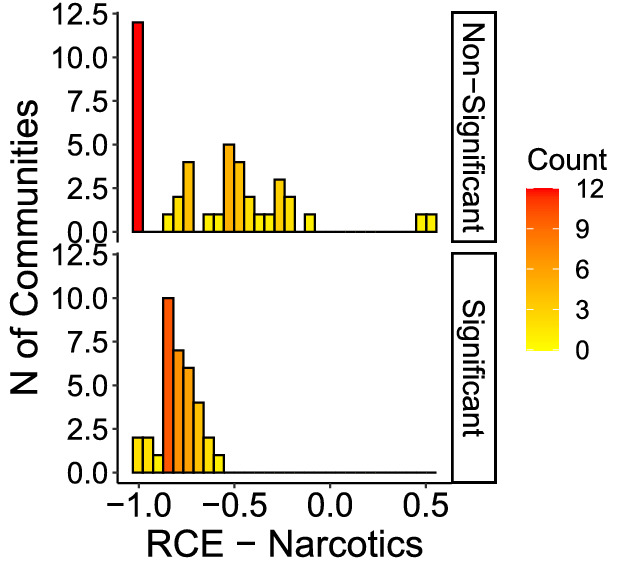
Recent studies exploiting city-level time series have shown that, around the world, several crimes declined after COVID-19 containment policies have been put in place. Using data at the community-level in Chicago, this work aims to advance our understanding on how public interventions affected criminal activities at a finer spatial scale. The analysis relies on a two-step methodology. First, it estimates the community-wise causal impact of social distancing and shelter-in-place policies adopted in Chicago via Structural Bayesian Time-Series across four crime categories (i.e., burglary, assault, narcotics-related offenses, and robbery). Once the models detected the direction, magnitude and significance of the trend changes, Firth's Logistic Regression is used to investigate the factors associated to the statistically significant crime reduction found in the first step of the analyses. Statistical results first show that changes in crime trends differ across communities and crime types. This suggests that beyond the results of aggregate models lies a complex picture characterized by diverging patterns. Second, regression models provide mixed findings regarding the correlates associated with significant crime reduction: several relations have opposite directions across crimes with population being the only factor that is stably and positively associated with significant crime reduction.
Keywords: Communities; Coronavirus; Crime trends; Pandemic; Sars-CoV-2; Structural Bayesian Time-Series.
© The Author(s) 2020.
Conflict of interest statement
Competing interestsThe authors declare no competing interests.
Figures
References
-
- Abrams, D. (2020). COVID and Crime: An Early Empirical Look. SSRN Scholarly Paper ID 3674032, Social Science Research Network, Rochester, NY, 10.2139/ssrn.3674032, https://papers.ssrn.com/abstract=3674032.
-
- Agnew R. Foundation for a general strain theory of crime and delinquency. Criminology. 1992;30(1):47–88. doi: 10.1111/j.1745-9125.1992.tb01093.x. - DOI
-
- Agnew R. A general strain theory of community differences in crime rates. Journal of Research in Crime and Delinquency. 1999;36(2):123–155. doi: 10.1177/0022427899036002001. - DOI
-
- Arnio AN, Baumer EP. Demography, foreclosure, and crime: Assessing spatial heterogeneity in contemporary models of neighborhood crime rates. Demographic Research. 2012;26:449–486. doi: 10.4054/DemRes.2012.26.18. - DOI
LinkOut - more resources
Full Text Sources
Miscellaneous