


An Epidemiological Study of Cut Throat Injury During COVID-19 Pandemic in a Tertiary Care Centre
- PMID: 33134155
- PMCID: PMC7584311
- DOI: 10.1007/s12070-020-02239-4
An Epidemiological Study of Cut Throat Injury During COVID-19 Pandemic in a Tertiary Care Centre
Abstract
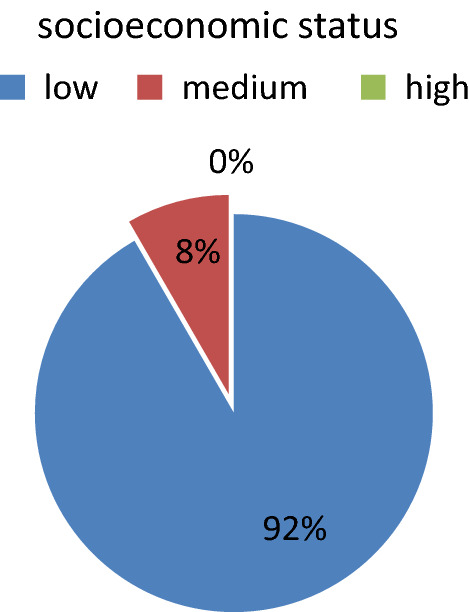
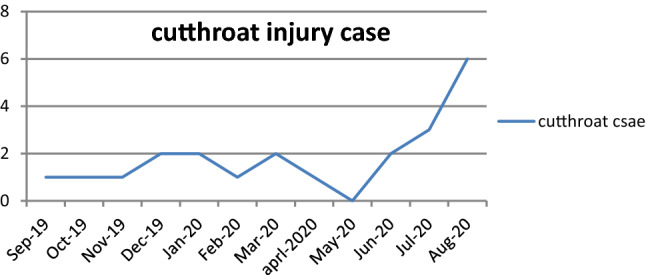
To find out incidence, prevalence, various modes and pattern of cutthroat injury during COVID-19 pandemic and compare with prior non pandemic period. To find out the various factor influencing the suicidal cutthroat and establish the temporal association of suicidal cutthroat with COVID-19 pandemic. It is a retrospective study of cutthroat patients who were managed in ENT Dept. VIMSAR, Burla, Sambalur, Odisha, India from 1st September 2019 to 31st August 2020. Source of information are casualty, IPD and OT registers and online data. Total cases were divided into group-A (prior to COVID-19 pandemic) and group-B (during COVID-19 pandemic) and analysed. Total 24 cutthroat injury cases were treated over 1 year in department of ENT, VIMSAR, Burla, which was 0.054% of total cases attended at casualty and 2.371% of total IPD patients treated. In GROUP-A, total 10 cases with M:F = 9:1,suicidal 4 cases (40%), homicidal 6 cases (60%), and no accidental cases were recorded. While in GROUP-B, total 14 case with M:F = 14:0, suicidal 9 cases (64.28%), homicidal 3 cases (21.42%) and accidental 2 (14.28%) cases were recorded. In our study majority of cases were male with M:F = 23:1. Common age group belongs to 20-30 years with LSES and farmer by occupation. Zone II injury had incidence of 70.83%. Homicide cases proportionally high during non-COVID period while suicide cases high during COVID-19 pandemic. Association of COVID-19 pandemic with suicidal cut throat injury is seems to be significant. Among predisposing risk factors for suicidal, depression during COVID-19 pandemic had seen in 53.84% of total suicidal cases. Incidence and prevalence of Cut throat injury is comparatively high in western odisha which again increases during months of July and August parallel to COVID-19 pandemic. The common mode of cutthroat injury is homicidal, which suddenly changes to suicidal during COVID-19 pandemic. More vulnerable groups were young unemployed male, farmers and labours. Cutthroat injury cases definitely increases during COVID-19 pandemic with most common mode of injury being suicidal attempt, which may be due to economical and psychological imbalances, due to loss of job and fear and social stigma for COVID-19 diseases.
Keywords: Accidental; Cutthroat; Homicidal; Predisposing factor; Suicidal.
© The Author(s) 2020.
Conflict of interest statement
Conflict of interestThe authors declare that they have no conflict of interest.
Figures





References
-
- Manilal A, Khorshed ABM, Talukder DC, Sarder RMA, Fakir AT, Hossain M. Cut throat injury: review of 67 cases. Bangladesh J Otorhinolaryngol. 2011;17:5–13.
LinkOut - more resources
Full Text Sources
Research Materials
Miscellaneous