


African Arowana Genome Provides Insights on Ancient Teleost Evolution
- PMID: 33134892
- PMCID: PMC7586111
- DOI: 10.1016/j.isci.2020.101662
African Arowana Genome Provides Insights on Ancient Teleost Evolution
Abstract
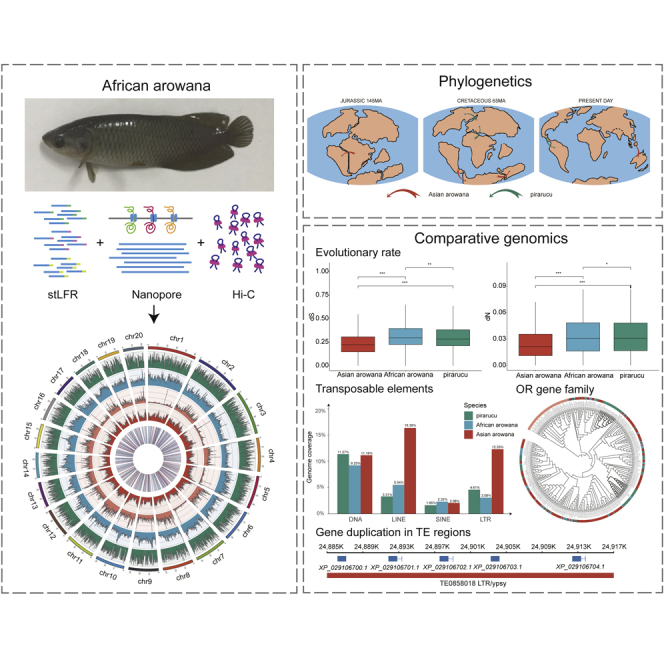
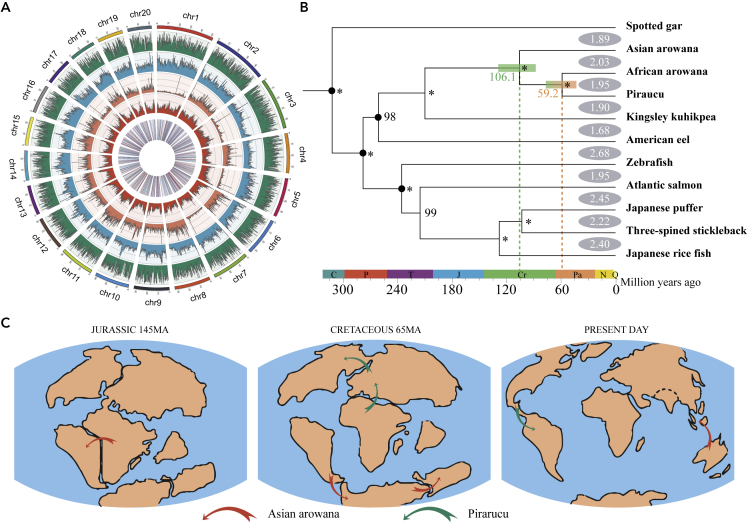
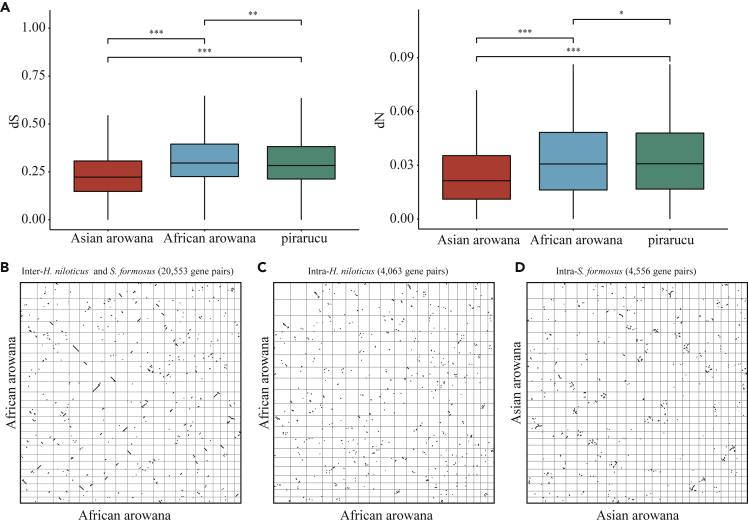
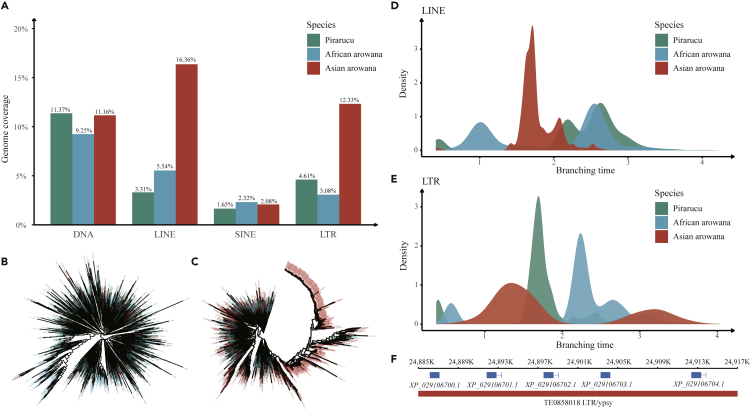
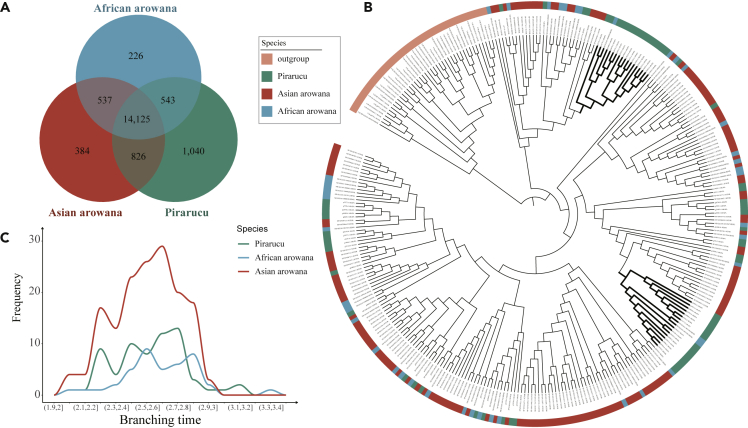
Osteoglossiformes is a basal clade of teleost, evolving since the Jurassic period. The genomes of Osteoglossiformes species would shed light on the evolution and adaptation of teleost. Here, we established a chromosome-level genome of African arowana. Together with the genomes of pirarucu and Asian arowana, we found that they diverged at ∼106.1 million years ago (MYA) and ∼59.2 MYA, respectively, which are coincident with continental separation. Interestingly, we identified a dynamic genome evolution characterized by a fast evolutionary rate and a high pseudogenization rate in African arowana and pirarucu. Additionally, more transposable elements were found in Asian arowana which confer more gene duplications. Moreover, we found the contraction of olfactory receptor and the expansion of UGT in African arowana might be related to its transformation from carnivore to be omnivore. Taken together, we provided valuable genomic resource of Osteoglossidae and revealed the correlation of biogeography and teleost evolution.
Keywords: Evolutionary Biology; Paleobiology; Paleogenetics; Phylogenetics.
© 2020 The Authors.
Conflict of interest statement
The authors declare no competing interests.
Figures
References
-
- Adite A., Ediye M.M., Toko I.I., Abou Y., Imorou R.S., Sonon S.P. Morphological and meristic characterization of the african bonytongue, Heterotis niloticus (cuvier, 1829), from lake hlan and sô river, southern Benin, west Africa: the need for habitat protection and species conservation. Int. J. Fish. Aquat. Res. 2017;2:16–28.
-
- Adite A., Gbankoto A., Toko I.I., Fiogbe E.D. Diet breadth variation and trophic plasticity behavior of the African bonytongue Heterotis niloticus (Cuvier, 1829) in the Sô River-Lake Hlan aquatic system (Benin, West Africa): implications for species conservation and aquaculture development. Nat. Sci. 2013;05:1219–1229.
-
- Aguileta G., Marthey S., Chiapello H., Lebrun M.H., Rodolphe F., Fournier E., Gendrault-Jacquemard A., Giraud T. Assessing the performance of single-copy genes for recovering robust phylogenies. Syst. Biol. 2008;57:613–627. - PubMed
-
- Axelrod H.R., Burgess W.E., Pronek N., Walls J.G. TFH Publications Neptune City; 1986. Dr. Axelrod's Atlas of Freshwater Aquarium Fishes.
LinkOut - more resources
Full Text Sources
