


Impact of the antibiotic-cargo from MSNs on Gram-positive and Gram-negative bacterial biofilms
- PMID: 33137170
- PMCID: PMC7116279
- DOI: 10.1016/j.micromeso.2020.110681
Impact of the antibiotic-cargo from MSNs on Gram-positive and Gram-negative bacterial biofilms
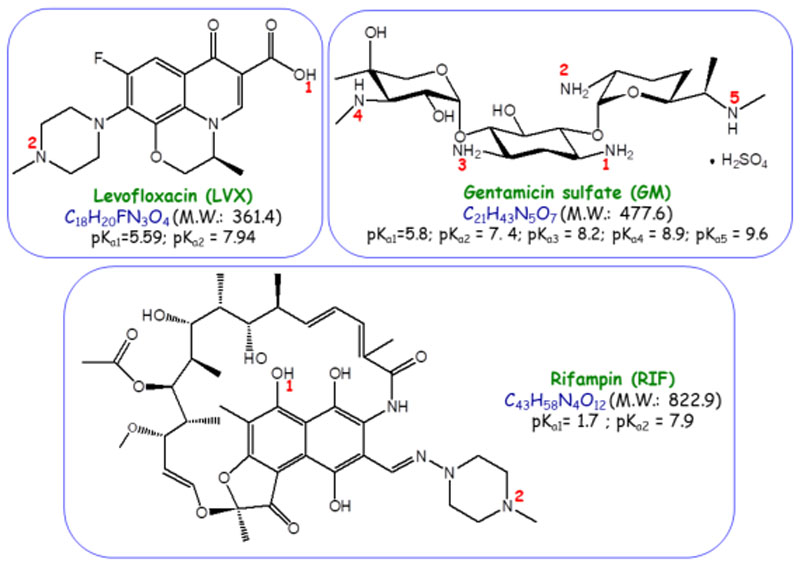
Abstract
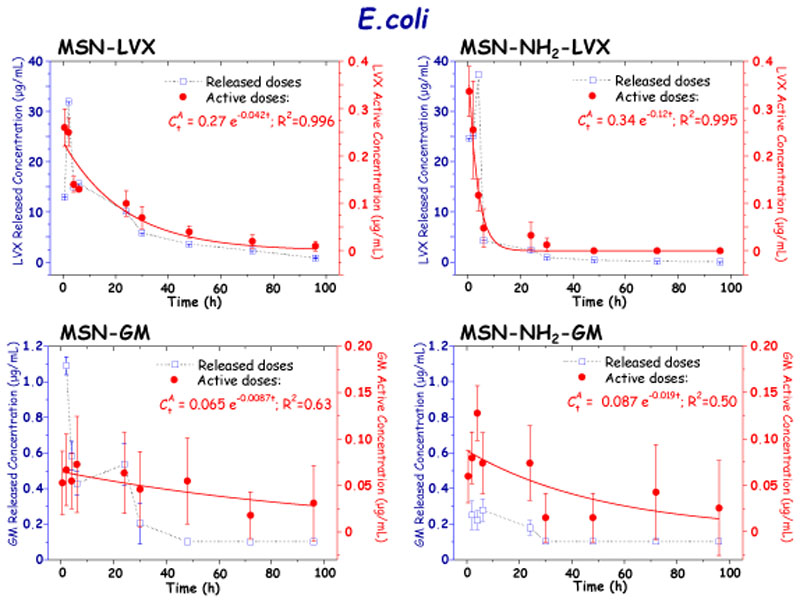
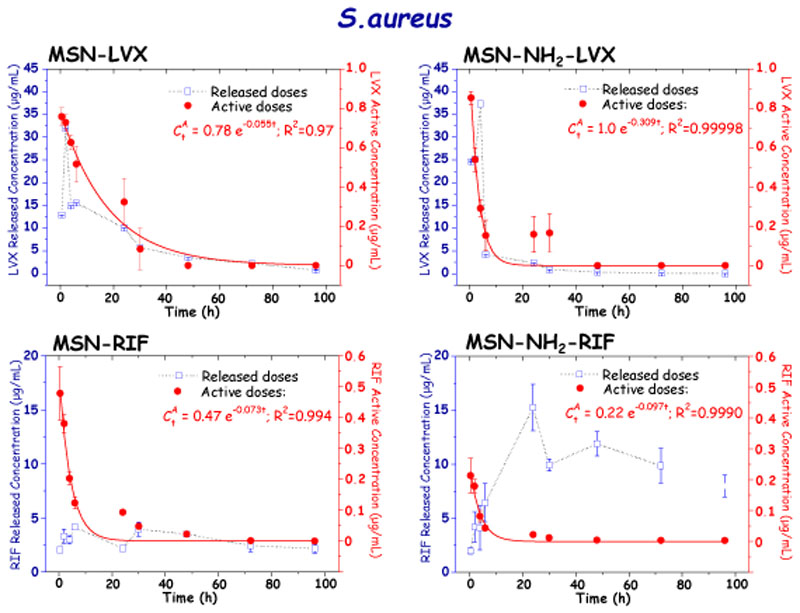
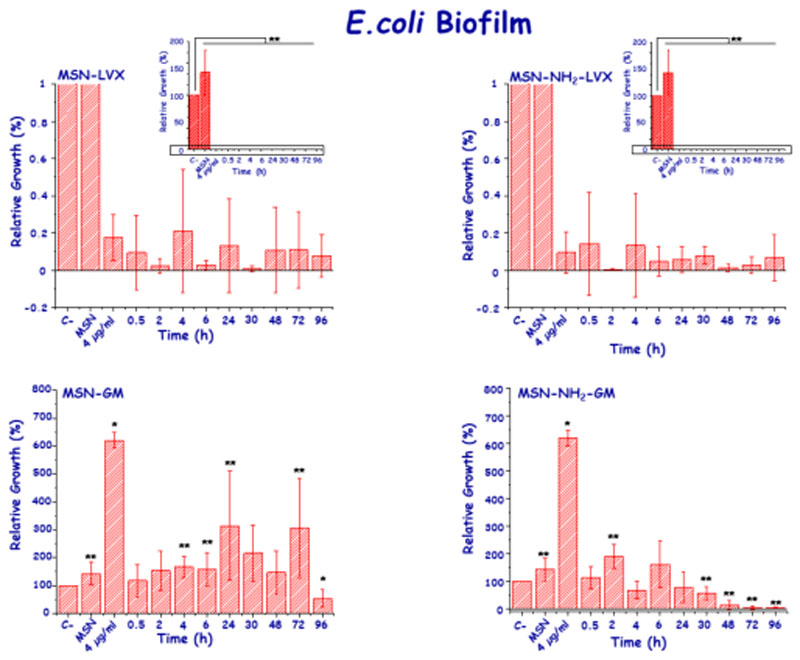
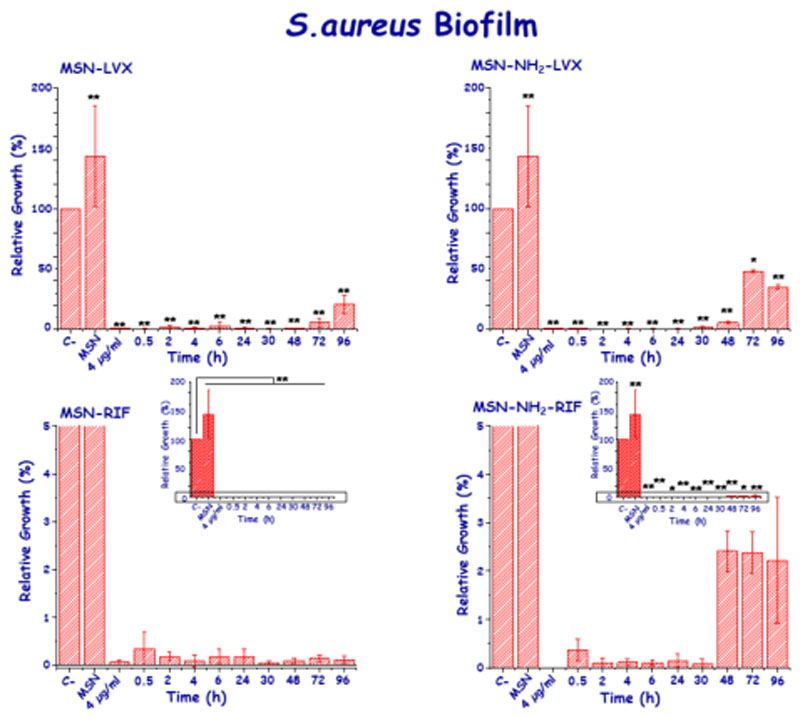
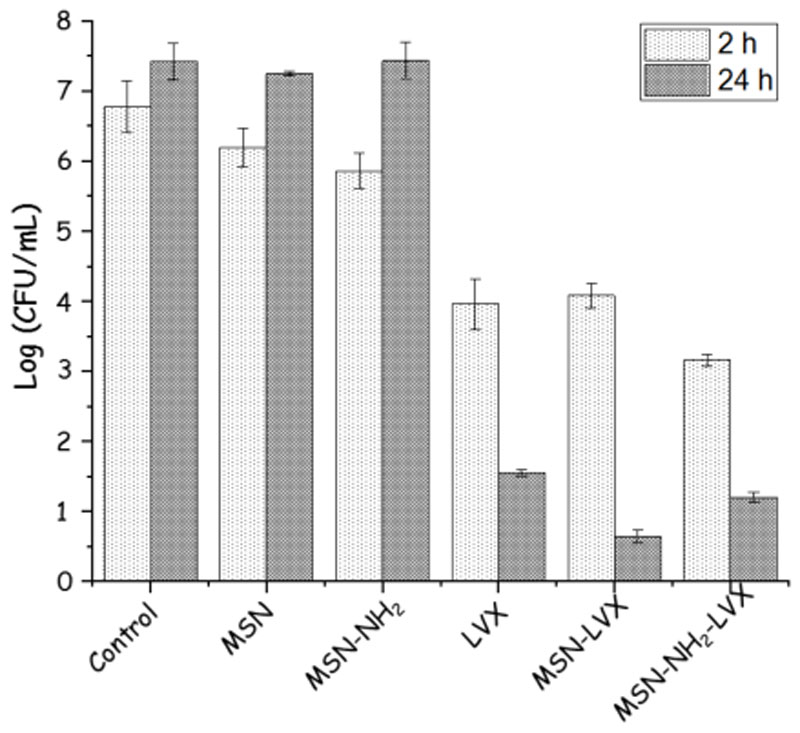
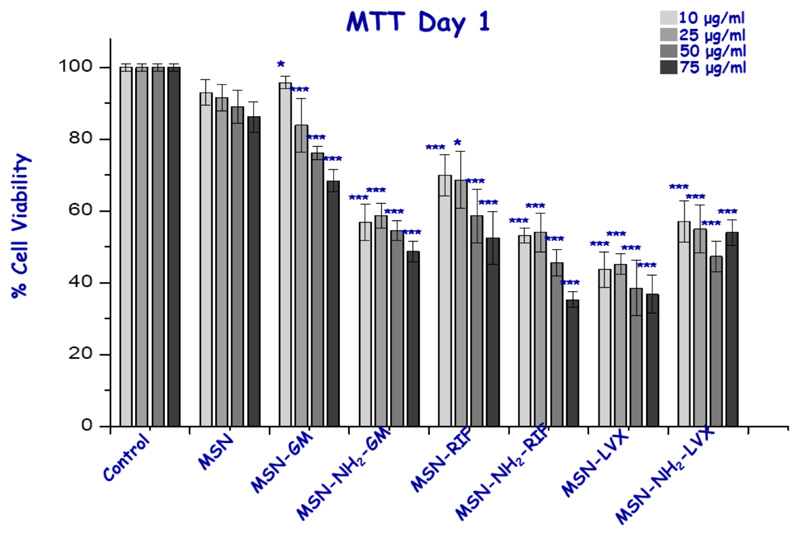
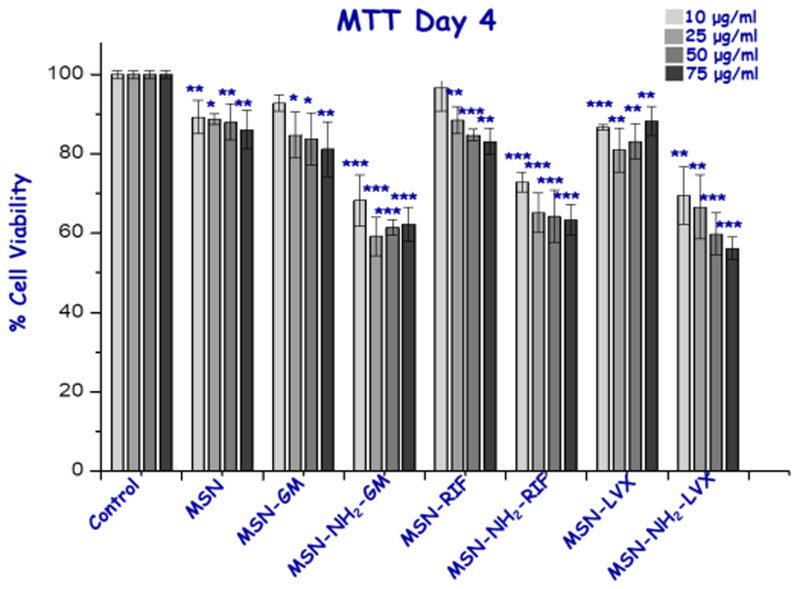
Mesoporous silica nanoparticles (MSNs) are promising drug nanocarriers for infection treatment. Many investigations have focused on evaluating the capacity of MSNs to encapsulate antibiotics and release them in a controlled fashion. However, little attention has been paid to determine the antibiotic doses released from these nanosystems that are effective against biofilm during the entire release time. Herein, we report a systematic and quantitative study of the direct effect of the antibiotic-cargo released from MSNs on Gram-positive and Gram-negative bacterial biofilms. Levofloxacin (LVX), gentamicin (GM) and rifampin (RIF) were separately loaded into pure-silica and amino-modified MSNs. This accounts for the versatility of these nanosystems since they were able to load and release different antibiotic molecules of diverse chemical nature. Biological activity curves of the released antibiotic were determined for both bacterial strains, which allowed to calculate the active doses that are effective against bacterial biofilms. Furthermore, in vitro biocompatibility assays on osteoblast-like cells were carried out at different periods of times. Albeit a slight decrease in cell viability was observed at the very initial stage, due to the initial burst antibiotic release, the biocompatibility of these nanosystems is evidenced since a recovery of cell viability was achieved after 72 h of assay. Biological activity curves for GM released from MSNs exhibited sustained patterns and antibiotic doses in the 2-6 μg/mL range up to 100 h, which were not enough to eradicate biofilm. In the case of LVX and RIF first-order kinetics featuring an initial burst effect followed by a sustained release above the MIC up to 96 h were observed. Such doses reduced by 99.9% bacterial biofilm and remained active up to 72 h with no emergence of bacterial resistance. This pioneering research opens up promising expectations in the design of personalized MSNs-based nanotherapies to treat chronic bone infection.
Keywords: Antibiotic-cargo; Biofilm; Biological activity curves; Mesoporous silica nanoparticles.
Conflict of interest statement
Declaration of interest JE has received funds from Pfizer, Angelini, Biomérieux and Heraeus.
Figures
References
-
- WHO. High levels of antibiotic resistance found worldwide, new data shows. [accessed July 29, 2020]. (n.d.). https://www.who.int/mediacentre/news/releases/2018/antibiotic-resistance...
-
- Lora-Tamayo J, Murillo O, Iribarren JA, Soriano A, Sánchez-Somolinos M, Baraia-Etxaburu JM, Rico A, Palomino J, Rodríguez-Pardo D, Horcajada JP, Benito N, et al. A Large Multicenter Study of Methicillin–Susceptible and Methicillin–Resistant Staphylococcus aureus Prosthetic Joint Infections Managed With Implant Retention. Clin Infect Dis. 2013;56:182–194. doi: 10.1093/cid/cis746. - DOI - PubMed
Grants and funding
LinkOut - more resources
Full Text Sources
Other Literature Sources