


OPTImising the implementation of pulMonary rehAbiLitation in people with chronic obstructive pulmonary disease (the OPTIMAL study): mixed methods study protocol
- PMID: 33138804
- PMCID: PMC7607703
- DOI: 10.1186/s12890-020-01322-4
OPTImising the implementation of pulMonary rehAbiLitation in people with chronic obstructive pulmonary disease (the OPTIMAL study): mixed methods study protocol
Abstract
Background: Chronic obstructive pulmonary disease (COPD) is a common respiratory condition characterised by dyspnoea during daily life. As the disease progresses, people with COPD can experience poor quality of life, reduced exercise capacity, worsening of symptoms and increased hospital admissions. Pulmonary rehabilitation, which includes exercise training, optimises both psychological and physical function, reduces symptoms and mitigates healthcare utilisation in people with COPD. There is, however, a gap in implementation of pulmonary rehabilitation programs, with global access limited to a small fraction of people with COPD. The overall aim of this study is to gather evidence that will optimise the implementation of pulmonary rehabilitation in people with COPD living in Perth, Western Australia.
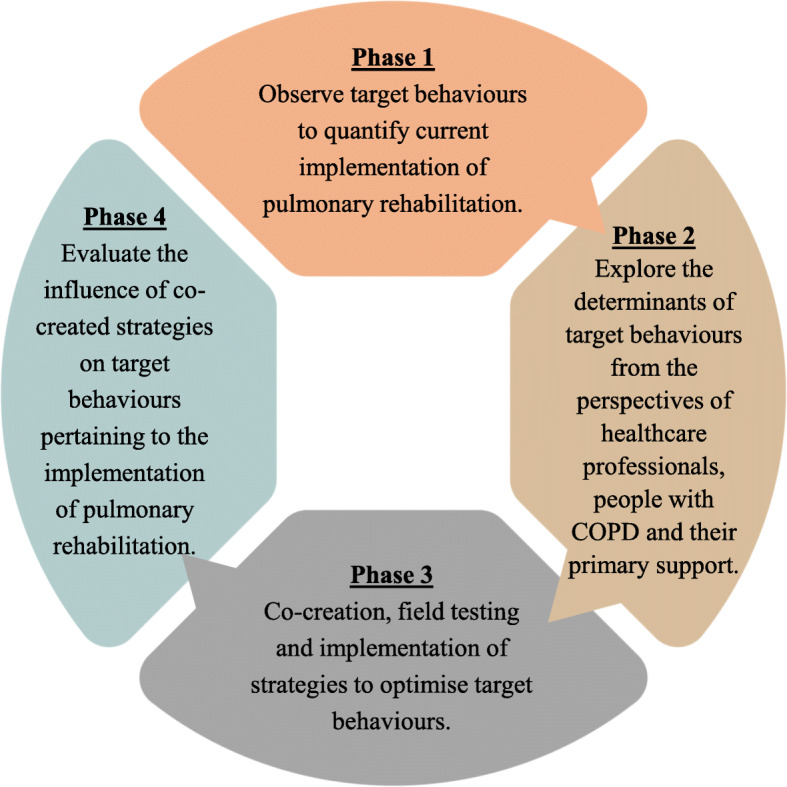
Methods: This is a mixed methods study protocol informed by a critical realist perspective. The study will comprise four phases. In Phase 1, we will quantify target behaviours of healthcare professionals and people with COPD which are related to the implementation of pulmonary rehabilitation at three tertiary hospitals. In Phase 2, we will conduct semi-structured interviews to explore the determinants of these target behaviours from the perspectives of healthcare professionals, people with COPD and their primary support person. In Phase 3, knowledge gained in Phases 1 and 2 will be used by healthcare professionals and people with COPD to co-create, field test and apply strategies that optimise these target behaviours. In Phase 4, we will re-quantify these target behaviours to determine the influence of co-created strategies. The cost effectiveness of implementing the co-created strategies will be explored by an economic analysis.
Discussion: Understanding current clinical practice and the determinants of target behaviours pertaining to the implementation of pulmonary rehabilitation is crucial when developing strategies that successfully bridge the pulmonary rehabilitation implementation gap. If co-created strategies are effective, more people with COPD living in Perth, Western Australia will have access to pulmonary rehabilitation enabling them to derive the health benefits associated with this intervention.
Keywords: Adherence; Attendance; Chronic obstructive pulmonary disease; Co-creation; Participatory research; Pulmonary rehabilitation; Referral; Uptake.
Conflict of interest statement
The authors declare that they have no competing interests.
References
-
- The Global Initiative for Chronic Obstructive Lung Diseases (GOLD) Global Strategy for Diagnosis, Management and Prevention of COPD: 2020 report. USA: GOLD; 2020.
-
- Soriano JB, Kendrick PJ, Paulson KR, Gupta V, Abrams EM, Adedoyin RA, et al. Prevalence and attributable health burden of chronic respiratory diseases, 1990-2017: a systematic analysis for the global burden of disease study 2017. Lancet Respir Med. 2020;8(6):585–596. doi: 10.1016/S2213-2600(20)30105-3. - DOI - PMC - PubMed
-
- Australian Institute of Health and Welfare . Australian burden of disease study 2015: interactive data on disease burden. Canberra: AIHW; 2015.
Publication types
MeSH terms
Grants and funding
LinkOut - more resources
Full Text Sources
Medical
Research Materials
Miscellaneous
