


This is a preprint.
Type I Interferon Transcriptional Network Regulates Expression of Coinhibitory Receptors in Human T cells
- PMID: 33140047
- PMCID: PMC7605554
- DOI: 10.1101/2020.10.30.362947
Type I Interferon Transcriptional Network Regulates Expression of Coinhibitory Receptors in Human T cells
Update in
-
Type I interferon transcriptional network regulates expression of coinhibitory receptors in human T cells.Nat Immunol. 2022 Apr;23(4):632-642. doi: 10.1038/s41590-022-01152-y. Epub 2022 Mar 17. Nat Immunol. 2022. PMID: 35301508 Free PMC article.
Abstract
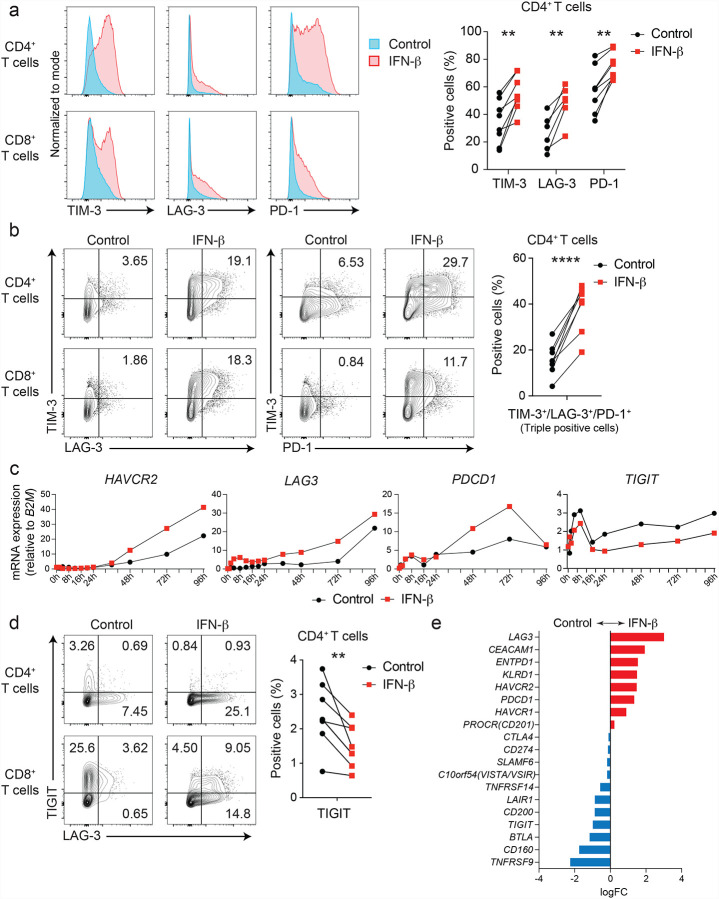
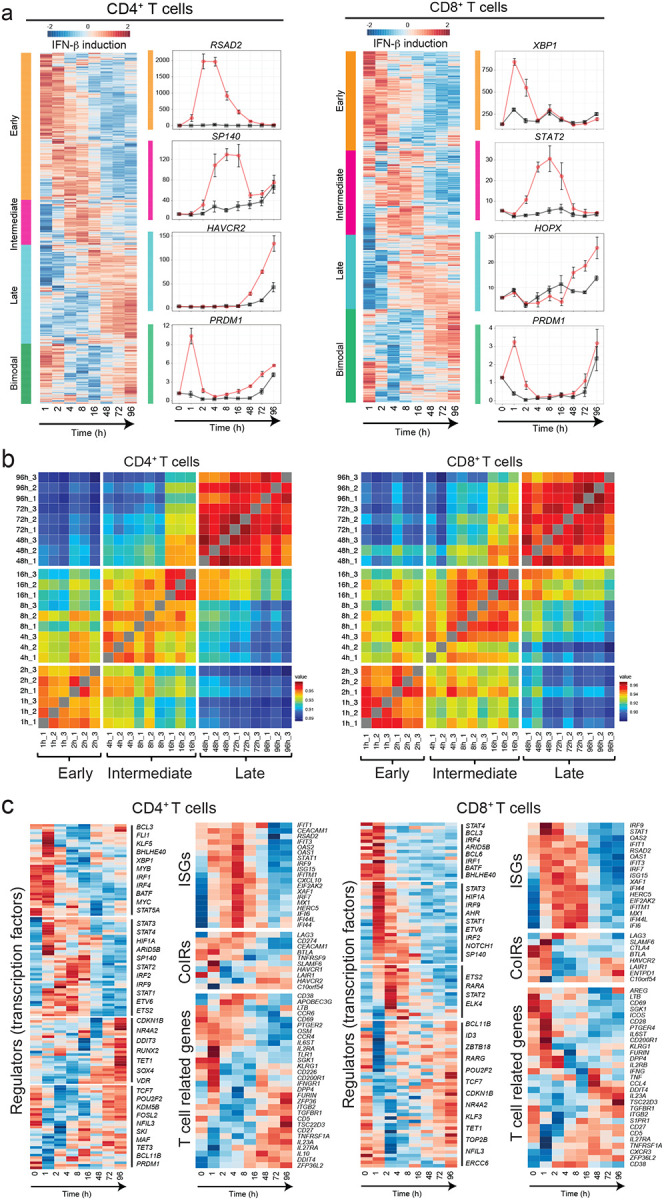
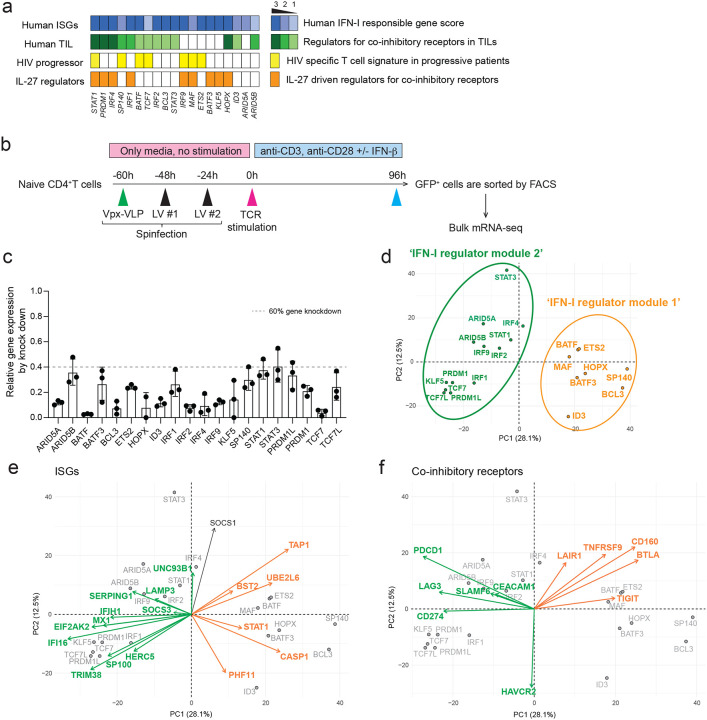
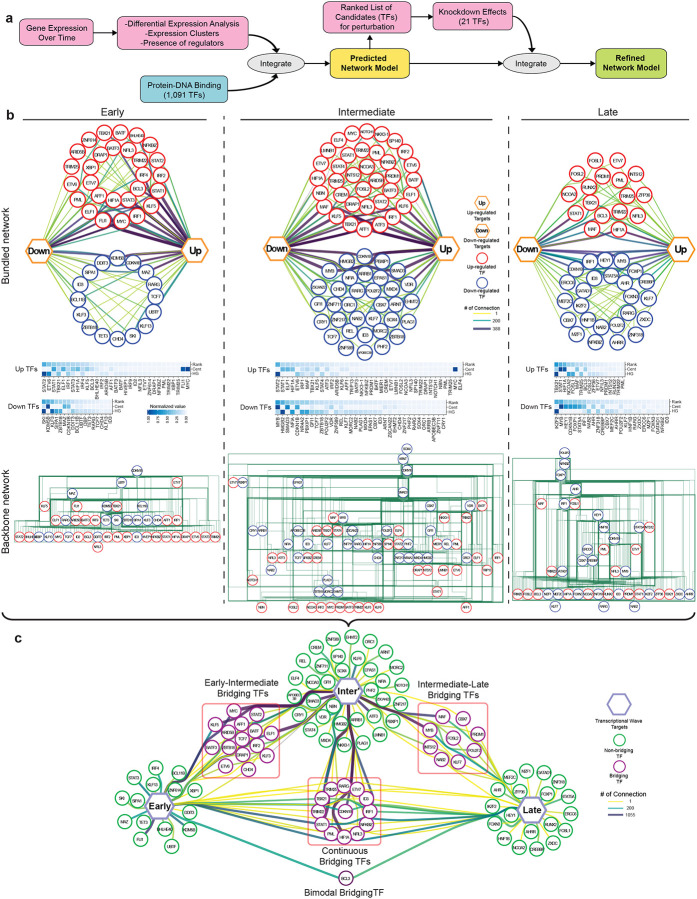
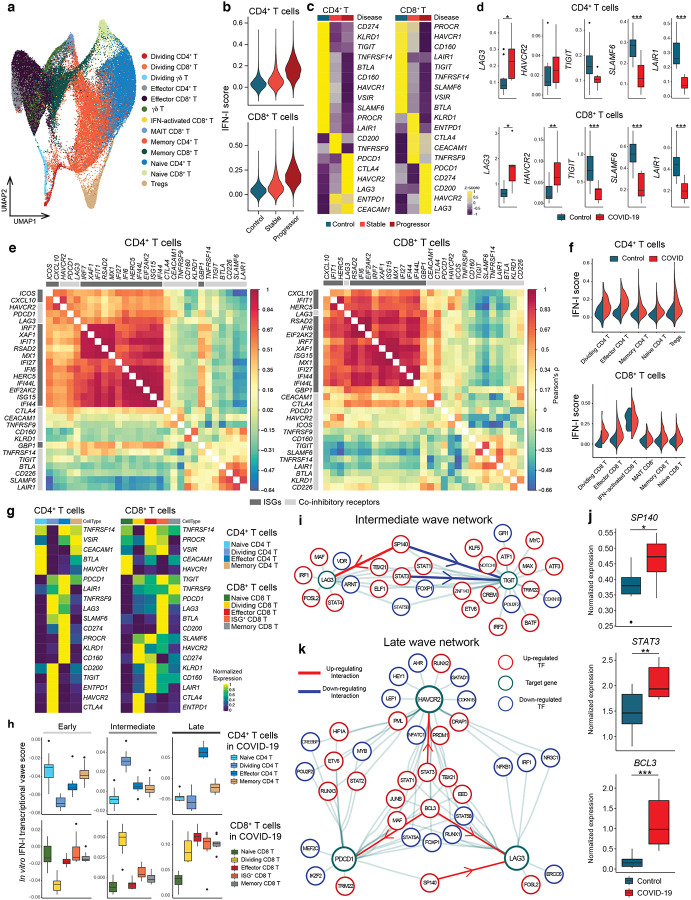
While inhibition of T cell co-inhibitory receptors has revolutionized cancer therapy, the mechanisms governing their expression on human T cells have not been elucidated. Type 1 interferon (IFN-I) modulates T cell immunity in viral infection, autoimmunity, and cancer, and may facilitate induction of T cell exhaustion in chronic viral infection 1,2 . Here we show that IFN-I regulates co-inhibitory receptors expression on human T cells, inducing PD-1/TIM-3/LAG-3 while surprisingly inhibiting TIGIT expression. High-temporal-resolution mRNA profiling of IFN-I responses enabled the construction of dynamic transcriptional regulatory networks uncovering three temporal transcriptional waves. Perturbation of key transcription factors on human primary T cells revealed both canonical and non-canonical IFN-I transcriptional regulators, and identified unique regulators that control expression of co-inhibitory receptors. To provide direct in vivo evidence for the role of IFN-I on co-inhibitory receptors, we then performed single cell RNA-sequencing in subjects infected with SARS-CoV-2, where viral load was strongly associated with T cell IFN-I signatures. We found that the dynamic IFN-I response in vitro closely mirrored T cell features with acute IFN-I linked viral infection, with high LAG3 and decreased TIGIT expression. Finally, our gene regulatory network identified SP140 as a key regulator for differential LAG3 and TIGIT expression. The construction of co-inhibitory regulatory networks induced by IFN-I with identification of unique transcription factors controlling their expression may provide targets for enhancement of immunotherapy in cancer, infectious diseases, and autoimmunity.
Conflict of interest statement
Competing interests
D.A.H. has received research funding from Bristol-Myers Squibb, Sanofi, and Genentech. He has been a consultant for Bristol Myers Squibb, Compass Therapeutics, EMD Serono, Genentech, and Sanofi Genzyme over the last three years. Further information regarding funding is available on:
Figures
References
Publication types
Grants and funding
- R01 CA227473/CA/NCI NIH HHS/United States
- UL1 TR001863/TR/NCATS NIH HHS/United States
- R01 NS045937/NS/NINDS NIH HHS/United States
- P01 AI039671/AI/NIAID NIH HHS/United States
- R25 NS079193/NS/NINDS NIH HHS/United States
- P50 CA121974/CA/NCI NIH HHS/United States
- U19 AI089992/AI/NIAID NIH HHS/United States
- R01 AI144166/AI/NIAID NIH HHS/United States
- P01 AI073748/AI/NIAID NIH HHS/United States
- U01 HL145567/HL/NHLBI NIH HHS/United States
- R01 HL141852/HL/NHLBI NIH HHS/United States
- R01 NS030843/NS/NINDS NIH HHS/United States
- P01 AI056299/AI/NIAID NIH HHS/United States
- R01 HL127349/HL/NHLBI NIH HHS/United States
LinkOut - more resources
Full Text Sources
Research Materials
Miscellaneous
