


The Immune Response of the Invasive Golden Apple Snail to a Nematode-Based Molluscicide Involves Different Organs
- PMID: 33143352
- PMCID: PMC7692235
- DOI: 10.3390/biology9110371
The Immune Response of the Invasive Golden Apple Snail to a Nematode-Based Molluscicide Involves Different Organs
Abstract
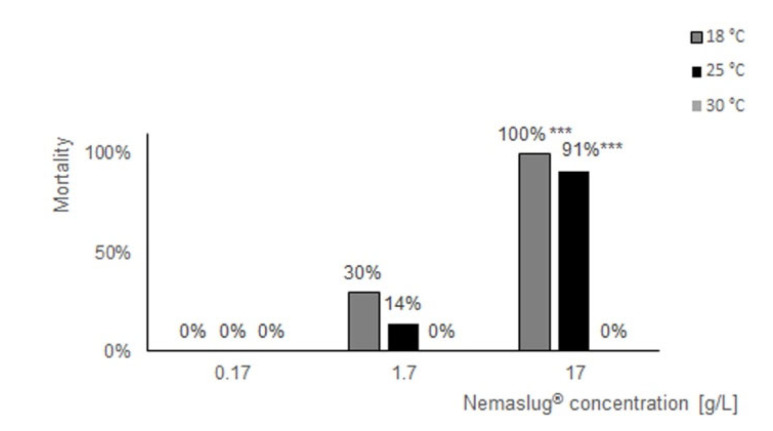
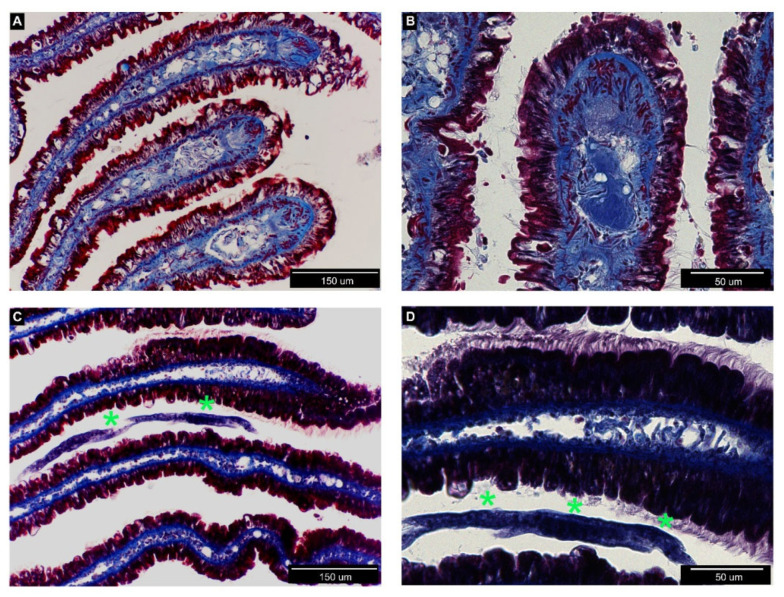
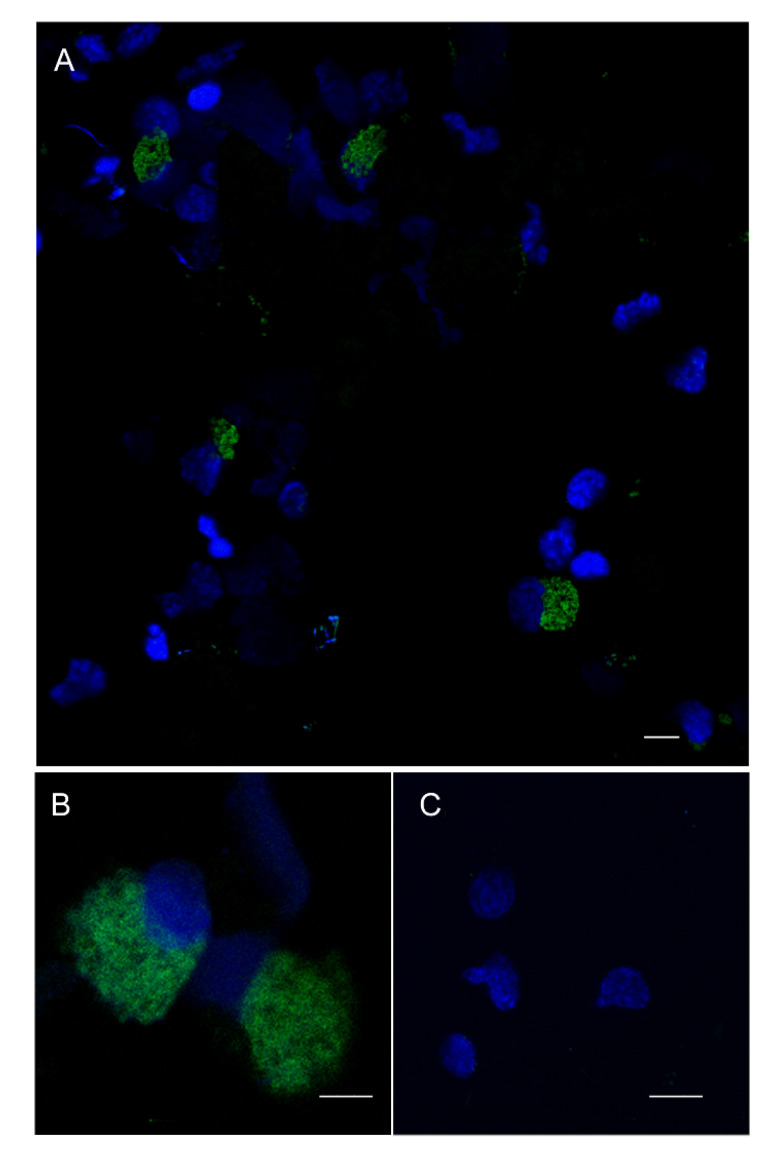
The spreading of alien and invasive species poses new challenges for the ecosystem services, the sustainable production of food, and human well-being. Unveiling and targeting the immune system of invasive species can prove helpful for basic and applied research. Here, we present evidence that a nematode (Phasmarhabditis hermaphrodita)-based molluscicide exerts dose-dependent lethal effects on the golden apple snail, Pomacea canaliculata. When used at 1.7 g/L, this biopesticide kills about 30% of snails within one week and promotes a change in the expression of Pc-bpi, an orthologue of mammalian bactericidal/permeability increasing protein (BPI). Changes in Pc-bpi expression, as monitored by quantitative PCR (qPCR), occurred in two immune-related organs, namely the anterior kidney and the gills, after exposure at 18 and 25 °C, respectively. Histological analyses revealed the presence of the nematode in the snail anterior kidney and the gills at both 18 and 25 °C. The mantle and the central nervous system had a stable Pc-bpi expression and seemed not affected by the nematodes. Fluorescence in situ hybridization (FISH) experiments demonstrated the expression of Pc-bpi in circulating hemocytes, nurturing the possibility that increased Pc-bpi expression in the anterior kidney and gills may be due to the hemocytes patrolling the organs. While suggesting that P. hermaphrodita-based biopesticides enable the sustainable control of P. canaliculata spread, our experiments also unveiled an organ-specific and temperature-dependent response in the snails exposed to the nematodes. Overall, our data indicate that, after exposure to a pathogen, the snail P. canaliculata can mount a complex, multi-organ innate immune response.
Keywords: Phasmarhabditis hermaphrodita; Pomacea canaliculata; eco-immunology; hemocytes; immunity; invertebrate; molluscicide; mollusk; pest control.
Conflict of interest statement
The authors declare no conflict of interest.
Figures



References
-
- Lv S., Guo Y.H., Nguyen H.M., Sinuon M., Sayasone S., Lo N.C., Zhou X.N., Andrews J.R. Invasive Pomacea snails as important intermediate hosts of Angiostrongylus cantonensis in Laos, Cambodia and Vietnam: Implications for outbreaks of eosinophilic meningitis. Acta Trop. 2018;183:32–35. doi: 10.1016/j.actatropica.2018.03.021. - DOI - PubMed
-
- Malagoli D. Going beyond a static picture: The apple snail Pomacea canaliculata can tell us the life history of molluscan hemocytes. Invertebr. Surv. J. 2018;15:61–65.
Grants and funding
LinkOut - more resources
Full Text Sources
Research Materials
