


Neural effects of a single dose of fluoxetine on resting-state functional connectivity in adolescent depression
- PMID: 33143532
- PMCID: PMC7708665
- DOI: 10.1177/0269881120959608
Neural effects of a single dose of fluoxetine on resting-state functional connectivity in adolescent depression
Abstract
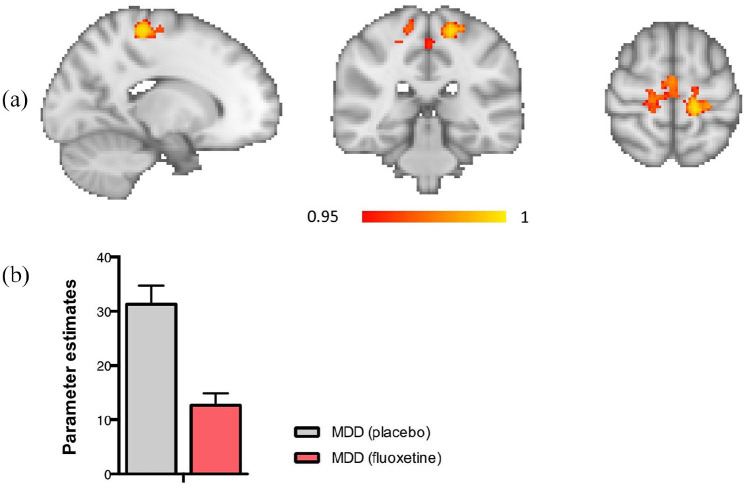
Fluoxetine is commonly prescribed in adolescent depression, but the neural mechanisms underlying its action remain poorly understood. Here, we used resting-state functional magnetic resonance imaging to investigate the effects of a single dose of fluoxetine vs. placebo in adolescents with major depressive disorder. In contrast with previous studies in adults that have demonstrated an acute effect of antidepressants on activity within the default mode network, a single dose of fluoxetine did not alter activity in this network in adolescent depression. There were unexpected group activity differences in the motor network, which should be clarified in future research.
Keywords: Fluoxetine; adolescent depression; resting-state functional connectivity.
Conflict of interest statement
Figures
References
-
- Kaufman J, Birmaher B, Brent D, et al. (1997) Schedule for affective disorders and schizophrenia for school-age children-present and lifetime version (K-SADS-PL): Initial reliability and validity data. J Am Acad Child Adolesc Psychiatry 36: 980–988. Available at: https://www.ncbi.nlm.nih.gov/pubmed/9204677 (accessed 3 February 2020). - PubMed
-
- Loubinoux I, Boulanouar K, Ranjeva JP, et al. (1999) Cerebral functional magnetic resonance imaging activation modulated by a single dose of the monoamine neurotransmission enhancers fluoxetine and fenozolone during hand sensorimotor tasks. J Cereb Blood Flow Metab 19: 1365–1375. 10.1097/00004647-199912000-00010 - DOI - PubMed
Publication types
MeSH terms
Substances
Grants and funding
LinkOut - more resources
Full Text Sources
