


Depression and cardiovascular risk-association among Beck Depression Inventory, PCSK9 levels and insulin resistance
- PMID: 33143700
- PMCID: PMC7641831
- DOI: 10.1186/s12933-020-01158-6
Depression and cardiovascular risk-association among Beck Depression Inventory, PCSK9 levels and insulin resistance
Abstract
Background: Depression and cardiovascular disease (CVD) are among the most common causes of disability in high-income countries, depression being associated with a 30% increased risk of future CV events. Depression is twice as common in people with diabetes and is associated with a 60% rise in the incidence of type 2 diabetes, an independent CVD risk factor. Proprotein convertase subtilisin/kexin type 9 (PCSK9), a key regulator of low-density lipoprotein cholesterol, has been related to a large number of CV risk factors, including insulin resistance. Aim of this study was to investigate whether the presence of depression could affect PCSK9 levels in a population of obese subjects susceptible to depressive symptoms and how these changes may mediate a pre-diabetic risk.
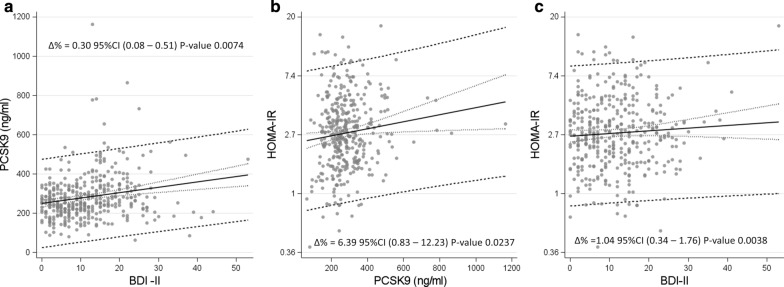
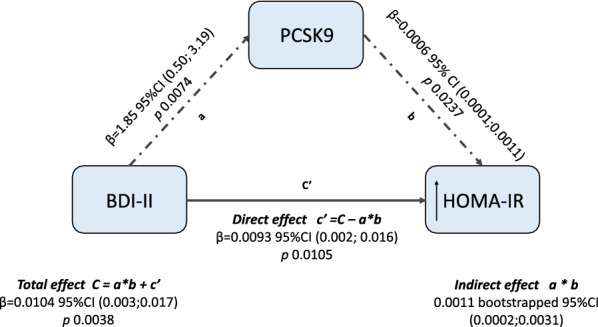
Results: In 389 obese individuals, the Beck Depression Inventory (BDI-II) was significantly associated with PCSK9 levels. For every one-unit increment in BDI-II score, PCSK9 rose by 1.85 ng/mL. Depression was associated also with the HOMA-IR (homeostatic model assessment index of insulin resistance), 11% of this effect operating indirectly via PCSK9.
Conclusions: This study indicates a possible mechanism linking depression and insulin resistance, a well-known CV risk factor, providing evidence for a significant role of PCSK9.
Keywords: Beck Depression Inventory; Cardiovascular risk; Depression; Framingham risk score; Obesity; Proprotein Converatse Subtilisin/Kexin type 9.
Conflict of interest statement
C Macchi, M Ruscica, A Ceresa, DM Conti, N Ferri, C Favero, L Vigna, AC Pesatori, G Racagni, CR Sirtori, V Bollati, M Buoli declare that there is no conflict of interest. A Corsini received honoraria from AstraZeneca, AMGEN, Sanofi, Recordati, Novartis, MSD, Mediolanum, DOC, Mylan and Pfizer.
Figures
References
-
- Mach F, Baigent C, Catapano AL, Koskinas KC, Casula M, Badimon L, Chapman MJ, De Backer GG, Delgado V, Ference BA et al: 2019 ESC/EAS Guidelines for the management of dyslipidaemias: lipid modification to reduce cardiovascular risk. Eur Heart J 2019. - PubMed
Publication types
MeSH terms
Substances
LinkOut - more resources
Full Text Sources
Medical
Miscellaneous
