Review
. 2020 Nov:239:109630.
doi: 10.1016/j.jfluchem.2020.109630.

Synthesis of complex unnatural fluorine-containing amino acids

Affiliations
Review

Synthesis of complex unnatural fluorine-containing amino acids

William D G Brittain et al. J Fluor Chem. 2020 Nov.

Abstract

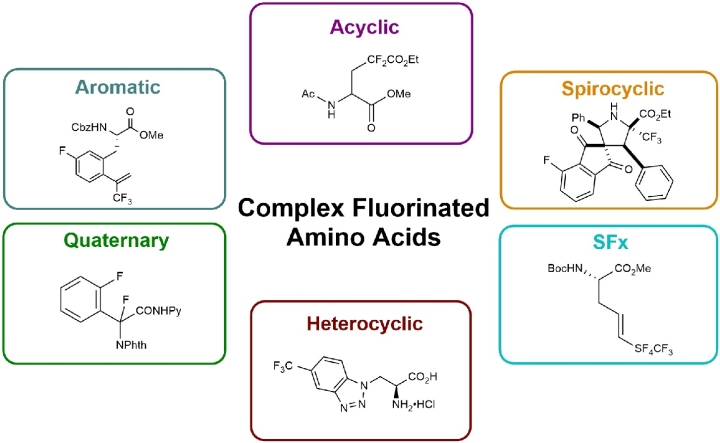
The area of fluorinated amino acid synthesis has seen rapid growth over the past decade. As reports of singly fluorinated natural amino acid derivatives have grown, researchers have turned their attention to develop methodology to access complex proteinogenic examples. A variety of reaction conditions have been employed in this area, exploiting new advances in the wider synthetic community such as photocatalysis and palladium cross-coupling. In addition, novel fluorinated functional groups have also been incorporated into amino acids, with SFX and perfluoro moieties now appearing with more frequency in the literature. This review focuses on synthetic methodology for accessing complex non-proteinogenic amino acids, along with amino acids containing multiple fluorine atoms such as CF3, SF5 and perfluoroaromatic groups.

Keywords: Amino acids; Fluorination; Peptide chemistry; Synthetic methods.


Conflict of interest statement

The authors report no declarations of interest.

Figures
None
Graphical abstract
Scheme 1
Scheme 1
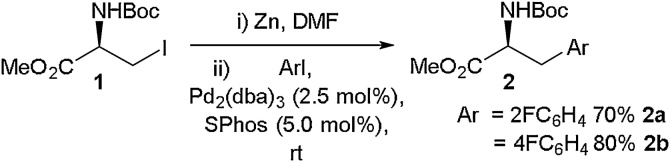
Negishi cross-coupling in the synthesis of α-amino acids, Jackson and co-workers [30].
Scheme 2
Scheme 2
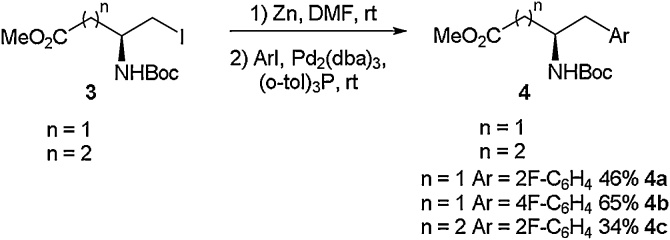
Negishi cross-coupling in the synthesis of β- and γ-amino acids, Jackson and co-workers [23].
Scheme 3
Scheme 3
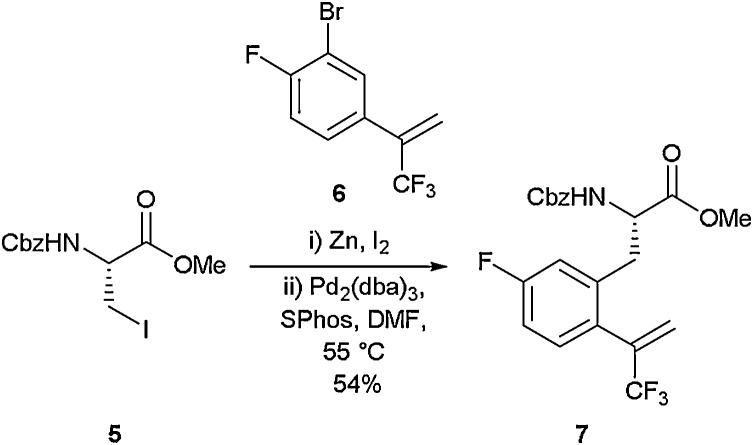
A fluorinated amino acid used in the synthesis of an oxidation catalyst, Featherston and Miller [34].
Scheme 4
Scheme 4
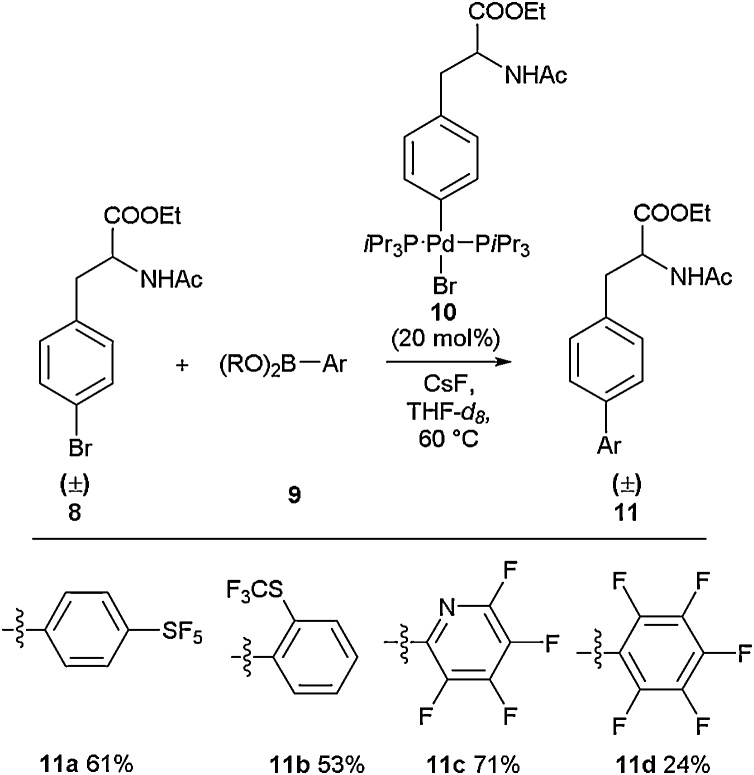
Suzuki-Miyaura cross-coupling in the synthesis of highly fluorinated amino acids, Herrmann and co-workers [35].
Scheme 5
Scheme 5
Suzuki-Miyaura cross-coupling to access bi-aryl β-amino acids, Seebach and co-workers [36].
Scheme 6
Scheme 6
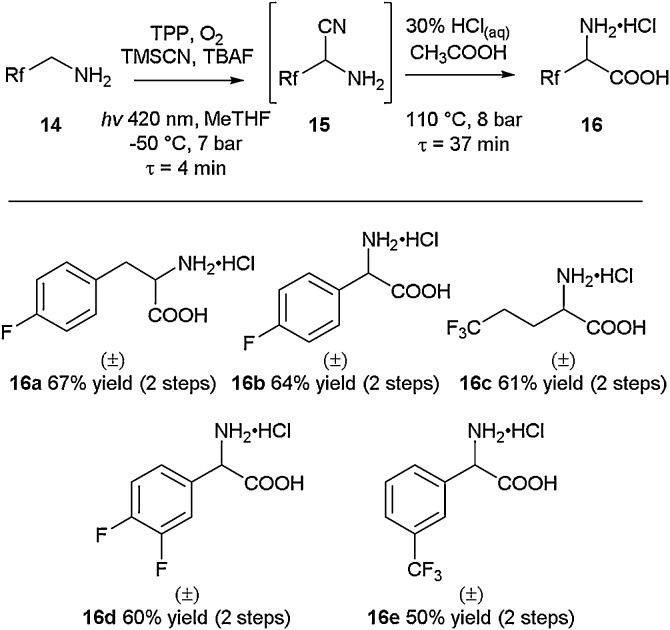
Flow synthesis of fluorinated amino acids, Seeberger and co-workers [37].
Scheme 7
Scheme 7
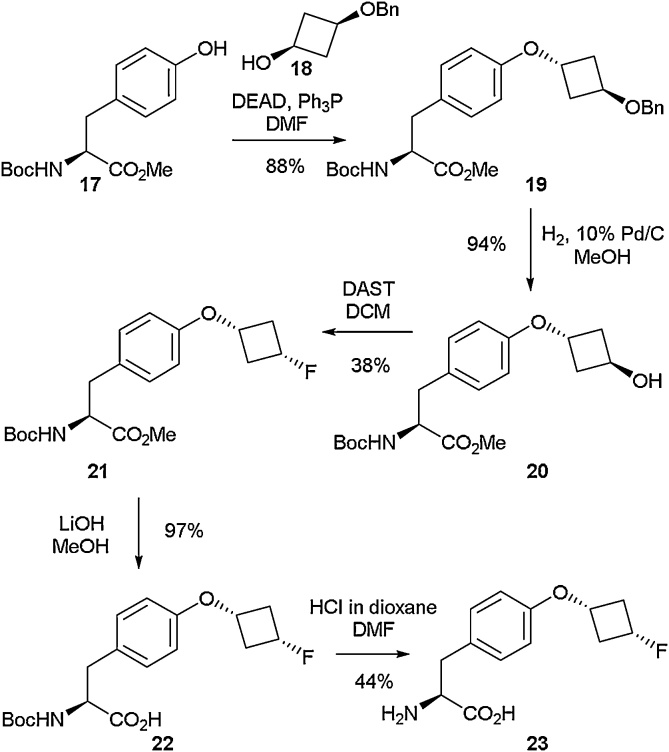
Synthesis of O-(cis-3-fluorocyclobutyl)-l-tyrosine, Graham and co-workers [39].
Scheme 8
Scheme 8
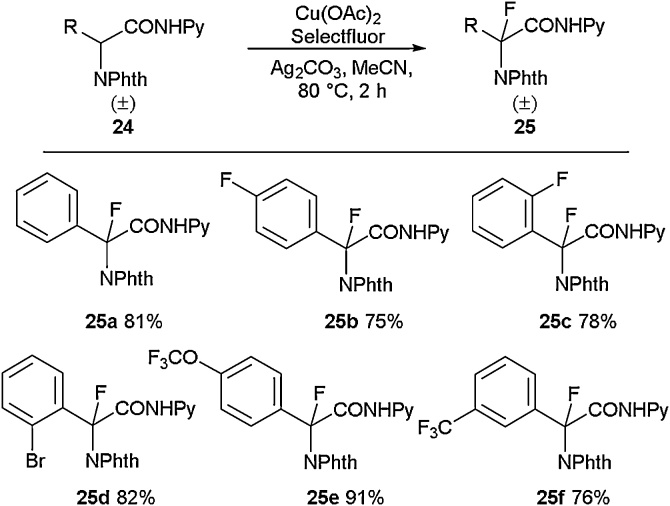
Copper-catalysed fluorination of C—H bonds to access quaternary fluorinated amino acids, Liu and co-workers [42].
Scheme 9
Scheme 9
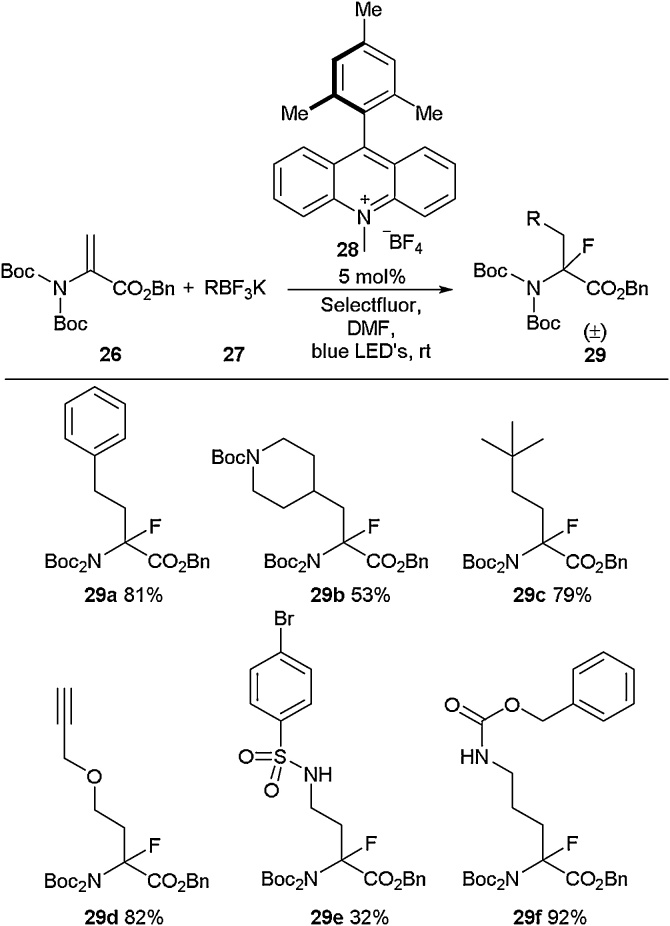
Synthesis of α-fluoro-α-amino acid derivatives via photoredox-catalyzed carbofluorination, Mollander and co-workers [43].
Scheme 10
Scheme 10
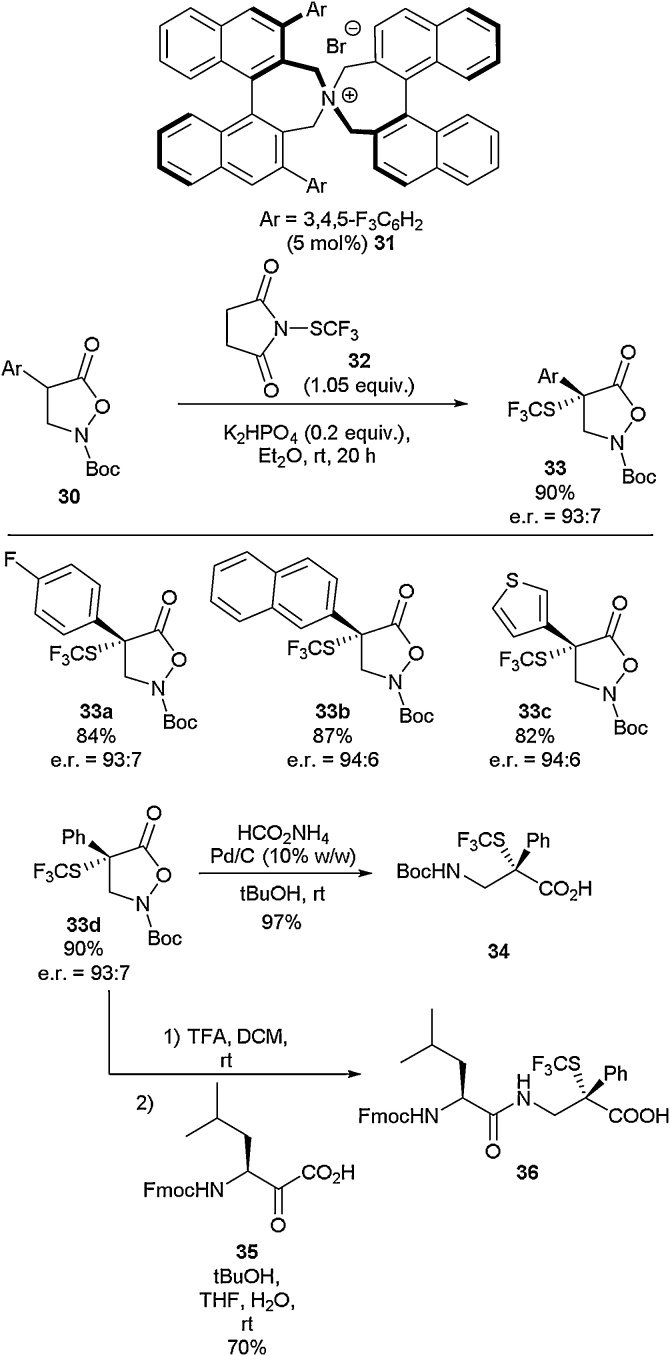
Synthesis of α-aryl-α-SCF32,2-amino acids, Waser and co-workers [44].
Scheme 11
Scheme 11
Synthesis of fluorinated triazolic amino acids, Jin and co-workers [51].
Scheme 12
Scheme 12
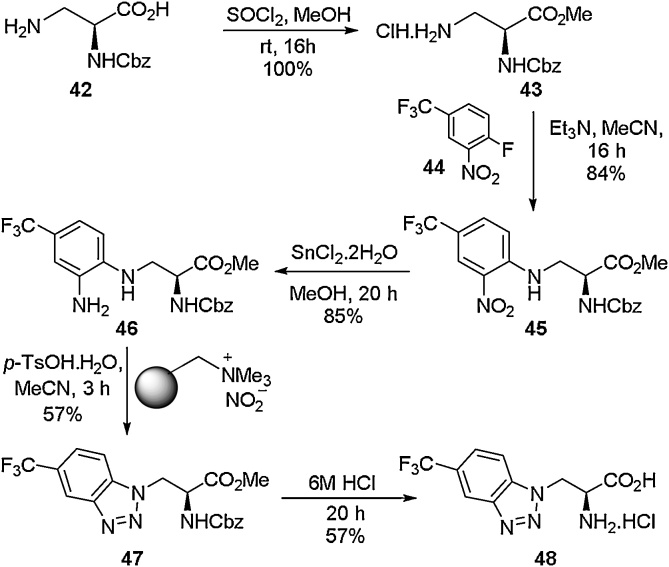
Synthesis of benzotriazole amino acids, Sutherland and co-workers [52].
Scheme 13
Scheme 13
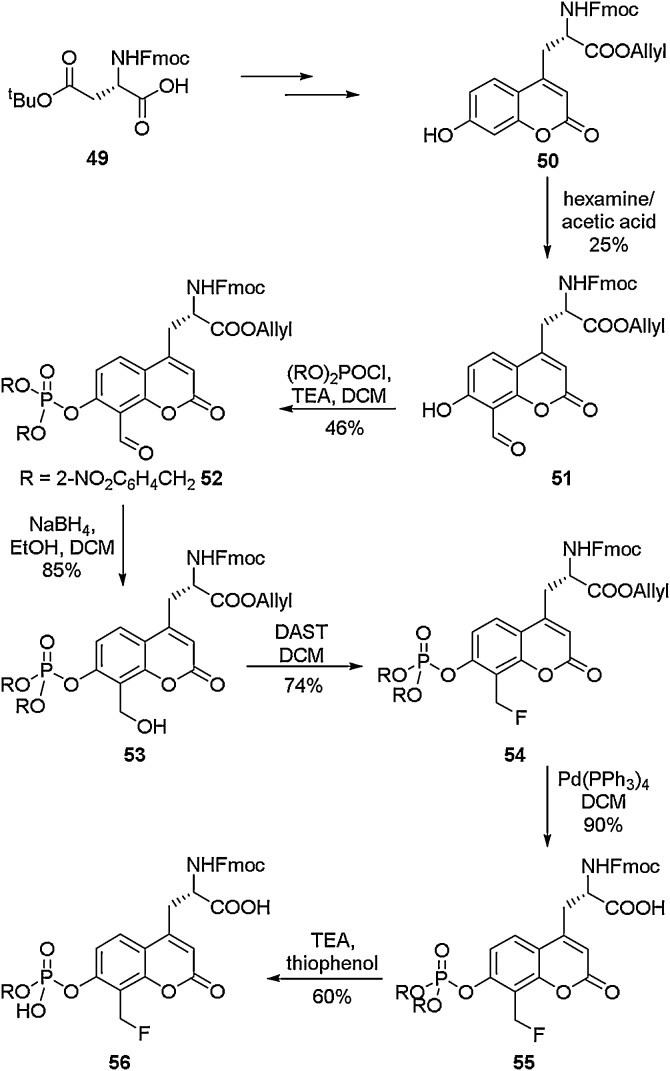
Synthesis of coumarin-containing amino acids, Yao and co-workers [59].
Scheme 14
Scheme 14
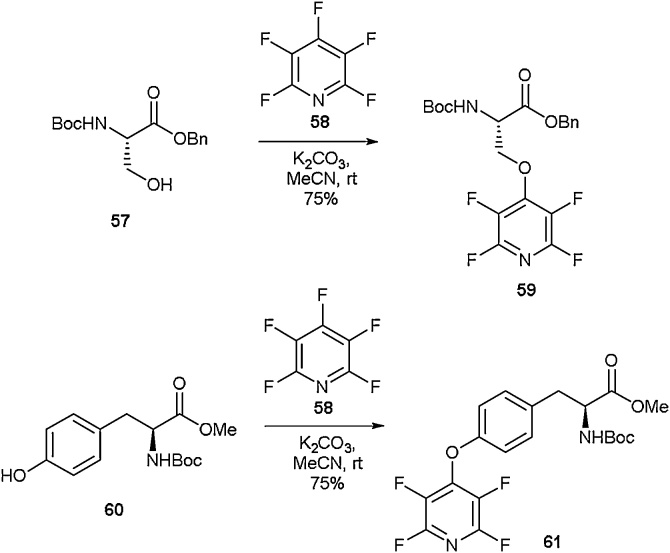
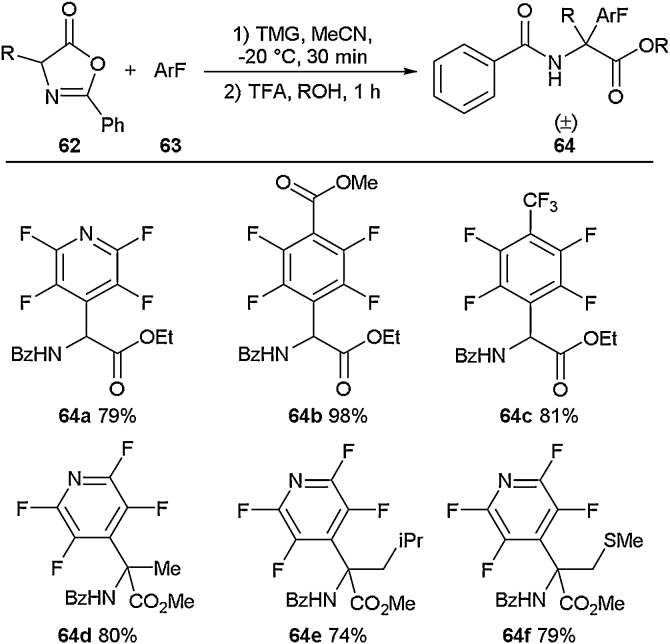
Synthesis of tetrafluoropyridyl amino acids, Cobb and co-workers [70,72].
Scheme 15
Scheme 15
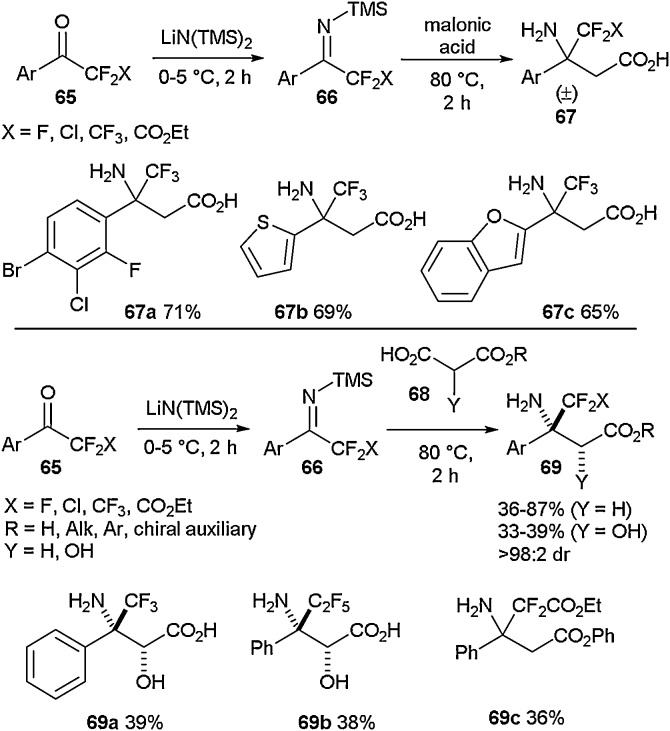
Synthesis of perfluoro-amino acids, Weaver and co-workers [74].
Scheme 16
Scheme 16
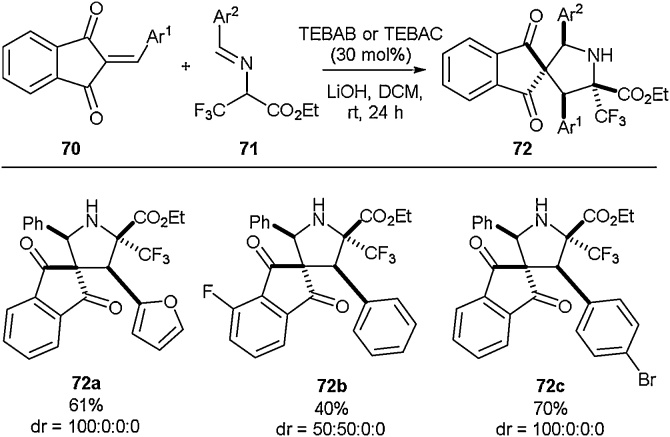
Synthesis of β-fluoroalkyl β-amino acids, Gillaizeau and co-workers [75].
Scheme 17
Scheme 17
Synthesis of spirocyclic fluorinated amino acids, Waser and co-workers [81].
Scheme 18
Scheme 18
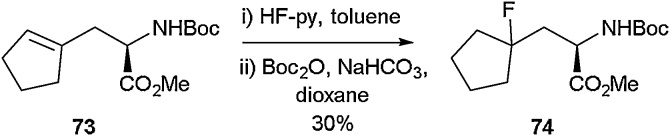
Fluorinated cyclopentane amino acid, Jackson and co-workers [82].
Scheme 19
Scheme 19
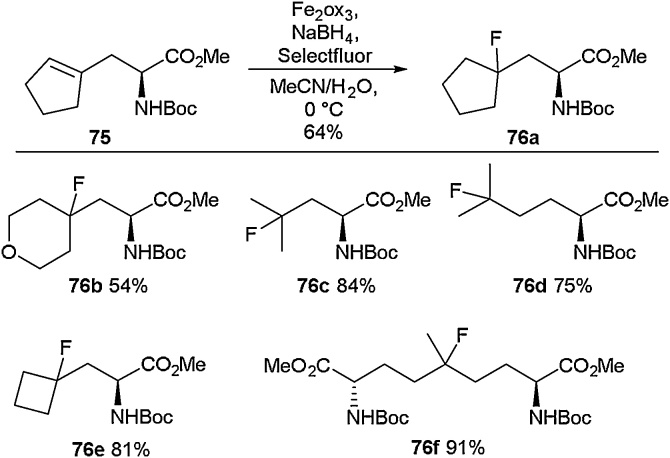
Radical functionalisation of amino acids, Jackson and co-workers [83].
Scheme 20
Scheme 20
Synthesis of difluoroprolines by electrophilic fluorination, Linclau and co-workers [87].
Scheme 21
Scheme 21
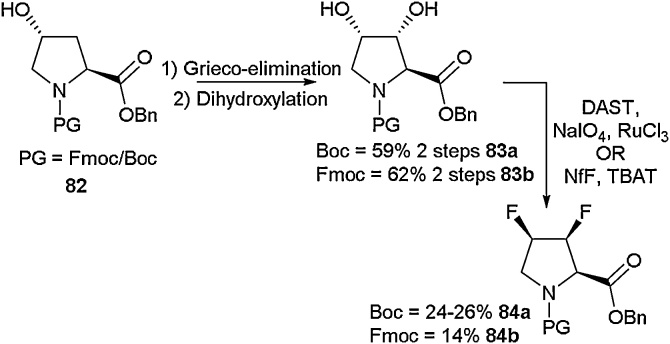
Grieco-elimination approach to difluoroprolines, Linclau and co-workers [87].
Scheme 22
Scheme 22
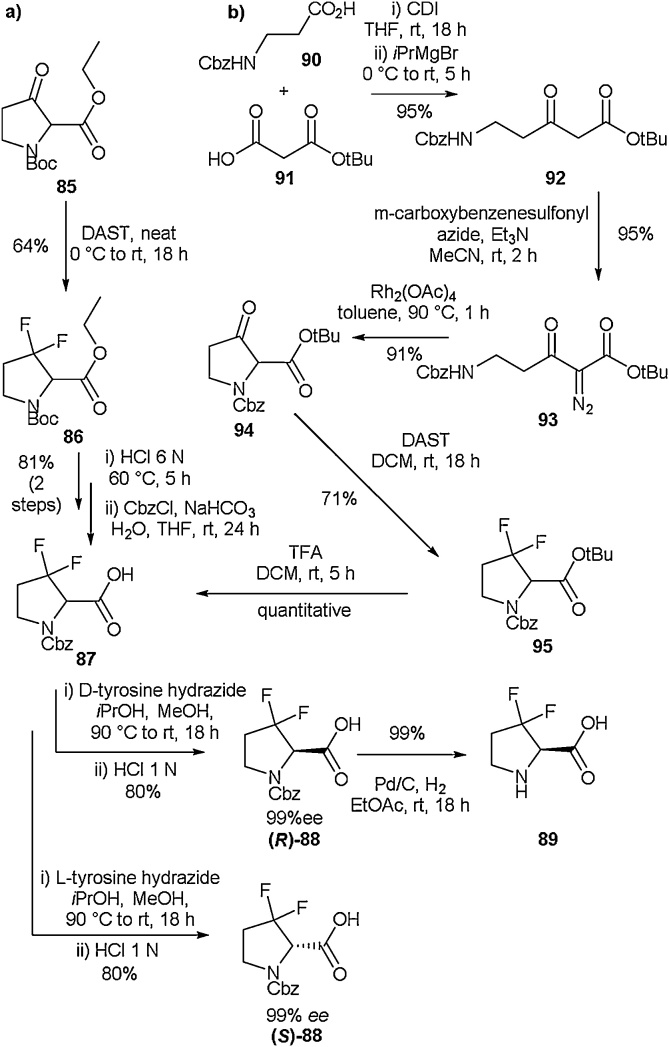
a) Synthesis of 3,3-difluoroproline on small scale b) Synthesis of 3,3-difluoroproline on multigram scale, Kamenecka and co-workers [89].
Scheme 23
Scheme 23
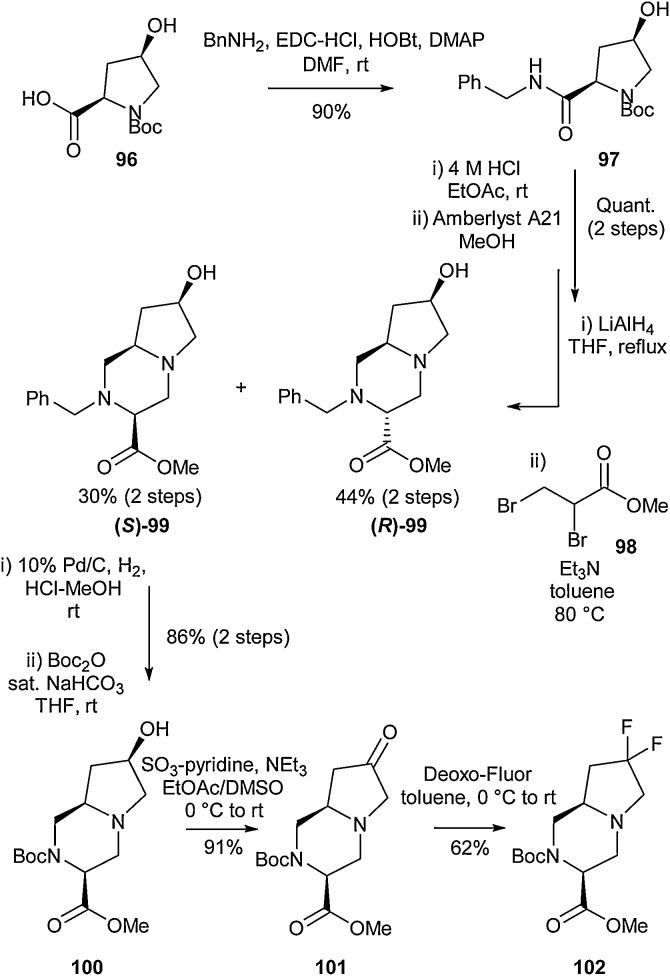
Synthesis of 7,7-difluorooctahydropyrrolo[1,2-a]pyrazine derivatives, Ishikawa and co-workers [93].
Scheme 24
Scheme 24
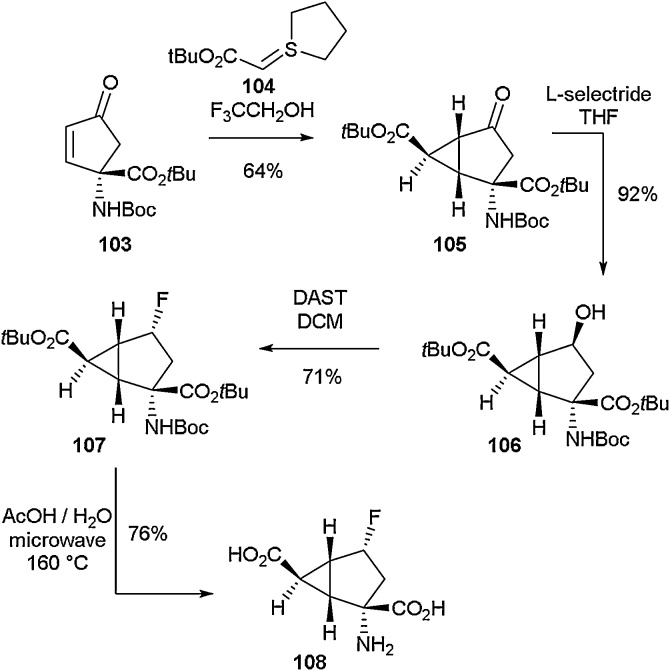
Synthesis of 4-fluoro-2-aminobicyclo[3.1.0]hexane-2,6-dicarboxylate, Monn and co-workers [95].
Scheme 25
Scheme 25
Access to trifluoromethyl β-proline derivatives, Hao et al. [101].
Scheme 26
Scheme 26
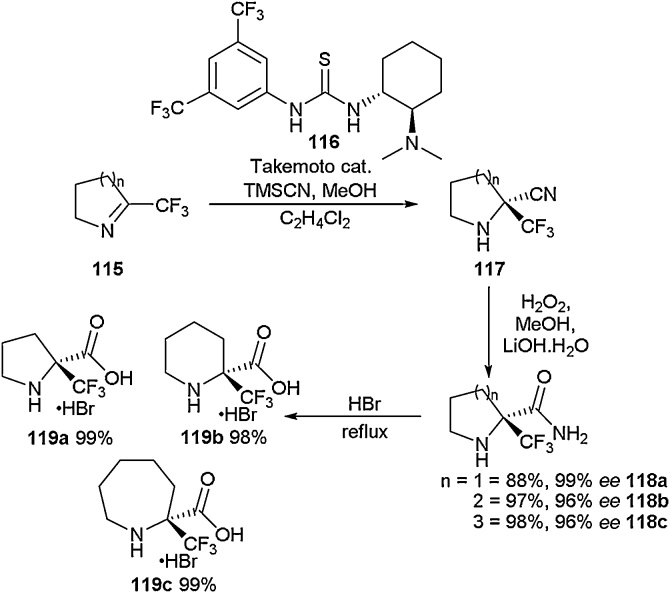
Synthesis of cyclic α-perfluoroalkylated amino acids, Nenajdenko and co-workers [102].
Scheme 27
Scheme 27
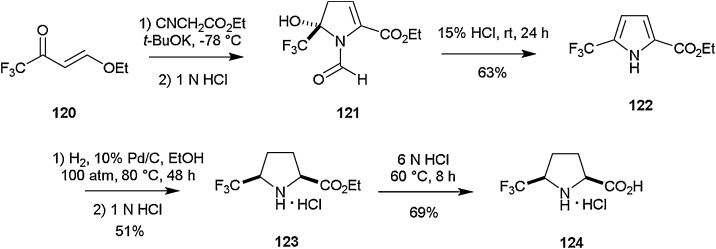
Synthesis of 5-trifluoromethyl proline, Haufe and co-workers [106].
Scheme 28
Scheme 28
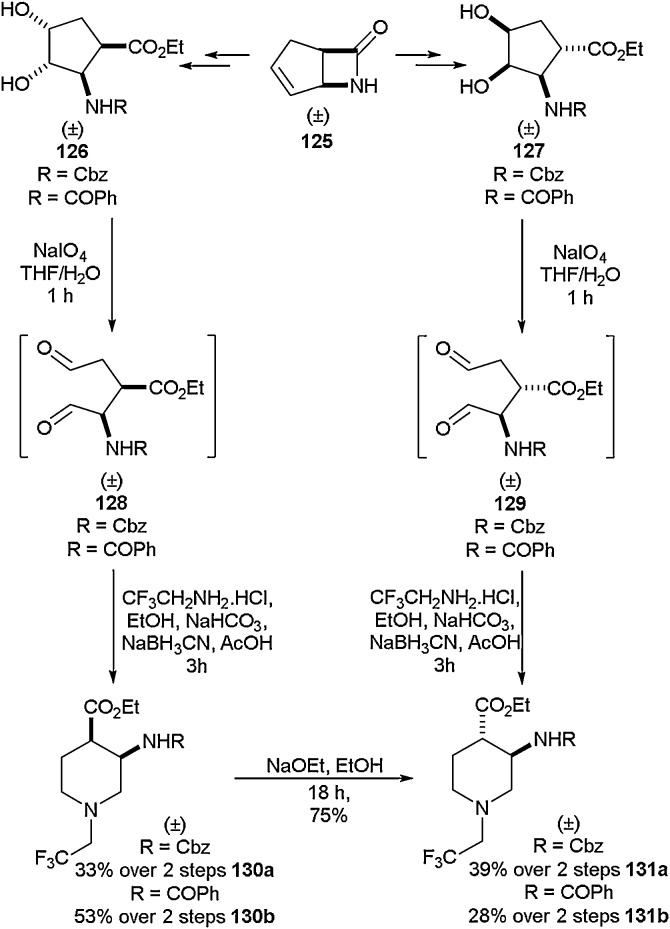
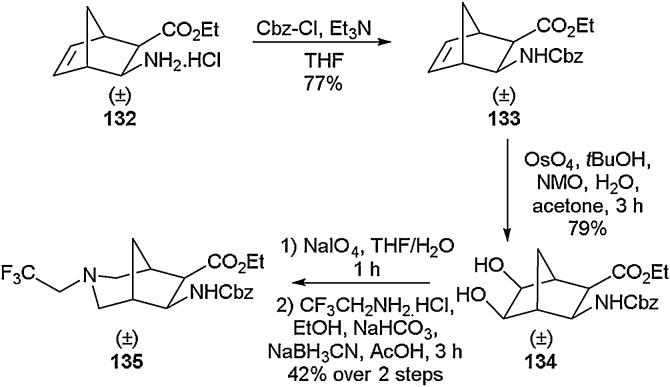
Synthesis of fluorinated piperidine amino acids, Fülöp and co-workers [112].
Scheme 29
Scheme 29
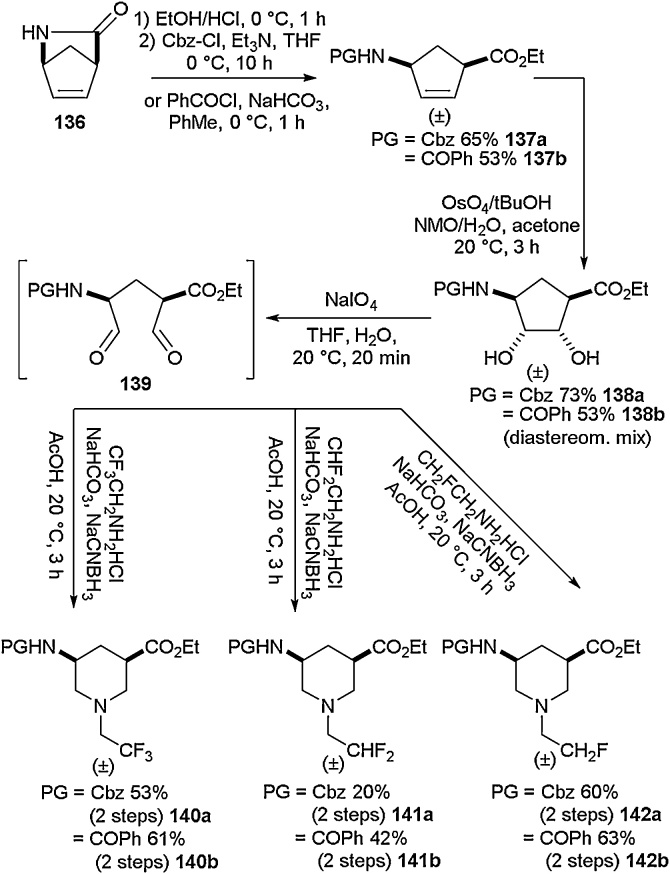
Access to fluorinated bi-cyclic amino acids, Fülöp and co-workers [112].
Scheme 30
Scheme 30
Synthesis of fluorinated γ-amino acids using a ring expansion approach, Kiss and co-workers [116].
Scheme 31
Scheme 31
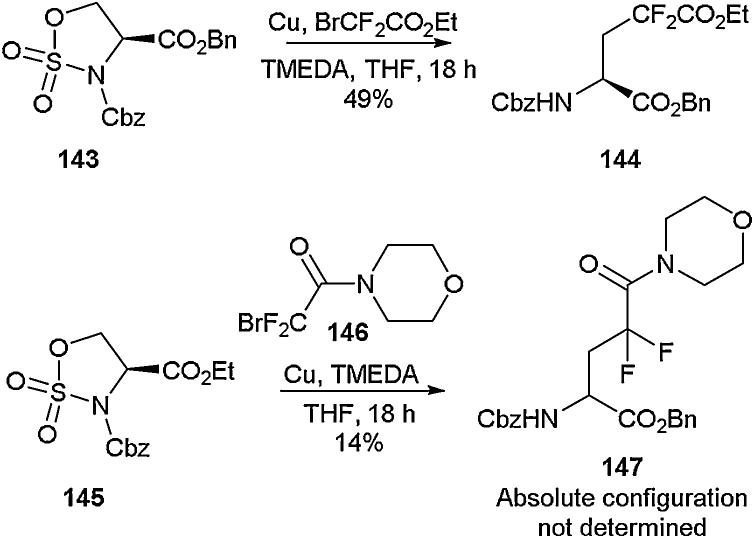
Access to β-fluoroalanines and difluoroglutamic acid derivatives, Bolek and Ignatowska [117].
Scheme 32
Scheme 32
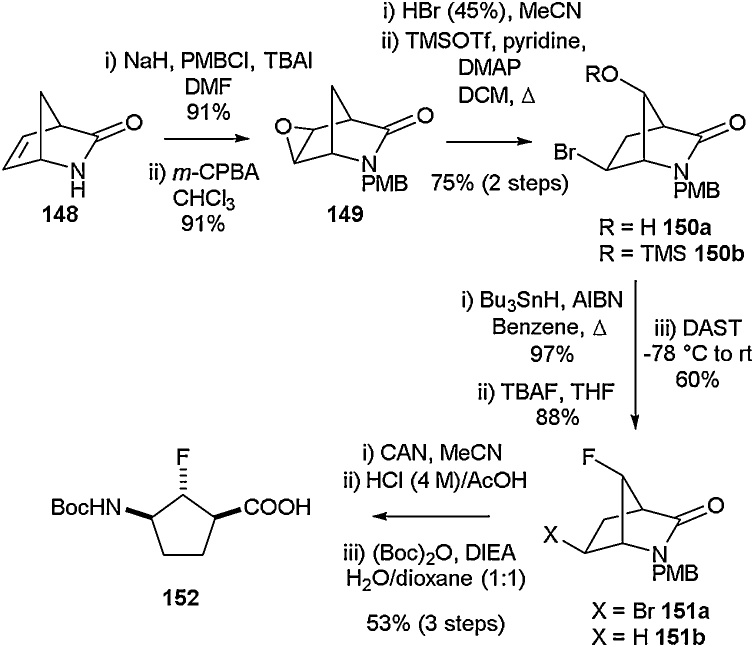
Synthesis of cis-fluorinated cyclic γ-amino acids, Granja and co-workers [120].
Scheme 33
Scheme 33
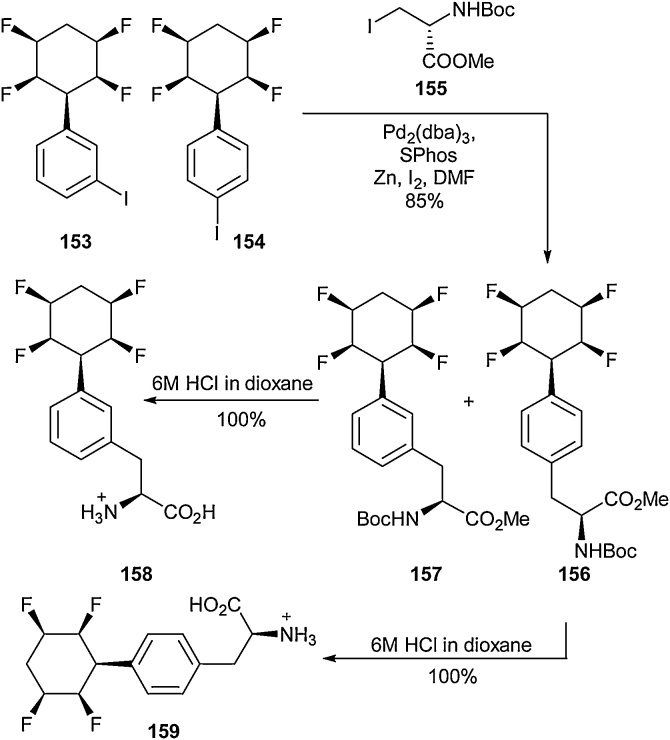
Janus-faced fluorinated cyclohexyl amino acids, O’Hagan and co-workers [124].
Scheme 34
Scheme 34
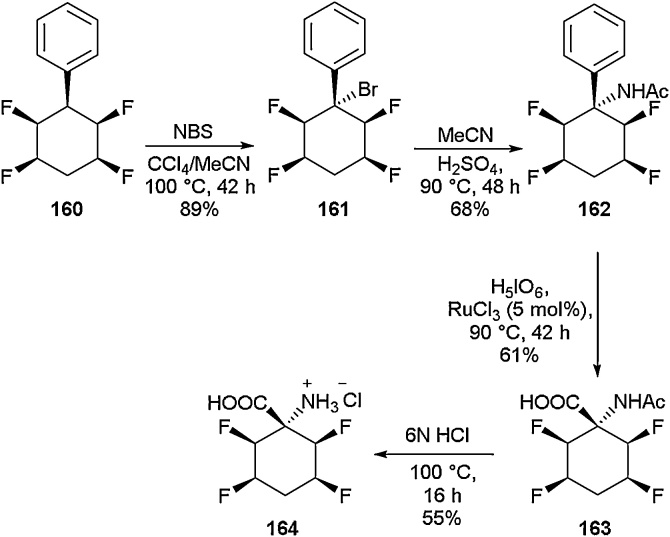
Fluorinated cyclohexyl amino acids, O’Hagan and co-workers [125].
Scheme 35
Scheme 35
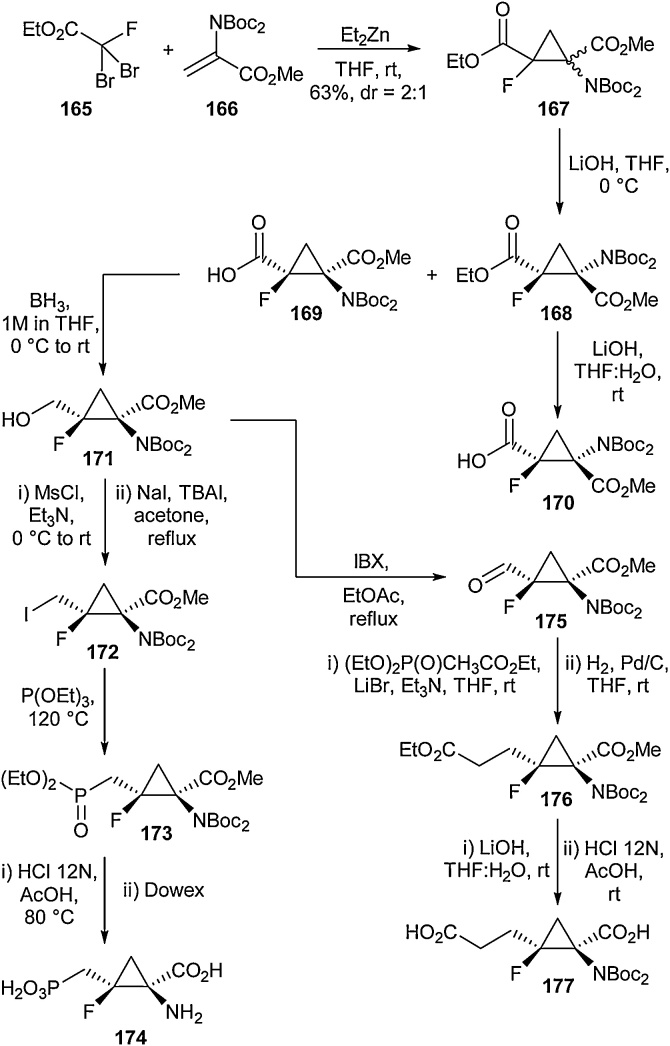
Routes to cyclopropane amino acids, Jubault and co-workers [127].
Scheme 36
Scheme 36
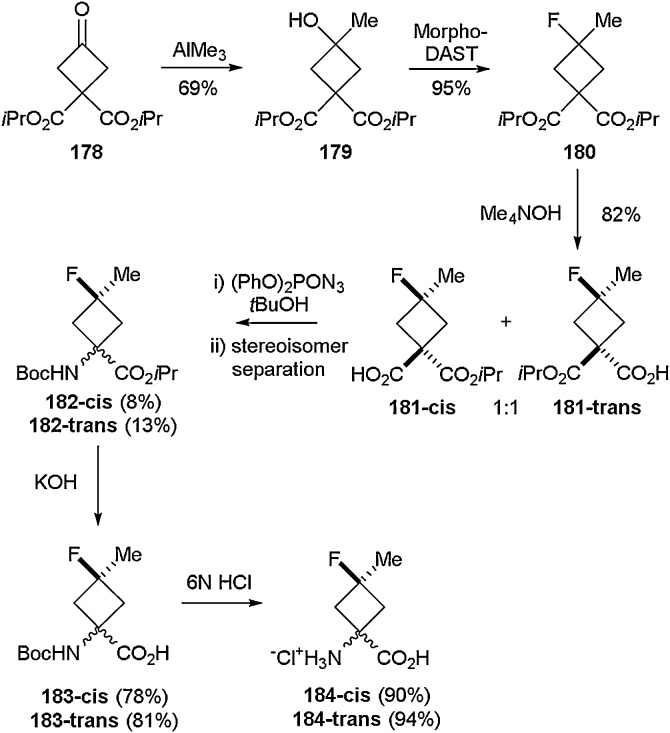
Synthesis of cis‐and trans‐1‐amino‐3‐fluoro‐3‐methylcyclobutanecarboxylic acids by Haufe and co-workers [132].
Scheme 37
Scheme 37
Stereoselective synthesis of 3-fluoro-N-methyl-d-aspartic acid, O’Hagan and co-workers [140].
Scheme 38
Scheme 38
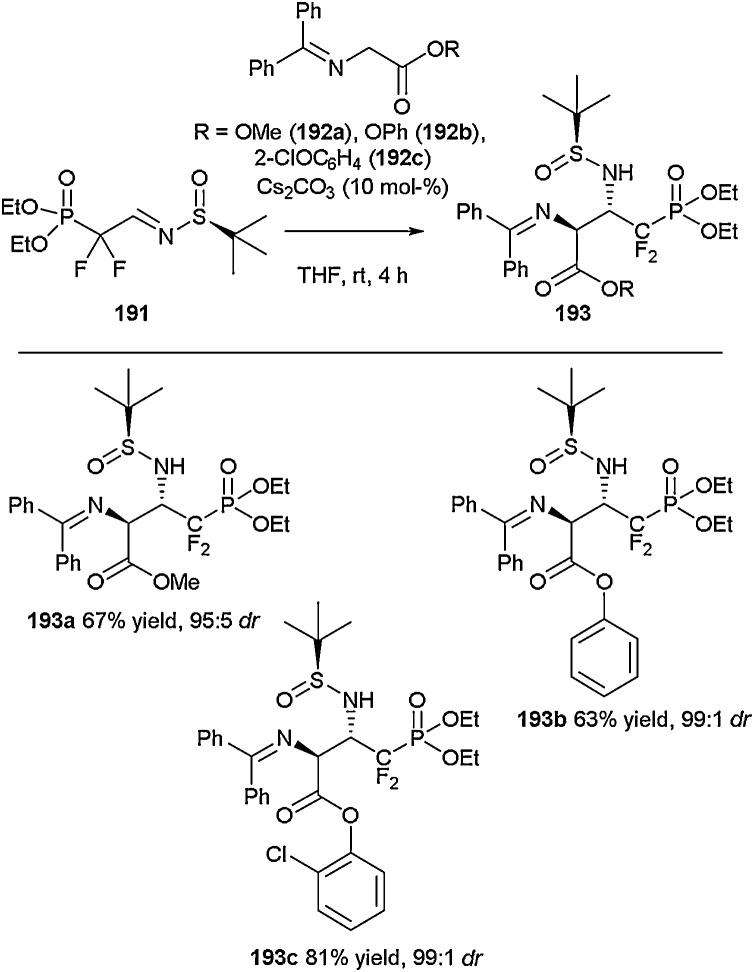
Synthesis of β-amino-γ,γ-difluoro-ω-phosphonoglutamic acid derivatives, Soloshonok and co-workers [141].
Scheme 39
Scheme 39
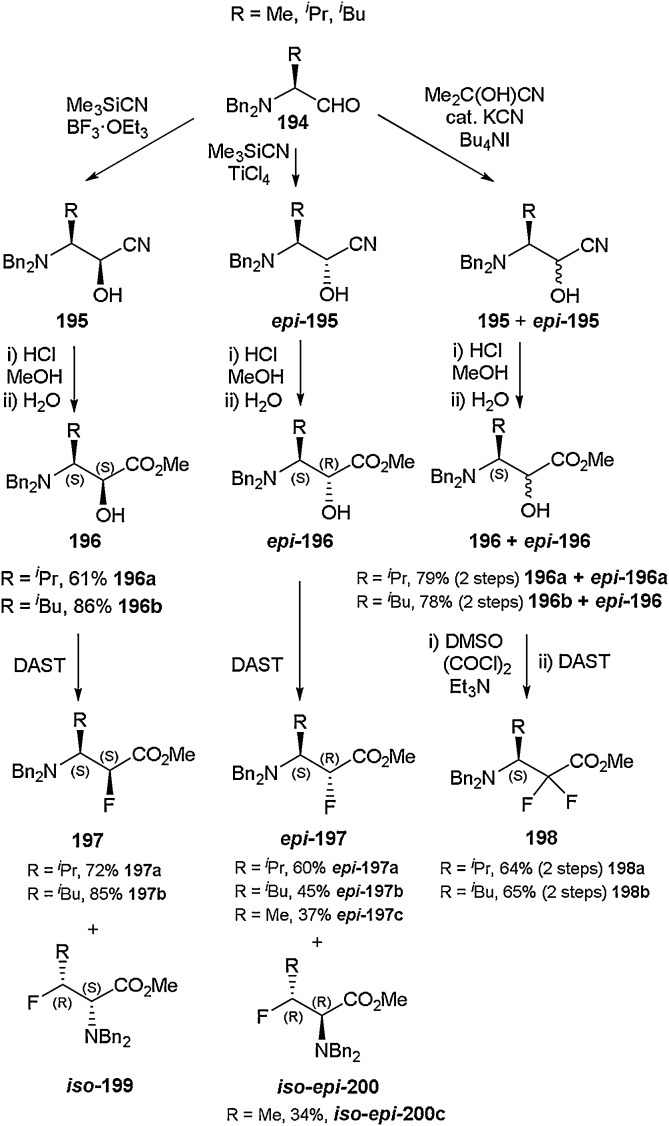
Synthesis of α-fluoro-β-amino acid derivatives, Seebach and co-workers [144].
Scheme 40
Scheme 40
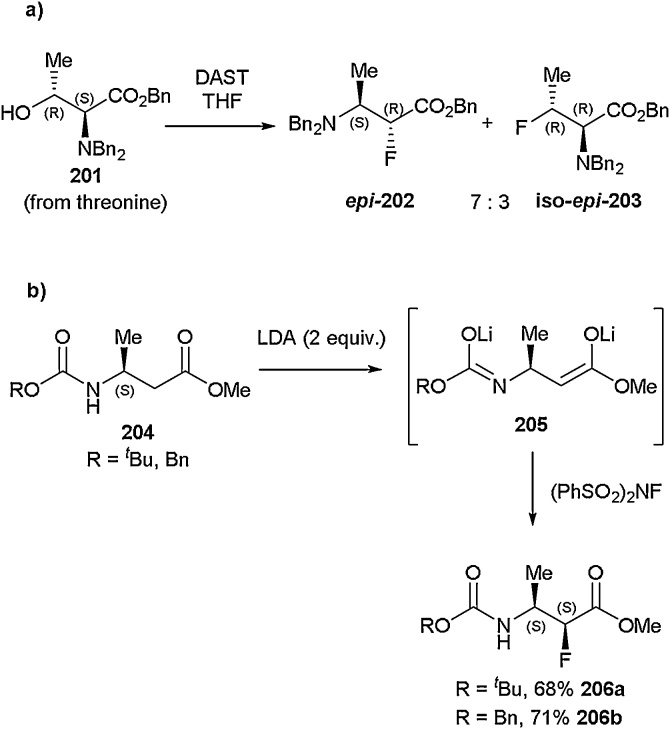
a) Synthesis of α-fluoro-β-amino acid derivatives, b) Synthesis of 3-amino-2-fluorobutanoates, Seebach and co-workers [144].
Scheme 41
Scheme 41
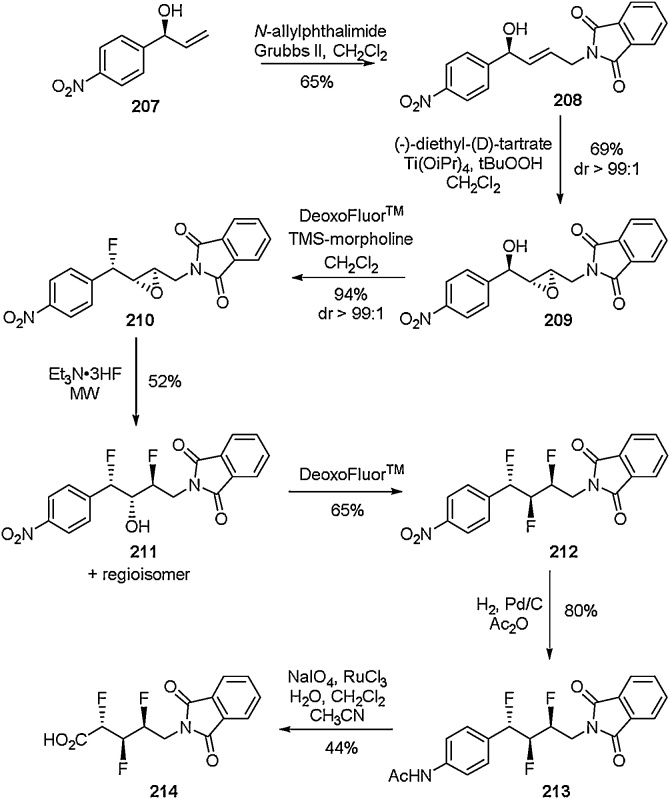
Synthesis of vicinal trifluoroamino acids, Hunter et al. [152].
Scheme 42
Scheme 42
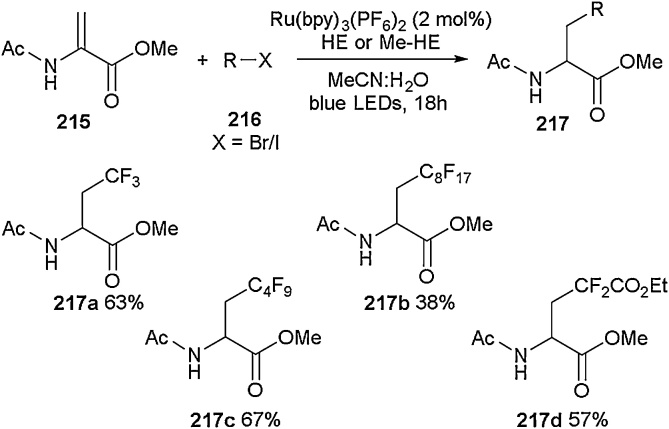
Photocatalysis to functionalise dehydroamino acids, Brandhofer et al. [160].
Scheme 43
Scheme 43
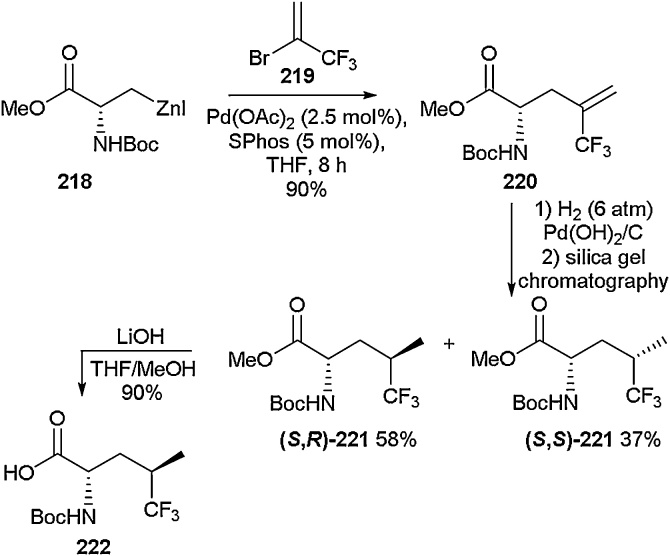
Negishi cross-coupling in the synthesis of trifluoromethyl alkene amino acids, Zhang and co-workers [161].
Scheme 44
Scheme 44
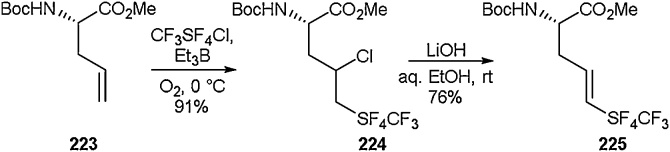
Access to an SF4CF3 alkene amino acid, Welch and co-workers [169].
Scheme 45
Scheme 45
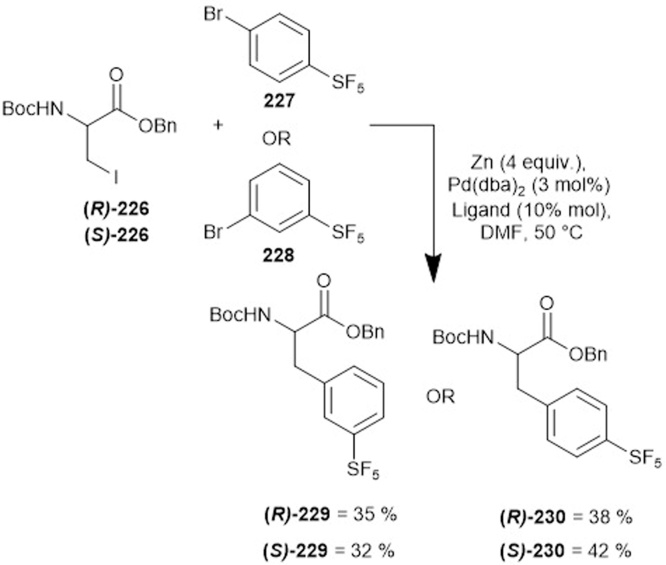
Aromatic SF5 amino acids, Cobb and co-workers [32].
Scheme 46
Scheme 46
Synthesis of Fmoc SF5-containing dipeptide, Johansson and co-workers [170].

References

    1. Gillis E.P., Eastman K.J., Hill M.D., Donnelly D.J., Meanwell N.A. Applications of fluorine in medicinal chemistry. J. Med. Chem. 2015;58(21):8315–8359. - PubMed
    1. O’Hagan D. Understanding organofluorine chemistry. An introduction to the C–F bond. Chem. Soc. Rev. 2008;37(2):308–319. - PubMed
    1. Wang J., Sánchez-Roselló M., Aceña J.L., del Pozo C., Sorochinsky A.E., Fustero S., Soloshonok V.A., Liu H. Fluorine in pharmaceutical industry: fluorine-containing drugs introduced to the market in the last decade (2001–2011) Chem. Rev. 2014;114(4):2432–2506. - PubMed
    1. Zhou Y., Wang J., Gu Z., Wang S., Zhu W., Aceña J.L., Soloshonok V.A., Izawa K., Liu H. Next generation of fluorine-containing pharmaceuticals, compounds currently in phase II–III clinical trials of major pharmaceutical companies: new structural trends and therapeutic areas. Chem. Rev. 2016;116(2):422–518. - PubMed
    1. Ojima I. Exploration of fluorine chemistry at the multidisciplinary interface of chemistry and biology. J. Org. Chem. 2013;78(13):6358–6383. - PMC - PubMed