. 2021 Jan 1;125(1):63-73.
doi: 10.1152/jn.00404.2020. Epub 2020 Nov 4.

Perceived effort affects choice of limb and reaction time of movements

Affiliations

Perceived effort affects choice of limb and reaction time of movements

Jing Wang et al. J Neurophysiol. .

Abstract

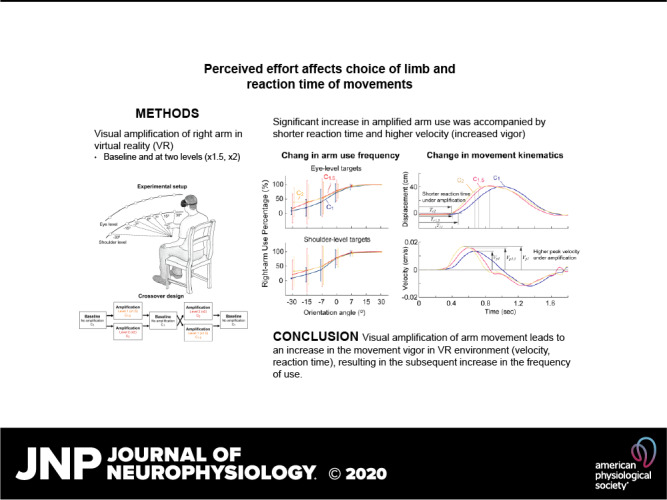
The decision regarding which arm to use to perform a task reflects a complex process that can be influenced by many factors, including effort requirements of acquiring the goal. In this study, we considered a virtual reality environment in which people reached to a visual target in three-dimensional space. To vary the cost of reaching, we altered the visual feedback associated with motion of one arm but not the other. This altered the extent of motion that was required to reach, thus changing the effort required to acquire the goal. We then measured how that change in effort affected the decision regarding which arm to use, as well as the preparation time for the movement that ensued. As expected, with increased visual amplification of one arm (reduced effort to reach the goal), subjects increased the probability of choosing that arm. Surprisingly, however, the reaction times to start these movements were also reduced: despite constancy of the visual representation of the target, reaction times were shorter for movements with less effort. Thus, as the perceived effort associated with accomplishing a goal was reduced for a given limb, the decision-making process was biased toward use of that limb. Furthermore, movements that were perceived to be less effortful were performed with shorter reaction times. These results suggest that visual amplification can alter the perceived effort associated with using a limb, thus increasing frequency of use. This may provide a useful method to increase use of a limb during rehabilitation.NEW & NOTEWORTHY We report that visual amplification may serve as an effective means to alter the perceived effort associated with use of a limb. This method may provide an effective tool with which use of the affected limb can be encouraged noninvasively after neurological injury.

Keywords: bimanual choice; decision-making; motor adaptation; movement vigor; reaction time; virtual reality.


Conflict of interest statement

No conflicts of interest, financial or otherwise, are declared by the authors.

Figures
None
Graphical abstract
Figure 1.
Figure 1.
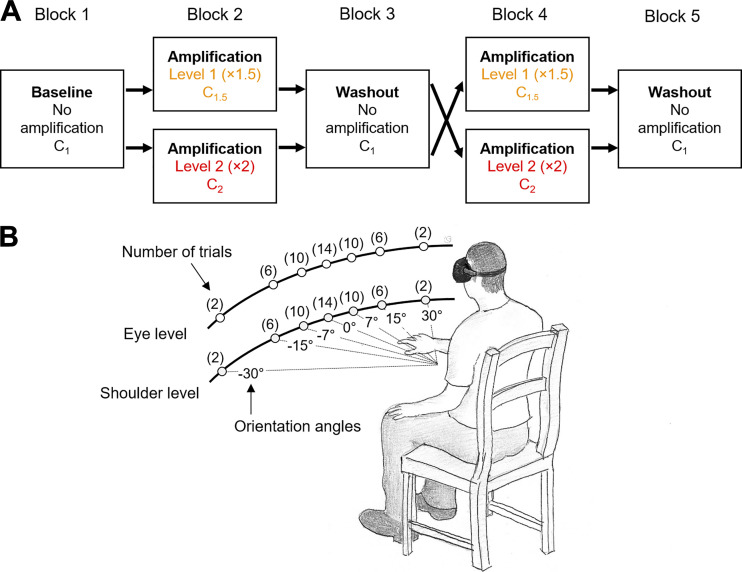
Experimental design. A: experimental protocol with randomized crossover design. B: target locations and frequency of appearance per block. The order of appearance was randomized within each block.
Figure 2.
Figure 2.
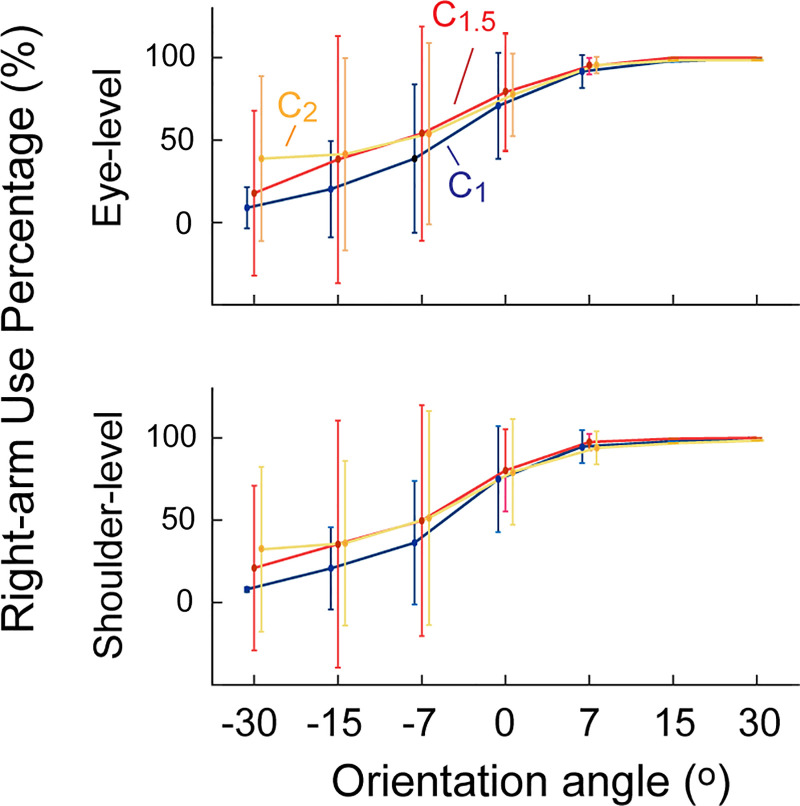
Change in the right-hand use under visual amplification. Use of the right hand (amplified side) increased across all orientation angles under visual amplification at both levels. A repeated-measures ANOVA showed significant increase in the right-hand use under both conditions (n = 31).
Figure 3.
Figure 3.
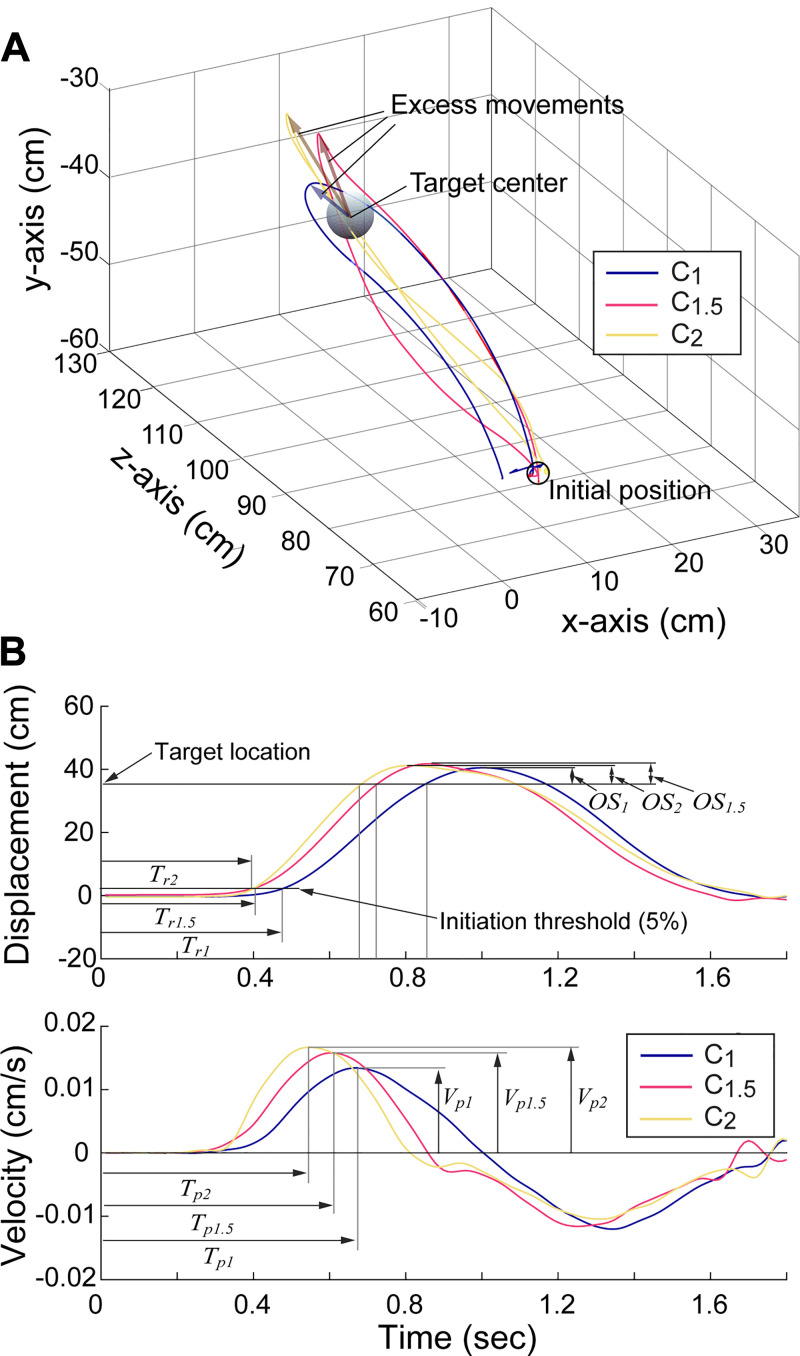
Movement kinematics under visual amplification. Spatial trajectories of the hand (A) and displacement and velocity of the hand (B) in the 3 conditions (representative case; subject 2). Under amplification, subjects responded more quickly, and moved faster to the target, which resulted in a higher degree of overshoot.
Figure 4.
Figure 4.
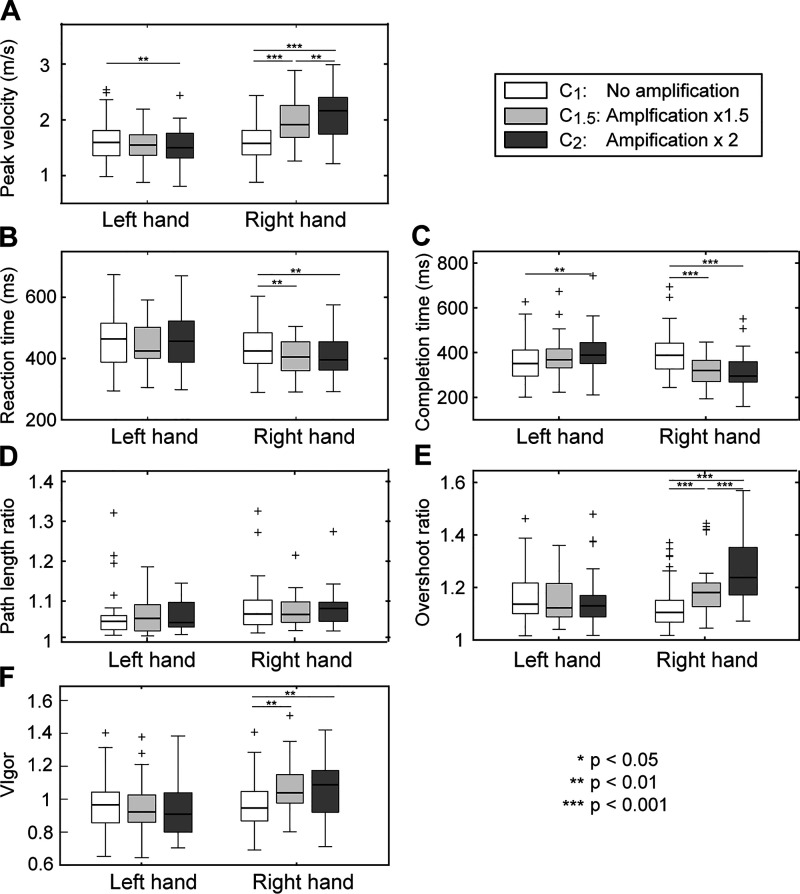
Kinematic parameters across 3 conditions. A: peak velocity. B: reaction time. C: completion time. D: path length ratio. E: overshoot ratio. F: vigor. Repeated-measures ANOVAs showed significant changes in the peak velocity, reaction time, overshoot ratio, and vigor of the amplified arm (n = 31). The plus symbols are outliers, placed outside the whiskers (interquartile range).
Figure 5.
Figure 5.
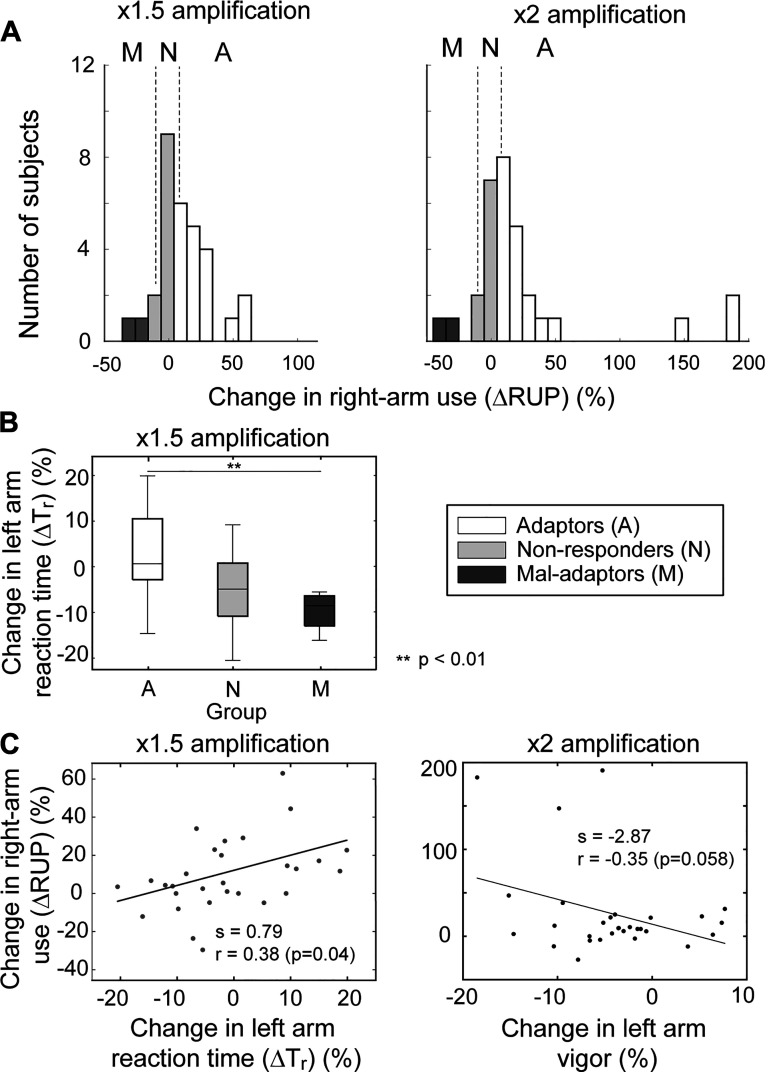
Between-subject variability in the motor adaptation and kinematics. A: between-subject variability in the level of adaptation (Adaptor: change in right hand use > 5%; nonadaptor: −5% < change < 5%; mal-adaptor: change < −5%). B: change in reaction time (%) between 3 subject groups. C: correlation between the change in left arm kinematics and the change in the right-arm usage. A significant positive correlation was observed between the changes in the reaction time of the left hand and the right arm under ×1.5 amplification condition; a negative correlation (trending toward significance; P = 0.058) was also observed between the vigor of the left arm and the right arm in ×2 amplification condition.
Figure 6.
Figure 6.
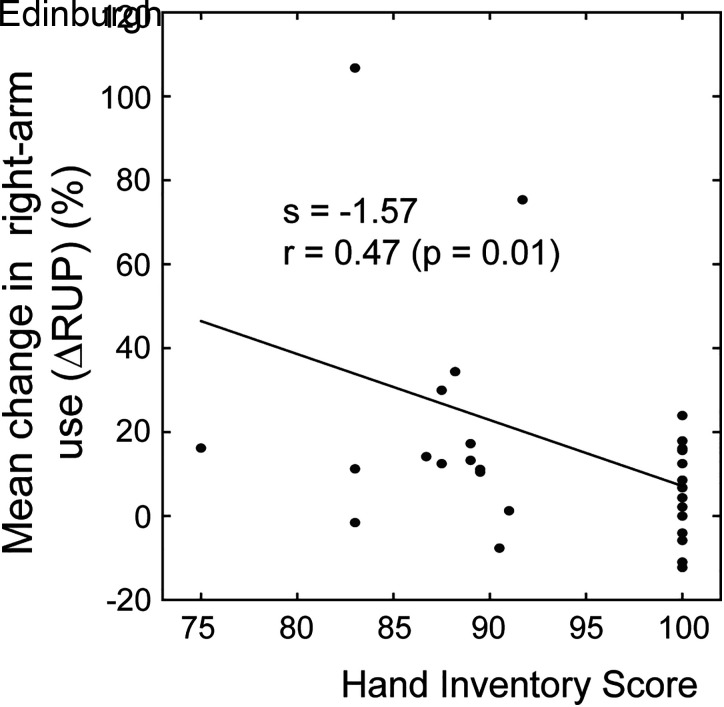
Correlation analysis. Negative correlation was observed between the degree of adaptation of subjects and their handedness scores.

References

    1. Lai SM, Studenski S, Duncan PW, Perera S. Persisting consequences of stroke measured by the Stroke Impact Scale. Stroke 33: 1840–1844, 2002. doi: 10.1161/01.STR.0000019289.15440.F2. - DOI - PubMed
    1. Raghavan P. Upper limb motor impairment post stroke. Phys Med Rehabil Clin N Am 26: 599–610, 2015. doi: 10.1016/j.pmr.2015.06.008. - DOI - PMC - PubMed
    1. Buxbaum LJ, Varghese R, Stoll H, Winstein CJ. Predictors of arm non-use in chronic stroke: a preliminary investigation. bioRxiv 702159: 2019. doi: 10.1101/702159v1. - DOI - PMC - PubMed
    1. Taub E, Heitmann RD, Barro G. Alertness, level of activity, and purposive movement. Ann NY Acad Sci 290: 348–365, 1977. doi: 10.1111/j.1749-6632.1977.tb39737.x. - DOI - PubMed
    1. Norouzi-Gheidari N, Archambault PS, Fung J. Effects of robot-assisted therapy on stroke rehabilitation in upper limbs: systematic review and meta-analysis of the literature. J Rehab Res Dev 49: 479–496, 2012. doi: 10.1682/JRRD.2010.10.0210. - DOI - PubMed

Publication types

LinkOut - more resources