


Effect of environmental factors on survival and population growth of ciliated parasite, Mesanophrys sp. (Ciliophora: Scuticociliatia) infecting Portunus trituberculatus
- PMID: 33146102
- PMCID: PMC11010202
- DOI: 10.1017/S0031182020002127
Effect of environmental factors on survival and population growth of ciliated parasite, Mesanophrys sp. (Ciliophora: Scuticociliatia) infecting Portunus trituberculatus
Abstract
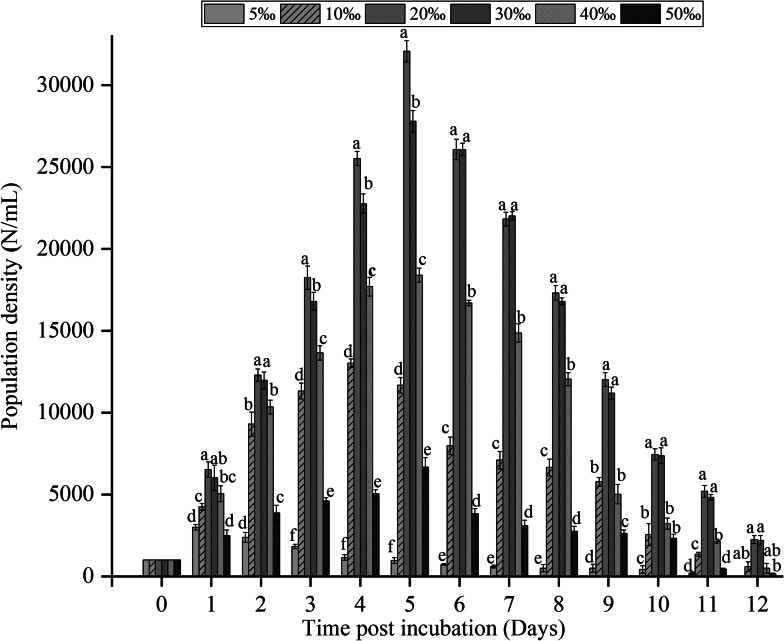
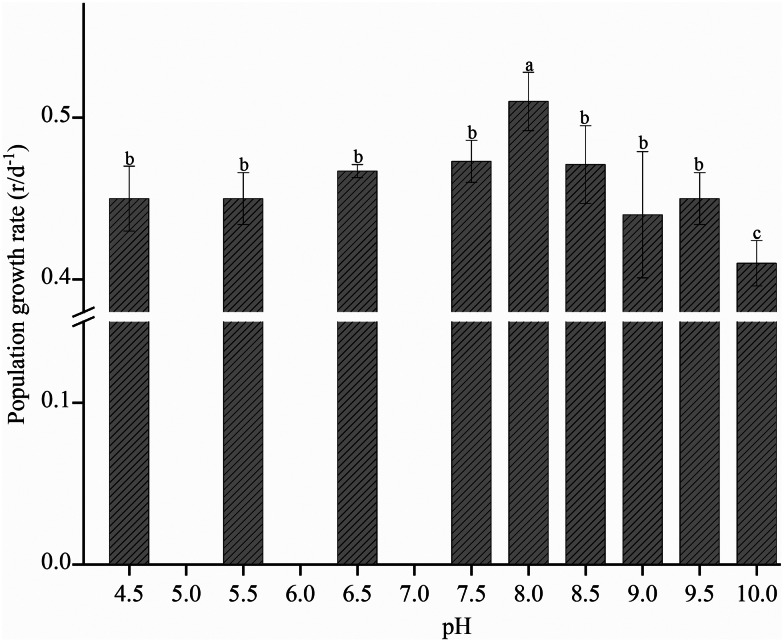
Mesanophrys sp. is a newly identified parasitic ciliate infecting farmed swimming crab. To demonstrate the correlation between parasite development and environmental conditions, this study aimed to investigate the effect of temperature, salinity, pH and frequency of passage of parasite on survival, growth and body size of Mesanophrys sp. in vitro. The results revealed that survival, population density and growth rate of the parasite were highest at 12°C and decreased with increasing temperature from 16 to 26°C. In addition, the survival, population density and growth rate of Mesanophrys sp. were high at 20‰. When salinity was adjusted to levels lower (0-10‰) and higher (40-60‰) than 20‰, the parasite's survival and growth rate gradually declined. The optimal pH for parasite survival was 8.0, whereas its survival was inhibited at <4.5 or >9.5. Our result also showed that parasite body proportions (length:width) were significantly smaller at the highest temperature compared to the lower temperature, whereas different salinities had no significant effect. Furthermore, we introduced dynamic parasite culture systems in vitro where Mesanophrys sp. was cultured in medium-containing culture plates through continually reducing and halving the old medium into fresh. Application of this optimized dilution timing technique with fresh medium and sub-cultured enabled a continuous culture of parasites. Under this optimized condition, the highest population density and exponential growth rate of the parasite were achieved than that of a control group. This study will help to understand the ciliated parasite infection dynamics and provides new possibilities for in vitro parasite-associated studies.
Keywords: Mesanophrys sp.; pH; population growth; salinity; scuticociliates; survival; temperature.
Figures






References
-
- Armstrong DA, Burreson EM and Sparks AK (1981) A ciliate infection (Paranophrys sp.) in laboratory-held Dungeness crabs, Cancer magister. Journal of Invertebrate Pathology 37, 201–209.
-
- Arzul I, Gagnaire B, Bond C, Bruno C, Morga B, Ferrand S and Renault T (2009) Effects of temperature and salinity on the survival of Bonamia ostreae, a parasite infecting flat oysters Ostrea edulis. Diseases of Aquatic Organisms 85, 67–75. - PubMed
-
- Audemard C, Carnegie RB, Bishop MJ, Peterson CH and Burreson EM (2008) Interacting effects of temperature and salinity on Bonamia sp. parasitism in the Asian oyster Crassostrea ariakensis. Journal of Invertebrate Pathology 98, 344–350. - PubMed
-
- Auzoux-Bordenave S (1995) In vitro sporulation of the clam pathogen Perkinsus atlanticus (Apicomplexa, Perkinsea) under various environmental conditions. Journal of Shellfish Research 14, 469–475.
-
- Bodinier C, Lorin-Nebel C, Charmantier G and Boulo V (2009) Influence of salinity on the localization and expression of the CFTR chloride channel in the ionocytes of juvenile Dicentrarchus labrax exposed to seawater and freshwater. Comparative Biochemistry and Physiology Part A: Molecular & Integrative Physiology 153, 345–351. - PubMed
Publication types
MeSH terms
Substances
LinkOut - more resources
Full Text Sources
