


Cumulative Effects of Stigma Experiences on Retention in HIV Care Among Men and Women in the Rural Southeastern United States
- PMID: 33147086
- PMCID: PMC7698850
- DOI: 10.1089/apc.2020.0144
Cumulative Effects of Stigma Experiences on Retention in HIV Care Among Men and Women in the Rural Southeastern United States
Abstract
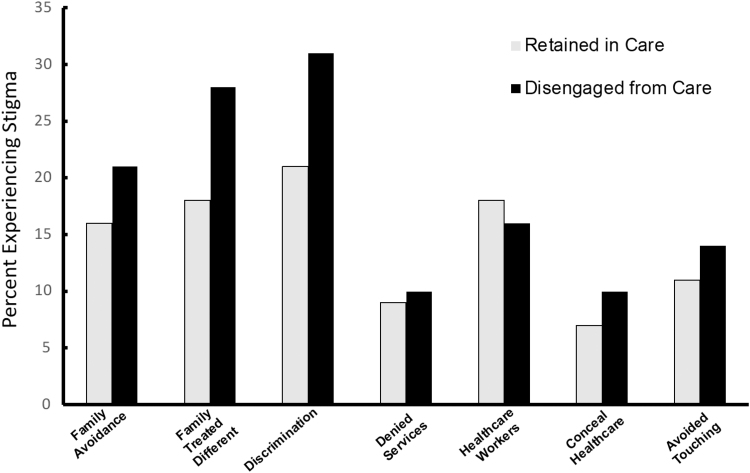
The stigmatization of HIV infection impedes every step along the HIV continuum of care, particularly care engagement and retention. The differential effects of various sources of stigma on retention in HIV care have been the subject of limited research. We examined the accumulation of HIV stigma experiences over 1 year in relationship to treatment retention among 251 men and women marginally engaged in HIV care in the southeastern United States. Results showed that cumulative stigma experiences predicted poorer retention in care, with greater stigma experiences related to less consistency in attending scheduled medical appointments. HIV stigma originating from family members and acts of overt discrimination were the most frequently experienced sources of stigma and were most closely associated with disengagement from HIV care. In addition, analyses by gender indicated that retention in care for men was impacted by stigma to a greater extent than among women. These findings reaffirm the importance of HIV stigma as a barrier to HIV care and provide new directions for interventions to mitigate the negative effects of stigma on patients who are not fully engaged in HIV care. Clinical trials registration NCT104180280.
Keywords: HIV stigma; HIV treatment; health disparities; retention in care.
Conflict of interest statement
No competing financial interests exist.
Figures
References
-
- Martin M, Del Cacho E, Codina C, et al. Relationship between adherence level, type of the antiretroviral regimen, and plasma HIV type 1 RNA viral load: A prospective cohort study. AIDS Res Hum Retroviruses 2008;24:1263–1268 - PubMed
-
- CDC. Understanding the HIV Care Continuum. 2020. Available at: https://www.cdc.gov/hiv/pdf/library/factsheets/cdc-hiv-care-continuum.pdf (Last accessed May7, 2020).
-
- Chang EJ, Fleming M, Nunez A, Dombrowski JC. Predictors of successful HIV care re-engagement among persons poorly engaged in HIV care. AIDS Behav 2019;23:2490–2497 - PubMed
Publication types
MeSH terms
Substances
Grants and funding
LinkOut - more resources
Full Text Sources
Medical
