. 2020 Nov 4;15(11):e0241867.
doi: 10.1371/journal.pone.0241867. eCollection 2020.

Bacterial genome editing by coupling Cre-lox and CRISPR-Cas9 systems

Affiliations

Bacterial genome editing by coupling Cre-lox and CRISPR-Cas9 systems

Hualan Liu et al. PLoS One. .

Abstract

The past decade has been a golden age for microbiology, marked by the discovery of an unprecedented increase in the number of novel bacterial species. Yet gaining biological knowledge of those organisms has not kept pace with sequencing efforts. To unlock this genetic potential there is an urgent need for generic (i.e. non-species specific) genetic toolboxes. Recently, we developed a method, termed chassis-independent recombinase-assisted genome engineering (CRAGE), enabling the integration and expression of large complex gene clusters directly into the chromosomes of diverse bacteria. Here we expand upon this technology by incorporating CRISPR-Cas9 allowing precise genome editing across multiple bacterial species. To do that we have developed a landing pad that carries one wild-type and two mutant lox sites to allow integration of foreign DNA at two locations through Cre-lox recombinase-mediated cassette exchange (RMCE). The first RMCE event is to integrate the Cas9 and the DNA repair protein genes RecET, and the second RMCE event enables the integration of customized sgRNA and a repair template. Following this workflow, we achieved precise genome editing in four different gammaproteobacterial species. We also show that the inserted landing pad and the entire editing machinery can be removed scarlessly after editing. We report here the construction of a single landing pad transposon and demonstrate its functionality across multiple species. The modular design of the landing pad and accessory vectors allows design and assembly of genome editing platforms for other organisms in a similar way. We believe this approach will greatly expand the list of bacteria amenable to genetic manipulation and provides the means to advance our understanding of the microbial world.


Conflict of interest statement

No conflict of interest declared.

Figures
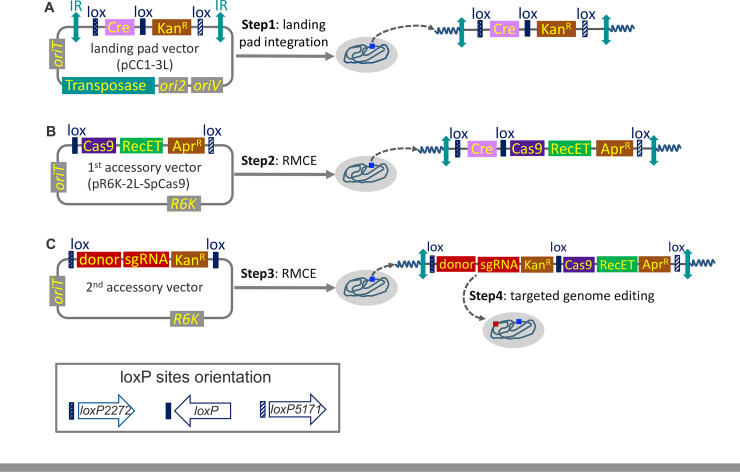
Fig 1
Fig 1. Overview of steps involved in the cross-species CRISPR-Cas9 genome editing strategy (not drawn to scale).
(A): Chromosomal integration of the landing pad vector by mariner-based transposon system. (B): Chromosome integration of the Cas9 and RecET via RMCE. (C): Chromosome integration of the sgRNA and donor template via RMCE, followed by genome editing at the specific target site. The orientation of lox sites was kept consistent in all the vectors. IR is the transposon-specific inverted repeats. oriT is the origin of transfer. KanR and AprR are antibiotic resistance cassettes for kanamycin and apramycin, respectively. OriS, oriV and R6K are different replication origins.
Fig 2
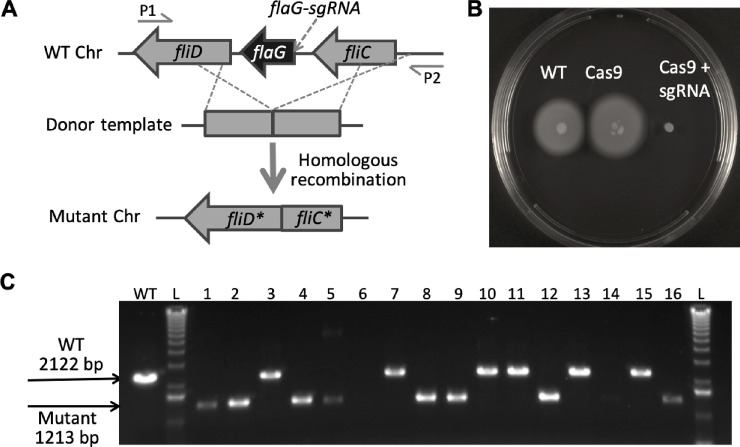
Fig 2. Construction of Cas9-mediated S. oneidensis flaG gene deletion mutants.
(A): The editing schematic diagram and screening primers are shown for deletion of the flaG gene. (B): The phenotype of different S. oneidensis strains. WT, wild type. Cas9, the wild type strain harboring Cre, Cas9, RecET and AprR in the chromosome. Cas9+sgRNA, the wild type strain harboring donor template, sgRNA, KanR, Cas9, RecET and AprR in the chromosome. (C): PCR screening of the initial transconjugant colonies. L: DNA ladder. WT: wild type as positive control. 1–16: 16 randomly picked colonies.
Fig 3
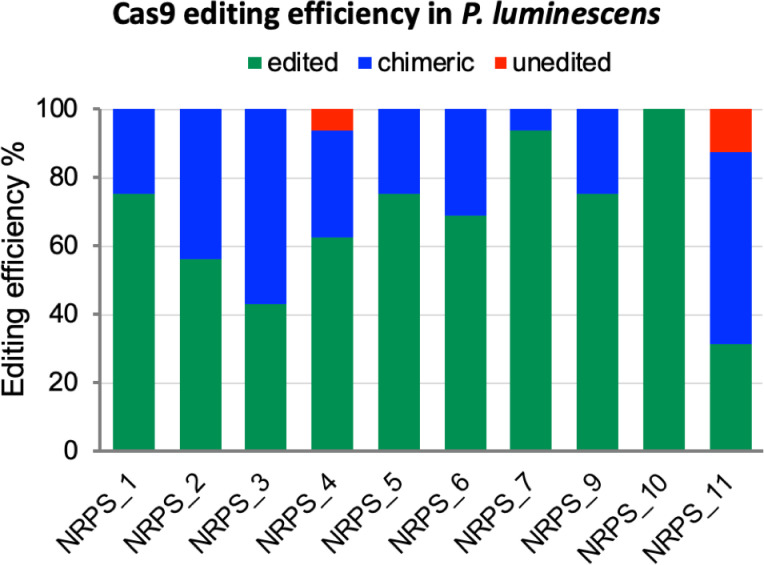
Fig 3. The Cas9-assisted deletion editing efficiency in P. luminescens subsp. laumondii TT01.
Edited: colony PCR yielding an amplicon of edited cells. Chimeric: colony PCR yielding mixed amplicons with both edited and unedited cells. Unedited: PCR only yielding an amplicon of unedited cells.
Fig 4
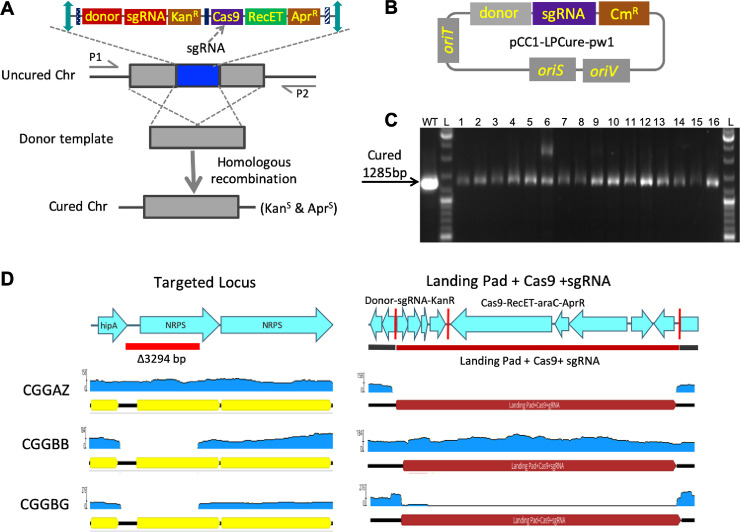
Fig 4. Removing the editing machinery in P. luminescens.
(A): The curing schematic diagram and screening primers are shown for curing the editing machinery (not drawn to scale). (B): The structure of the curing plasmid. (C): PCR screening after curing (the larger band in isolate 6 is a non-specific amplification). L: DNA ladder. WT: wild type as positive control. 1–16: 16 randomly picked colonies. (D) The sequence alignment analysis of three strains at two specific loci on the chromosome. CGGAZ, CGGBB, and CGGBG denote as reads generated from a wild-type strain, an edited strain carrying the landing pad, Cas9, and sgRNA, and an edited strain with landing pad removed, respectively. The red vertical lines indicate the 3 lox sites in the landing pad.

References

    1. Hug LA, Baker BJ, Anantharaman K, Brown CT, Probst AJ, Castelle CJ, et al. A new view of the tree of life. Nat Microbiol. 2016;1: 16048 10.1038/nmicrobiol.2016.48 - DOI - PubMed
    1. Wexler AG, Goodman AL. An insider’s perspective: Bacteroides as a window into the microbiome. Nat Microbiol. 2017;2: 17026 10.1038/nmicrobiol.2017.26 - DOI - PMC - PubMed
    1. Barka EA, Vatsa P, Sanchez L, Gaveau-Vaillant N, Jacquard C, Meier-Kolthoff JP, et al. Correction for Barka et al., Taxonomy, Physiology, and Natural Products of Actinobacteria. Microbiol Mol Biol Rev. 2016;80: iii 10.1128/MMBR.00044-16 - DOI - PMC - PubMed
    1. Hadjithomas M, Chen I-MA, Chu K, Huang J, Ratner A, Palaniappan K, et al. IMG-ABC: new features for bacterial secondary metabolism analysis and targeted biosynthetic gene cluster discovery in thousands of microbial genomes. Nucleic Acids Res. 2017;45: D560–D565. 10.1093/nar/gkw1103 - DOI - PMC - PubMed
    1. Zou Y, Xue W, Luo G, Deng Z, Qin P, Guo R, et al. 1,520 reference genomes from cultivated human gut bacteria enable functional microbiome analyses. Nat Biotechnol. 2019;37: 179–185. 10.1038/s41587-018-0008-8 - DOI - PMC - PubMed

Publication types