


Modulation of premotor cortex response to sequence motor learning during escitalopram intake
- PMID: 33148103
- PMCID: PMC8138331
- DOI: 10.1177/0271678X20965161
Modulation of premotor cortex response to sequence motor learning during escitalopram intake
Abstract
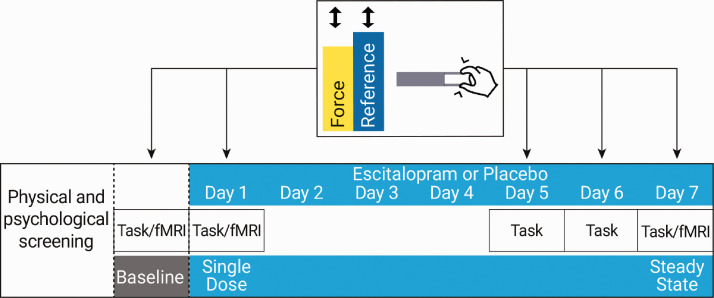
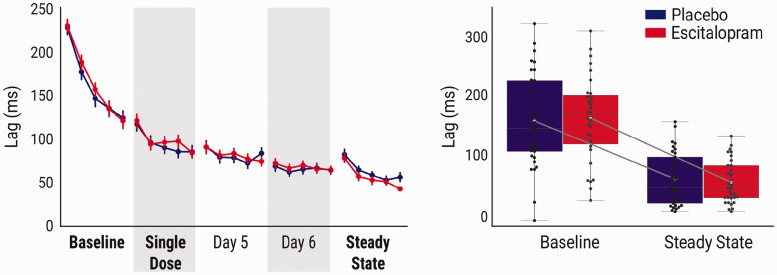
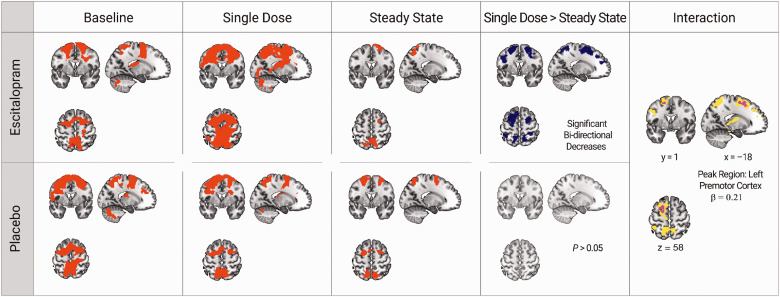
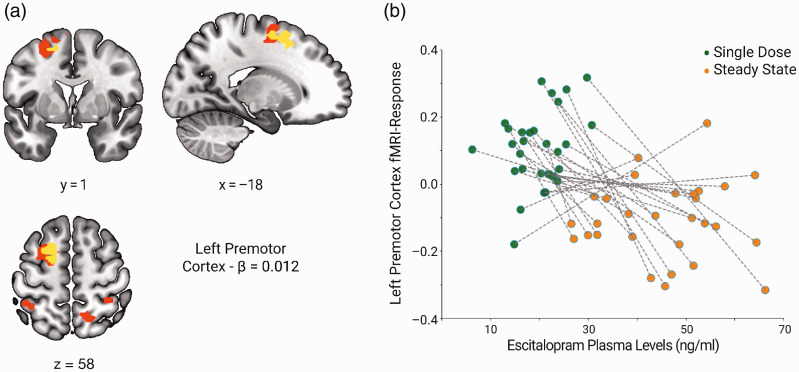
The contribution of selective serotonin reuptake inhibitors to motor learning by inducing motor cortical plasticity remains controversial given diverse findings from positive preclinical data to negative findings in recent clinical trials. To empirically address this translational disparity, we use functional magnetic resonance imaging in a double-blind, randomized controlled study to assess whether 20 mg escitalopram improves sequence-specific motor performance and modulates cortical motor response in 64 healthy female participants. We found decreased left premotor cortex responses during sequence-specific learning performance comparing single dose and steady escitalopram state. Escitalopram plasma levels negatively correlated with the premotor cortex response. We did not find evidence in support of improved motor performance after a week of escitalopram intake. These findings do not support the conclusion that one week escitalopram intake increases motor performance but could reflect early adaptive plasticity with improved neural processing underlying similar task performance when steady peripheral escitalopram levels are reached.
Keywords: Functional magnetic resonance imaging; neural plasticity; post-stroke motor dysfunction; selective serotonin reuptake inhibitors; sequential motor learning.
Conflict of interest statement
Figures
References
-
- Flöel A, Breitenstein C, Hummel F, et al. Dopaminergic influences on formation of a motor memory. Ann Neurol 2005; 58: 121–130. - PubMed
Publication types
MeSH terms
Substances
LinkOut - more resources
Full Text Sources
