


A meta-analysis of the impact of COVID-19 on liver dysfunction
- PMID: 33148326
- PMCID: PMC7609835
- DOI: 10.1186/s40001-020-00454-x
A meta-analysis of the impact of COVID-19 on liver dysfunction
Abstract
Background: The novel coronavirus disease 2019 (COVID-19), which is caused by the severe acute respiratory syndrome coronavirus 2 (SARS-CoV-2) is leading to a worldwide pandemic. Except representative manifestation of pneumonia and acute respiratory symptoms, COVID-19 patients have also shown different levels of liver injury or liver dysfunction. The aim of our study was to explore the probable clinical severity and mortality of COVID-19 patients and their liver dysfunction.
Method: A combination of computer and manual retrieval was used to search in Medline through PubMed, EMBASE and Web of Science. Review Manager 5.3 software was used to examine the heterogeneity among the studies and to calculate the combined effect value (OR, 95CI). Subgroup analysis, sensitivity analysis, and publication bias test were also performed.
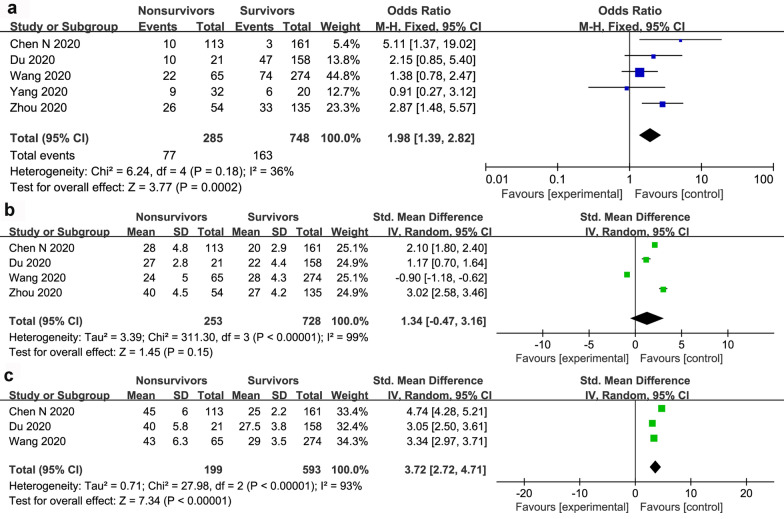
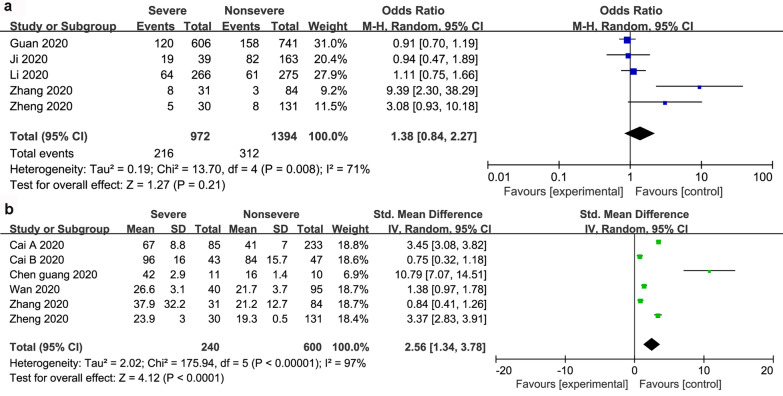
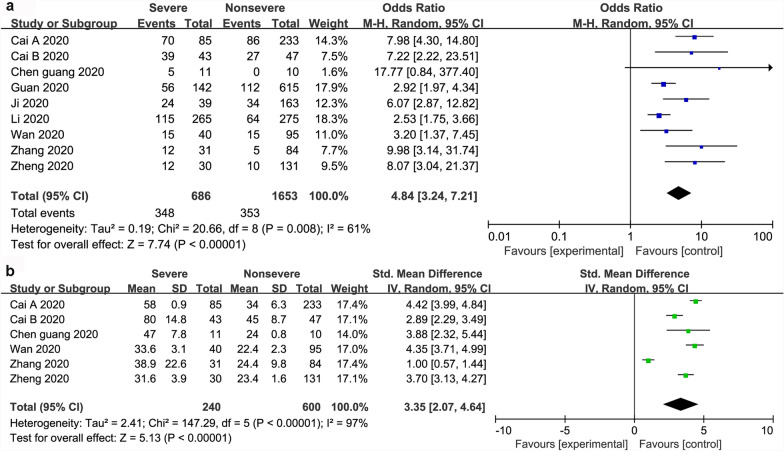
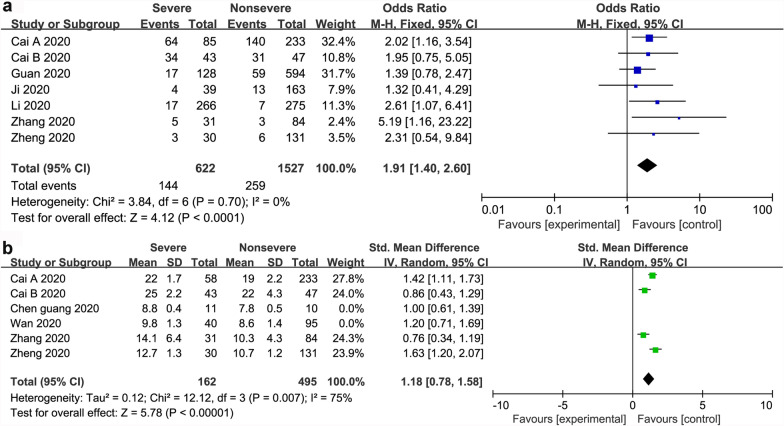
Results: We found a significant connection between liver dysfunction and mortality of COVID-19 patients with a pooled OR of 1.98 (95% CI 1.39-2.82; P = 0.0002). There was a significant association between AST and severity of COVID-19 with a pooled OR of 4.48 (95% CI 3.24-7.21; P < 0.001), and a pooled WMD of 3.35 (95% CI, 2.07 to 4.64; P < 0.001). In addition, there was a significant difference between TBIL and severity of COVID-19, with a pooled OR of 1.91 (95% CI 1.40-2.60; P < 0.001), and with a pooled WMD of 1.18 (95% CI, 0.78 to 1.58; P < 0.001).
Conclusion: The mortality and severity of COVID-19 patients are significantly associated with liver dysfunction. The non-survivors and severe COVID-19 patients have elevated serum AST levels than the survivors and non-severe COVID-19 patients. The results of this study form a basis for better clinical liver management of patients with COVID-19.
Keywords: COVID-19; Liver dysfunction; Liver injury; Meta-analysis; SARS-CoV-2.
Conflict of interest statement
The authors declare that they have no competing interests.
Figures
References
-
- Vaira LA, Hopkins C, Salzano G, Petrocelli M, Melis A, Cucurullo M, Ferrari M, Gagliardini L, Pipolo C, Deiana G, et al. Olfactory and gustatory function impairment in COVID-19 patients: Italian objective multicenter-study. Head Neck. 2020;42(7):1560–1569. doi: 10.1002/hed.26269. - DOI - PMC - PubMed
Publication types
MeSH terms
LinkOut - more resources
Full Text Sources
Medical
Miscellaneous
