


Cardiac CaMKII δ and Wenxin Keli Prevents Ang II-Induced Cardiomyocyte Hypertrophy by Modulating CnA-NFATc4 and Inflammatory Signaling Pathways in H9c2 Cells
- PMID: 33149757
- PMCID: PMC7603598
- DOI: 10.1155/2020/9502651
Cardiac CaMKII δ and Wenxin Keli Prevents Ang II-Induced Cardiomyocyte Hypertrophy by Modulating CnA-NFATc4 and Inflammatory Signaling Pathways in H9c2 Cells
Abstract
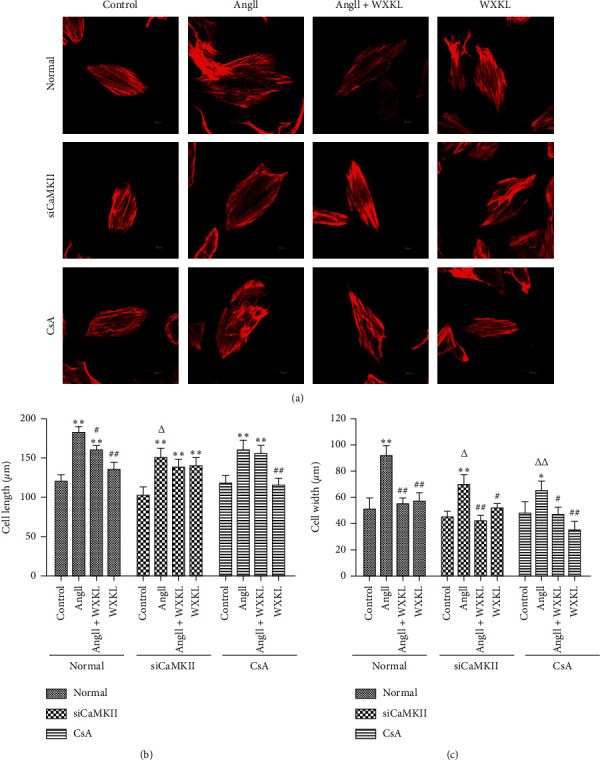
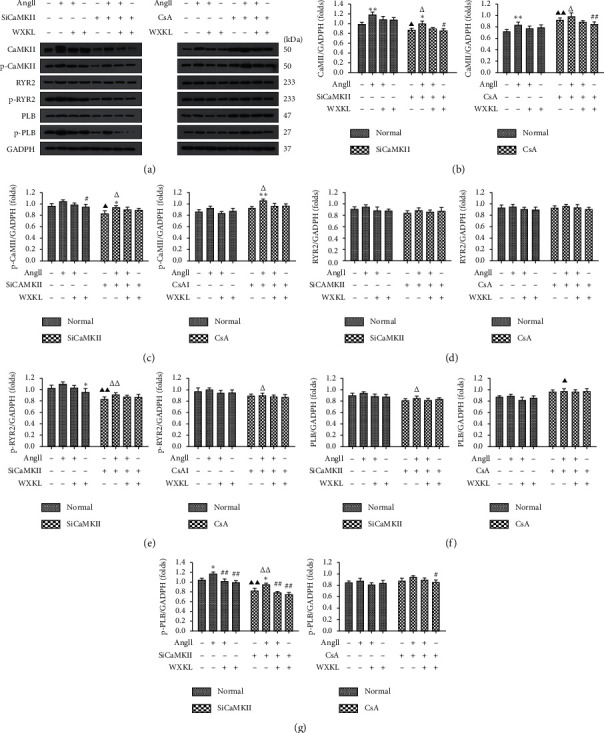
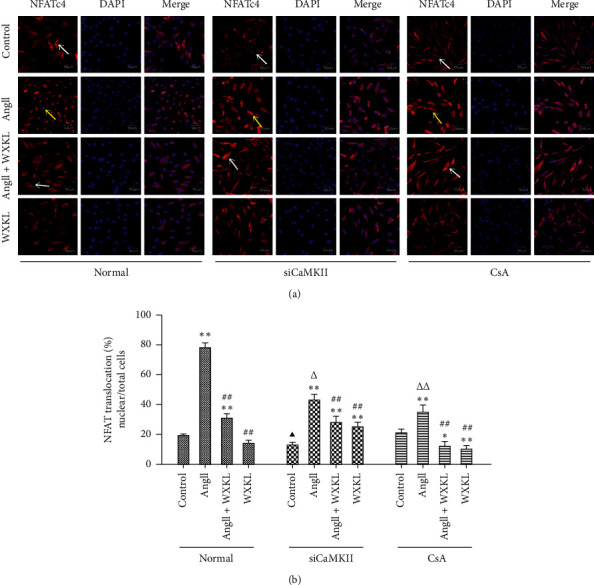
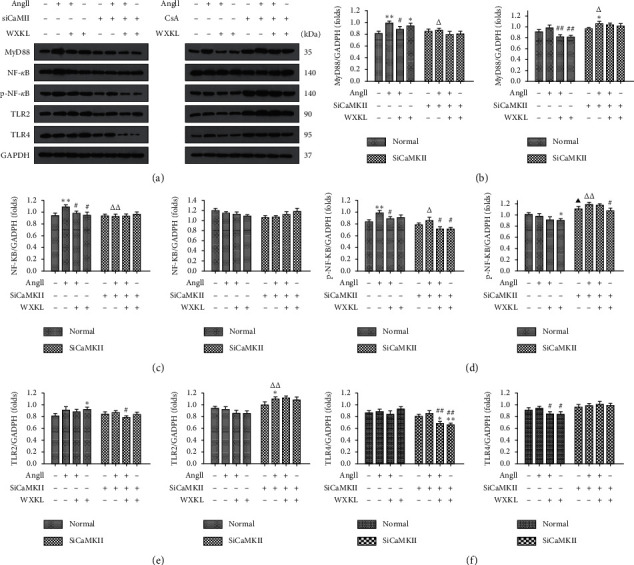
Previous studies have demonstrated that calcium-/calmodulin-dependent protein kinase II (CaMKII) and calcineurin A-nuclear factor of activated T-cell (CnA-NFAT) signaling pathways play key roles in cardiac hypertrophy (CH). However, the interaction between CaMKII and CnA-NFAT signaling remains unclear. H9c2 cells were cultured and treated with angiotensin II (Ang II) with or without silenced CaMKIIδ (siCaMKII) and cyclosporine A (CsA, a calcineurin inhibitor) and subsequently treated with Wenxin Keli (WXKL). Patch clamp recording was conducted to assess L-type Ca2+ current (ICa-L), and the expression of proteins involved in signaling pathways was measured by western blotting. Myocardial cytoskeletal protein and nuclear translocation of target proteins were assessed by immunofluorescence. The results indicated that siCaMKII suppressed Ang II-induced CH, as evidenced by reduced cell surface area and ICa-L. Notably, siCaMKII inhibited Ang II-induced activation of CnA and NFATc4 nuclear transfer. Inflammatory signaling was inhibited by siCaMKII and WXKL. Interestingly, CsA inhibited CnA-NFAT pathway expression but activated CaMKII signaling. In conclusion, siCaMKII may improve CH, possibly by blocking CnA-NFAT and MyD88 signaling, and WXKL has a similar effect. These data suggest that inhibiting CaMKII, but not CnA, may be a promising approach to attenuate CH and arrhythmia progression.
Copyright © 2020 Na An et al.
Conflict of interest statement
The authors declare that they have no conflicts of interest.
Figures





References
-
- Yancy C. W., Jessup M., Bozkurt B., et al. 2013 ACCF/AHA guideline for the management of heart failure: executive summary: a report of the American College of cardiology foundation/American heart association task force on practice guidelines. Circulation. 2013;128(16):1810–1852. doi: 10.1161/CIR.0b013e31829e8807. - DOI - PubMed
-
- Shibu M. A., Kuo C.-H., Chen B.-C., et al. Oolong tea prevents cardiomyocyte loss against hypoxia by attenuating p-JNK mediated hypertrophy and enhancing P-IGF1R, p-akt, and p-Badser136 activity and by fortifying NRF2 antioxidation system. Environmental Toxicology. 2018;33(2):220–233. doi: 10.1002/tox.22510. - DOI - PubMed
LinkOut - more resources
Full Text Sources
Miscellaneous
