


Transcription factor old astrocyte specifically induced substance is a novel regulator of kidney fibrosis
- PMID: 33150680
- PMCID: PMC7821213
- DOI: 10.1096/fj.202001820R
Transcription factor old astrocyte specifically induced substance is a novel regulator of kidney fibrosis
Abstract
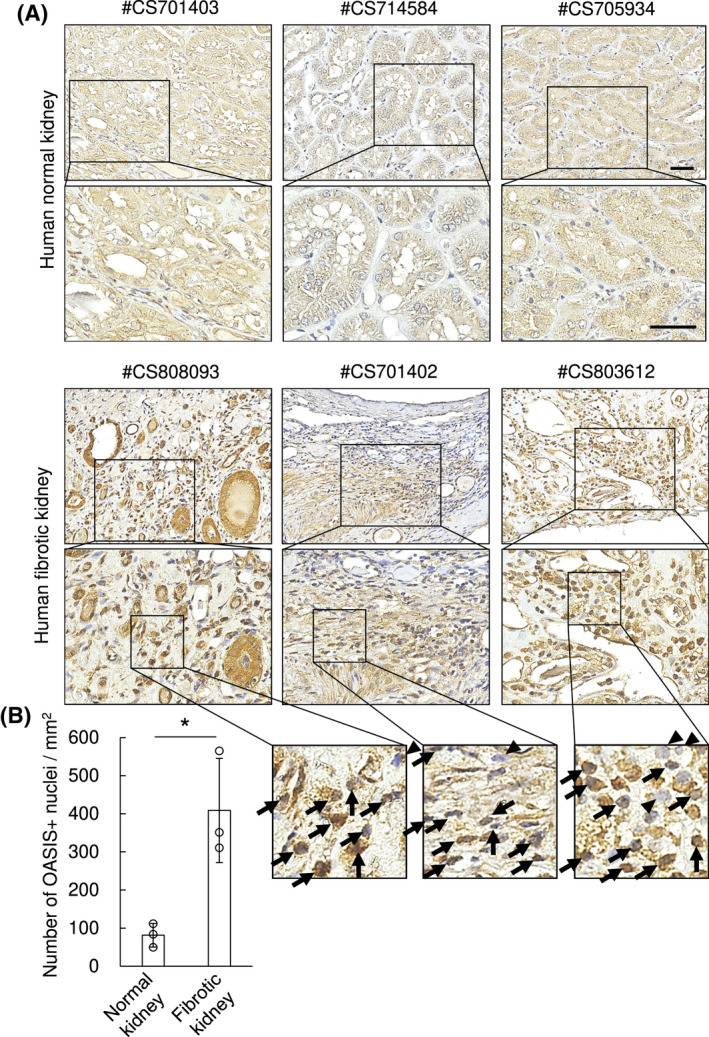
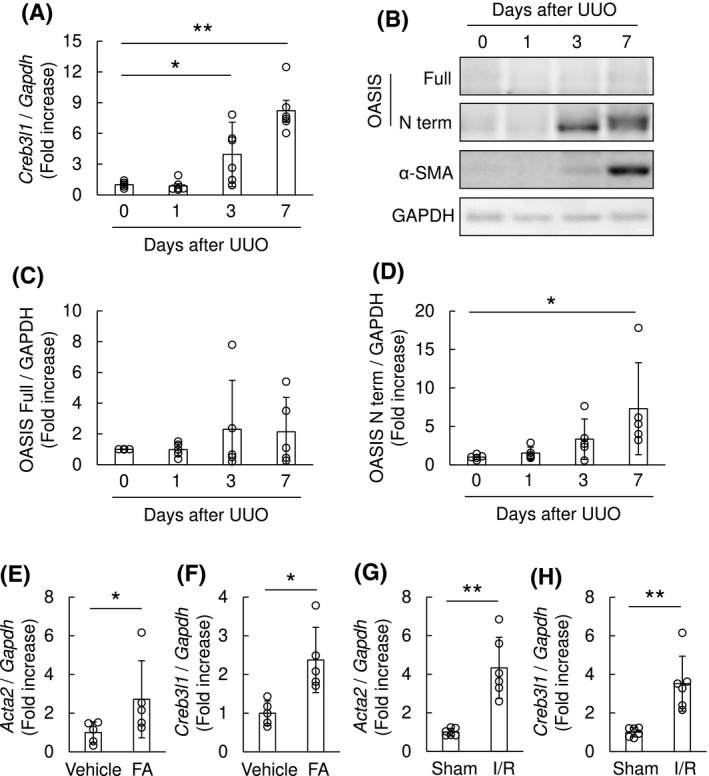
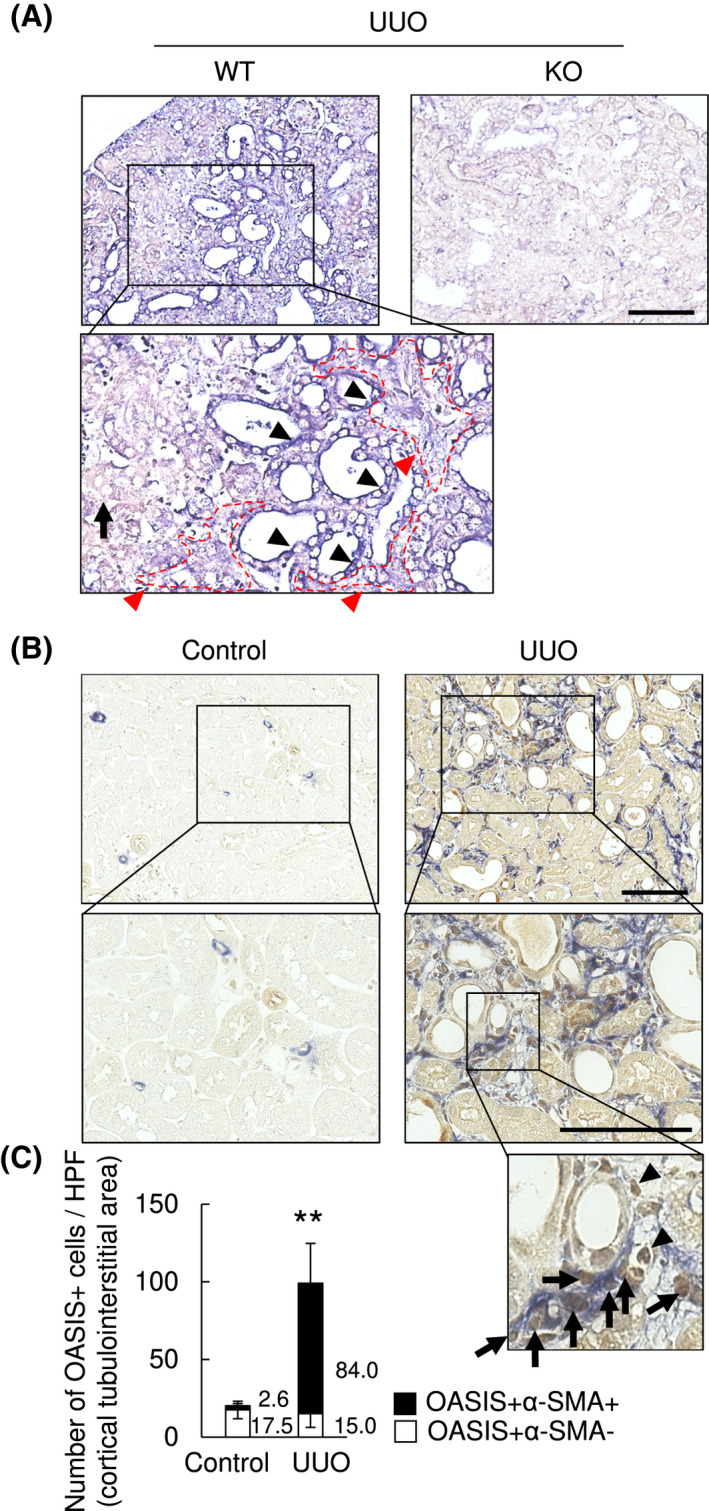
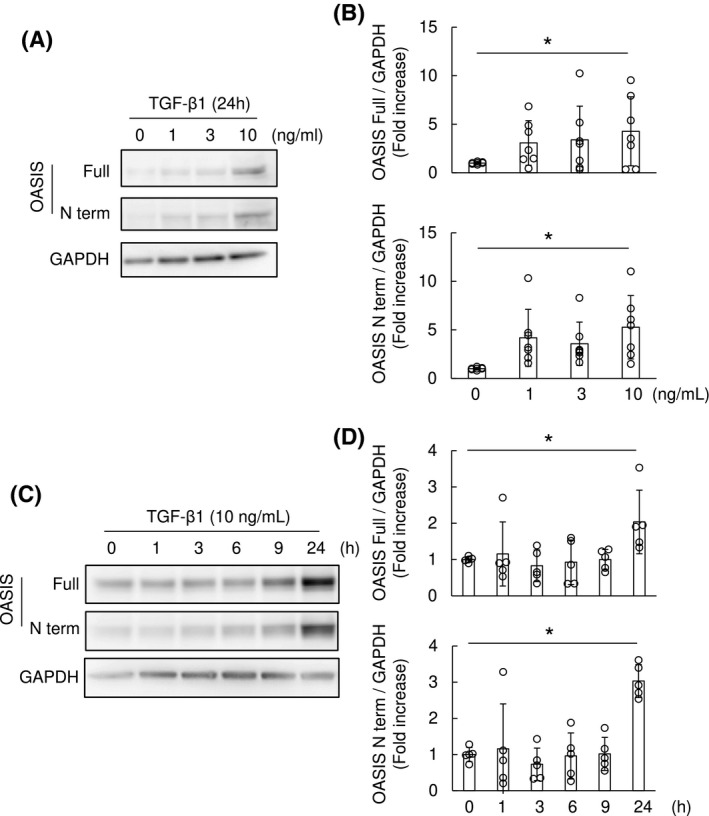
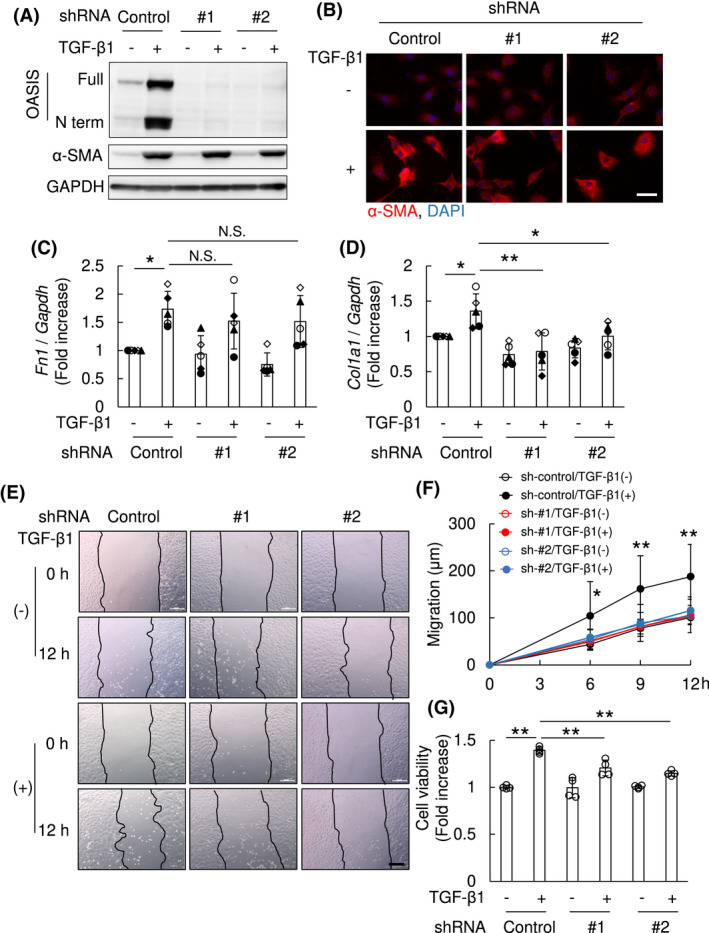
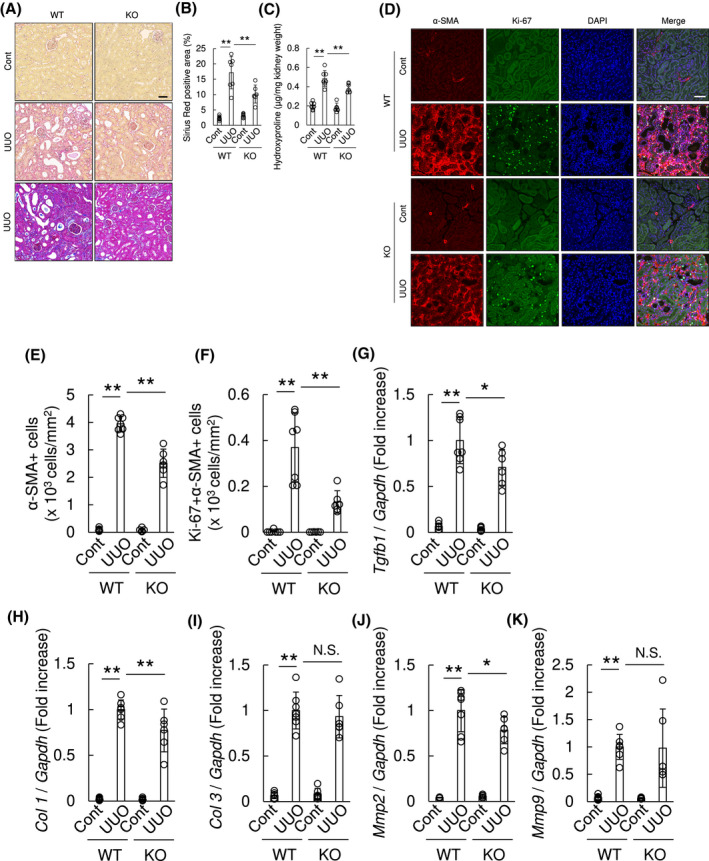
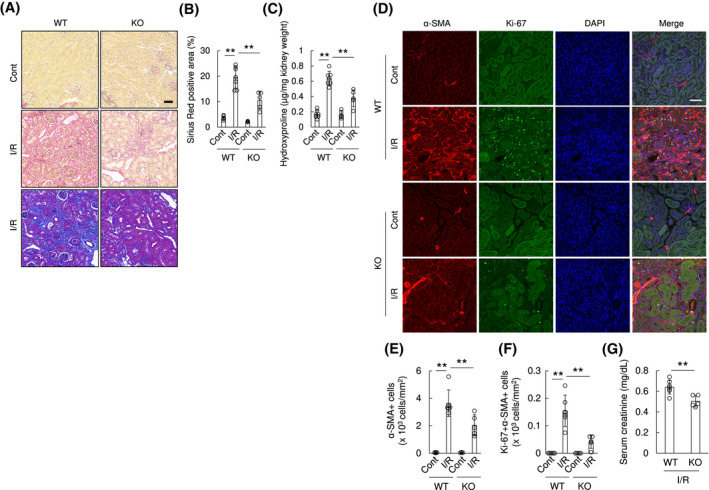
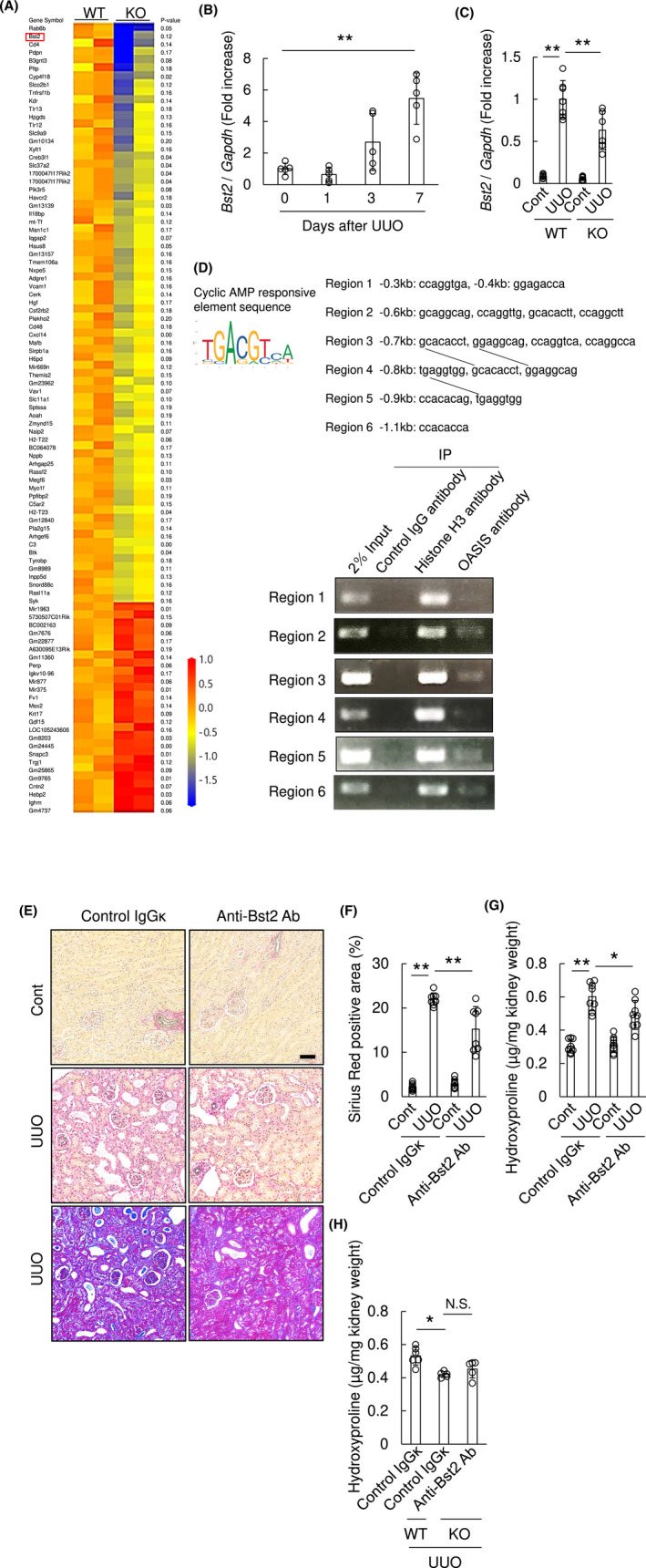
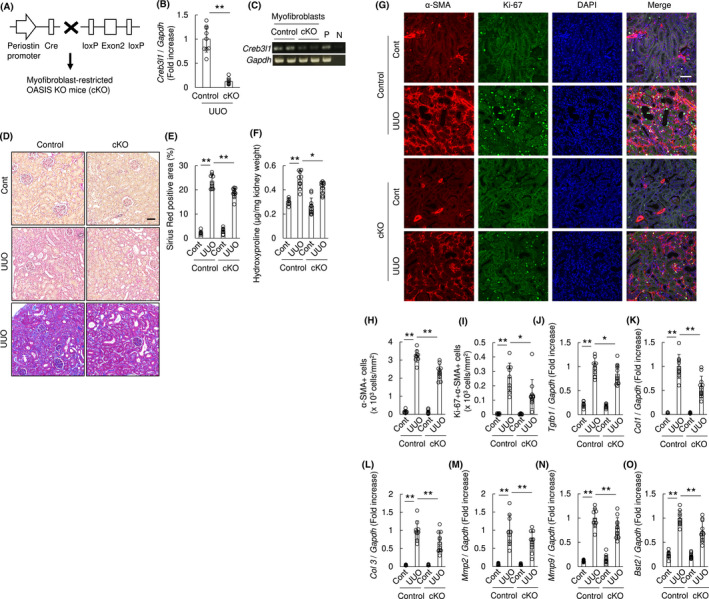
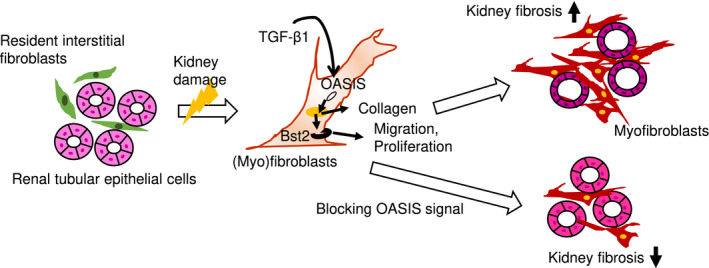
Prevention of kidney fibrosis is an essential requisite for effective therapy in preventing chronic kidney disease (CKD). Here, we identify Old astrocyte specifically induced substance (OASIS)/cAMP responsive element-binding protein 3-like 1 (CREB3l1), a CREB/ATF family transcription factor, as a candidate profibrotic gene that drives the final common pathological step along the fibrotic pathway in CKD. Although microarray data from diseased patient kidneys and fibrotic mouse model kidneys both exhibit OASIS/Creb3l1 upregulation, the pathophysiological roles of OASIS in CKD remains unknown. Immunohistochemistry revealed that OASIS protein was overexpressed in human fibrotic kidney compared with normal kidney. Moreover, OASIS was upregulated in murine fibrotic kidneys, following unilateral ureteral obstruction (UUO), resulting in an increase in the number of OASIS-expressing pathological myofibroblasts. In vitro assays revealed exogenous TGF-β1 increased OASIS expression coincident with fibroblast-to-myofibroblast transition and OASIS contributed to TGF-β1-mediated myofibroblast migration and increased proliferation. Significantly, in vivo kidney fibrosis induced via UUO or ischemia/reperfusion injury was ameliorated by systemic genetic knockout of OASIS, accompanied by reduced myofibroblast proliferation. Microarrays revealed that the transmembrane glycoprotein Bone marrow stromal antigen 2 (Bst2) expression was reduced in OASIS knockout myofibroblasts. Interestingly, a systemic anti-Bst2 blocking antibody approach attenuated kidney fibrosis in normal mice but not in OASIS knockout mice after UUO, signifying Bst2 functions downstream of OASIS. Finally, myofibroblast-restricted OASIS conditional knockouts resulted in resistance to kidney fibrosis. Taken together, OASIS in myofibroblasts promotes kidney fibrosis, at least in part, via increased Bst2 expression. Thus, we have identified and demonstrated that OASIS signaling is a novel regulator of kidney fibrosis.
Keywords: chronic kidney disease; fibrosis; myofibroblast; transcription regulation.
© 2020 The Authors. The FASEB Journal published by Wiley Periodicals LLC on behalf of Federation of American Societies for Experimental Biology.
Conflict of interest statement
The authors have declared that no conflict of interest exists.
Figures
References
-
- Go AS, Chertow GM, Fan D, McCulloch CE, Hsu CY. Chronic kidney disease and the risks of death, cardiovascular events, and hospitalization. N Engl J Med. 2004;351(13):1296‐1305. - PubMed
-
- Keith DS, Nichols GA, Gullion CM, Brown JB, Smith DH. Longitudinal follow‐up and outcomes among a population with chronic kidney disease in a large managed care organization. Arch Intern Med. 2004;164(6):659‐663. - PubMed
-
- Moll S, Meier M, Formentini I, Pomposiello S, Prunotto M. New renal drug development to face chronic renal disease. Expert Opin Drug Discov. 2014;9(12):1471‐1485. - PubMed
-
- Strutz F, Zeisberg M. Renal fibroblasts and myofibroblasts in chronic kidney disease. J Am Soc Nephrol. 2006;17(11):2992‐2998. - PubMed
Publication types
MeSH terms
Substances
Grants and funding
LinkOut - more resources
Full Text Sources
Medical
Molecular Biology Databases
Research Materials
