


E-Cigarette Promotion on Twitter in Australia: Content Analysis of Tweets
- PMID: 33151159
- PMCID: PMC7677022
- DOI: 10.2196/15577
E-Cigarette Promotion on Twitter in Australia: Content Analysis of Tweets
Abstract
Background: The sale of electronic cigarettes (e-cigarettes) containing nicotine is prohibited in all Australian states and territories; yet, the growing availability and convenience of the internet enable the promotion and exposure of e-cigarettes across countries. Social media's increasing pervasiveness has provided a powerful avenue to market products and influence social norms and risk behaviors. At present, there is no evidence of how e-cigarettes and vaping are promoted on social media in Australia.
Objective: This study aimed to investigate how e-cigarettes are portrayed and promoted on Twitter through a content analysis of vaping-related tweets containing an image posted and retweeted by Australian users and how the portrayal and promotion have emerged and trended over time.
Methods: In total, we analyzed 1303 tweets and accompanying images from 2012, 2014, 2016, and 2018 collected through the Tracking Infrastructure for Social Media Analysis (TrISMA), a contemporary technical and organizational infrastructure for the tracking of public communication by Australian users of social media, via a list of 15 popular e-cigarette-related terms.
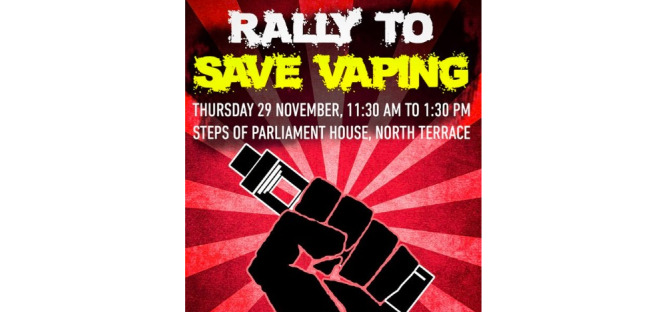
Results: Despite Australia's cautious approach toward e-cigarettes and the limited evidence supporting them as an efficacious smoking cessation aid, it is evident that there is a concerted effort by some Twitter users to promote these devices as a health-conducive (91/129, 70.5%), smoking cessation product (266/1303, 20.41%). Further, Twitter is being used in an attempt to circumvent Australian regulation and advocate for a more liberal approach to personal vaporizers (90/1303, 6.90%). A sizeable proportion of posts was dedicated to selling or promoting vape products (347/1303, 26.63%), and 19.95% (260/1303) were found to be business listings. These posts used methods to try and expand their clientele further than immediate followers by touting competitions and giveaways, with those wanting to enter having to perform a sequence of steps such as liking, tagging, and reposting, ultimately exposing the post among the user's network and to others not necessarily interested in vaping.
Conclusions: The borderless nature of social media presents a clear challenge for enforcing Article 13 of the World Health Organization Framework Convention on Tobacco Control, which requires all ratifying nations to implement a ban on tobacco advertising, promotion, and sponsorship. Countering the advertising and promotion of these products is a public health challenge that will require cross-border cooperation with other World Health Organization Framework Convention on Tobacco Control parties. Further research aimed at developing strategies to counter the advertising and promotion of e-cigarettes is therefore needed.
Keywords: content analysis; e-cigarette; electronic cigarette; electronic nicotine delivery systems; public health; public policy; social media; twitter; vape; vaping.
©Kahlia McCausland, Bruce Maycock, Tama Leaver, Katharina Wolf, Becky Freeman, Katie Thomson, Jonine Jancey. Originally published in JMIR Public Health and Surveillance (http://publichealth.jmir.org), 05.11.2020.
Conflict of interest statement
Conflicts of Interest: BF is a member of the NHMRC Electronic Cigarettes Working Committee (May 2020). She has received consulting payment for e-cigarette policy review for the New South Wales National Heart Foundation (December 2019). She had travel expenses (flight and registration) reimbursed to attend Oceania Tobacco Control Conference 2017 to present on e-cigarette and cessation. She provided her opinion (unpaid) at the Australian Parliament’s Standing Committee on Health, Aged Care and Sport public hearing into the Use and Marketing of Electronic Cigarettes and Personal Vaporisers (September 8, 2017). She led a contract on e-cigarette regulation in Australia for the Commonwealth Department of Health (2016). She had travel expenses reimbursed by National Taiwan University for presenting on e-cigarette regulation (2016). The other authors have no conflicts to declare.
Figures






References
-
- Legal status of electronic cigarettes in Australia. Quit Victoria. 2016. [2019-05-27]. https://www.quit.org.au/documents/77/legal-status-electronic-cigarettes-....
-
- Therapeutic Goods Administration Electronic cigarettes. Australian Government Department of Health. 2019. [2019-06-24]. https://www.tga.gov.au/community-qa/electronic-cigarettes.
-
- NicoPharm. 2019. [2019-11-06]. http://nicopharm.com.au/
-
- Greenhalgh EM, Grace C, Scollo MM. Tobacco in Australia: Facts and issues. Melbourne, Victoria, Australia: Cancer Council Victoria; 2019. [2019-11-06]. 18B.8: Legal status in Australia. https://www.tobaccoinaustralia.org.au/chapter-18-harm-reduction/indepth-....
-
- Australian Border Force Tobacco. Prohibited goods. 2020. [2020-10-16]. https://www.abf.gov.au/importing-exporting-and-manufacturing/prohibited-....
Publication types
MeSH terms
LinkOut - more resources
Full Text Sources
Medical
