


High expression of Tie-2 predicts poor prognosis in primary high grade serous ovarian cancer
- PMID: 33151982
- PMCID: PMC7644024
- DOI: 10.1371/journal.pone.0241484
High expression of Tie-2 predicts poor prognosis in primary high grade serous ovarian cancer
Abstract
Background: Antiangiogenic therapy, although part of standard treatment in ovarian cancer, has variable efficacy. Furthermore, little is known about the prognostic biomarkers and factors influencing angiogenesis in cancer tissue. We evaluated the expression of angiopoietin-2 and two endothelial tyrosine kinase receptors, Tie-1 and Tie-2, and assessed their value in the prediction of survival in patients with malignant epithelial ovarian cancer. We also compared the expression of these factors between primary high grade serous tumors and their distant metastasis.
Materials and methods: We evaluated 86 women with primary epithelial ovarian cancer. Matched distal omental metastasis were investigated in 18.6% cases (N = 16). The expression levels of angiogenic factors were evaluated by immunohistochemistry in 306 specimens and by qRT-PCR in 111 samples.
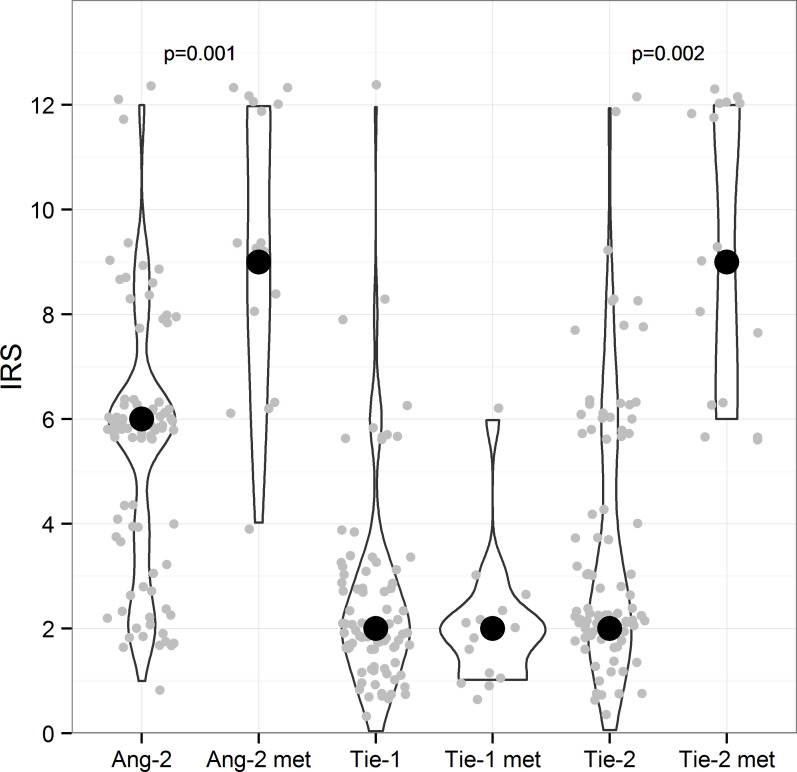
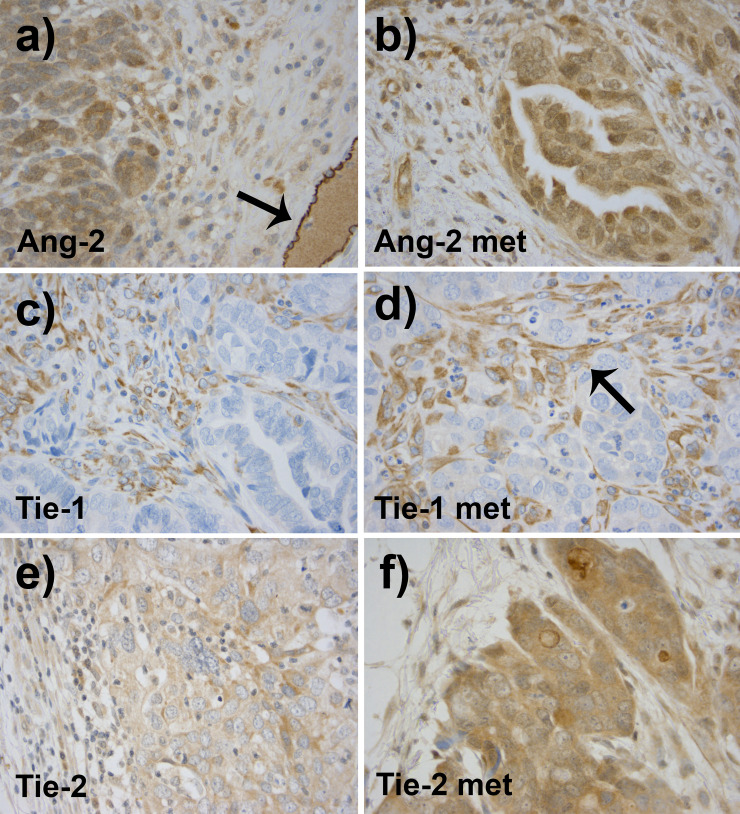
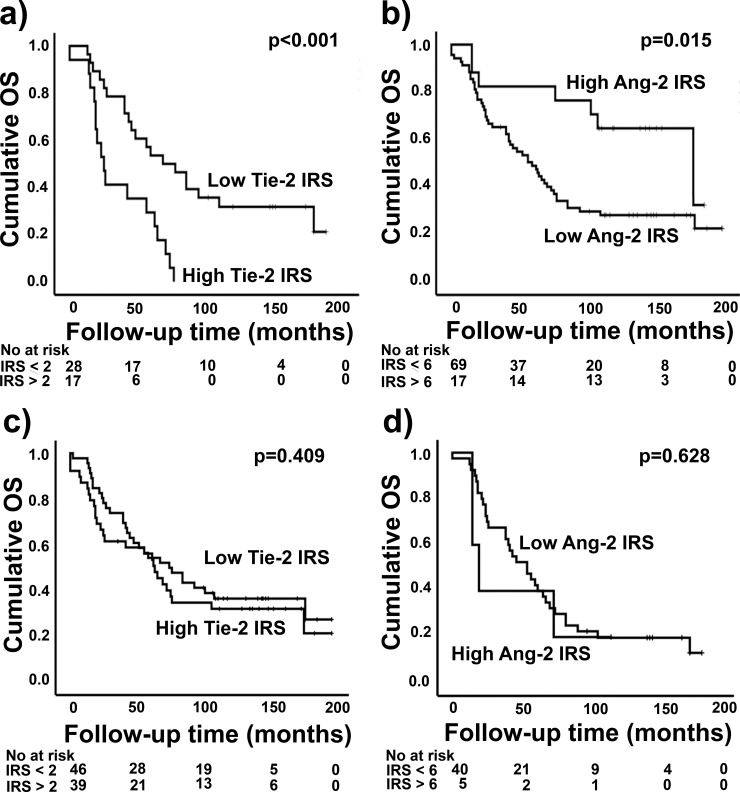
Results: A high epithelial expression level of Tie-2 is a significant prognostic factor in primary high grade serous ovarian cancer. It predicted significantly shorter overall survival both in univariate (p<0.001) and multivariate survival analyses (p = 0.022). Low angiopoietin-2 expression levels in primary ovarian tumors were significantly associated with shorter overall survival (p = 0.015) in the univariate survival analysis. A low expression of angiopoietin-2 was also significantly related to high grade tumors, size of residual tumor after primary surgery and the recurrence of cancer (p = 0.008; p = 0.012; p = 0.018) in the whole study population. The expression of angiopoietin-2 and Tie-2 was stronger in distal omental metastasis than in primary high grade serous tumors in matched-pair analysis (p = 0.001; p = 0.002).
Conclusions: The angiogenic factor, angiopoietin-2, and its receptor Tie-2 seem to be significant prognostic factors in primary epithelial ovarian cancer. Their expression levels are also increased in metastatic lesions in comparison with primary tumors.
Conflict of interest statement
The authors have declared that no competing interests exist.
Figures
References
-
- Coxon A, Bready J, Min H, Kaufman S, Leal J, Yu D, et al. Context-Dependent Role of Angiopoietin-1 Inhibition in the Suppression of Angiogenesis and Tumor Growth: Implications for AMG 386, an Angiopoietin-1/2-Neutralizing Peptibody. Molecular cancer therapeutics. 2010;9: 2641–2651. 10.1158/1535-7163.MCT-10-0213 - DOI - PMC - PubMed
Publication types
MeSH terms
Substances
LinkOut - more resources
Full Text Sources
Medical
Miscellaneous
