


Effect of complementary feeding behavior change communication delivered through community-level actors on the time of initiation of complementary foods in rural communities of West Gojjam zone, Northwest Ethiopia: a cluster-randomized controlled trial
- PMID: 33153434
- PMCID: PMC7643318
- DOI: 10.1186/s12887-020-02396-z
Effect of complementary feeding behavior change communication delivered through community-level actors on the time of initiation of complementary foods in rural communities of West Gojjam zone, Northwest Ethiopia: a cluster-randomized controlled trial
Abstract
Background: Attaining the recommended level of complementary feeding practices remains a serious challenge in many developing countries. Complementary foods are usually untimely initiated, which has adverse consequences on the growth, development, and survival of infants. The focus of most studies conducted worldwide seemed to be on the effect of behavior change interventions on the adequacy of complementary diets; but not on the timing of initiations. Moreover, many of the interventions targeted only mothers/caregivers of infants, and studies that engaged the family members are scarce. This study aimed to evaluate the effectiveness of complementary feeding behavior change communication delivered through women development army leaderson the time of initiation of complementary foods.
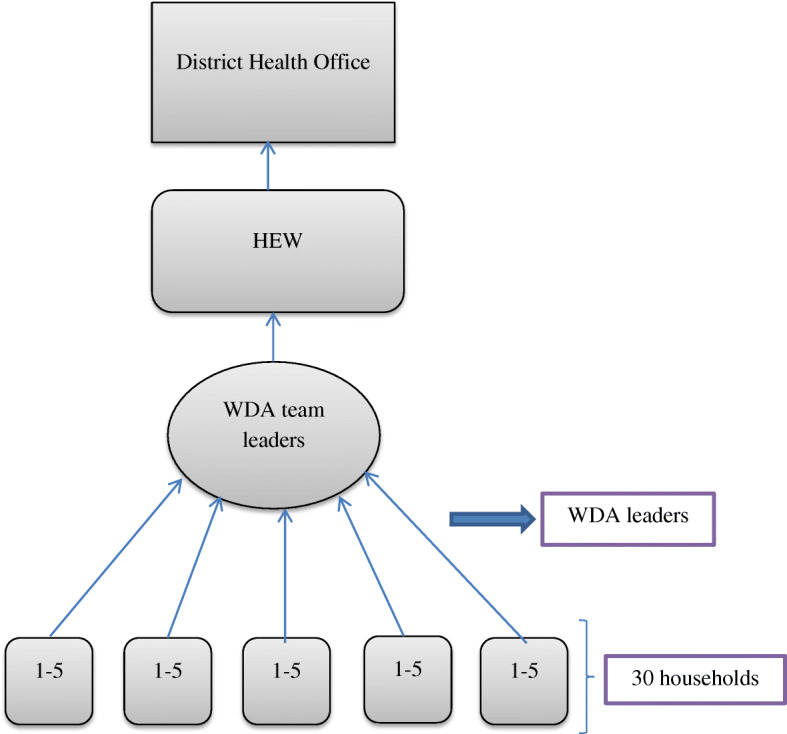
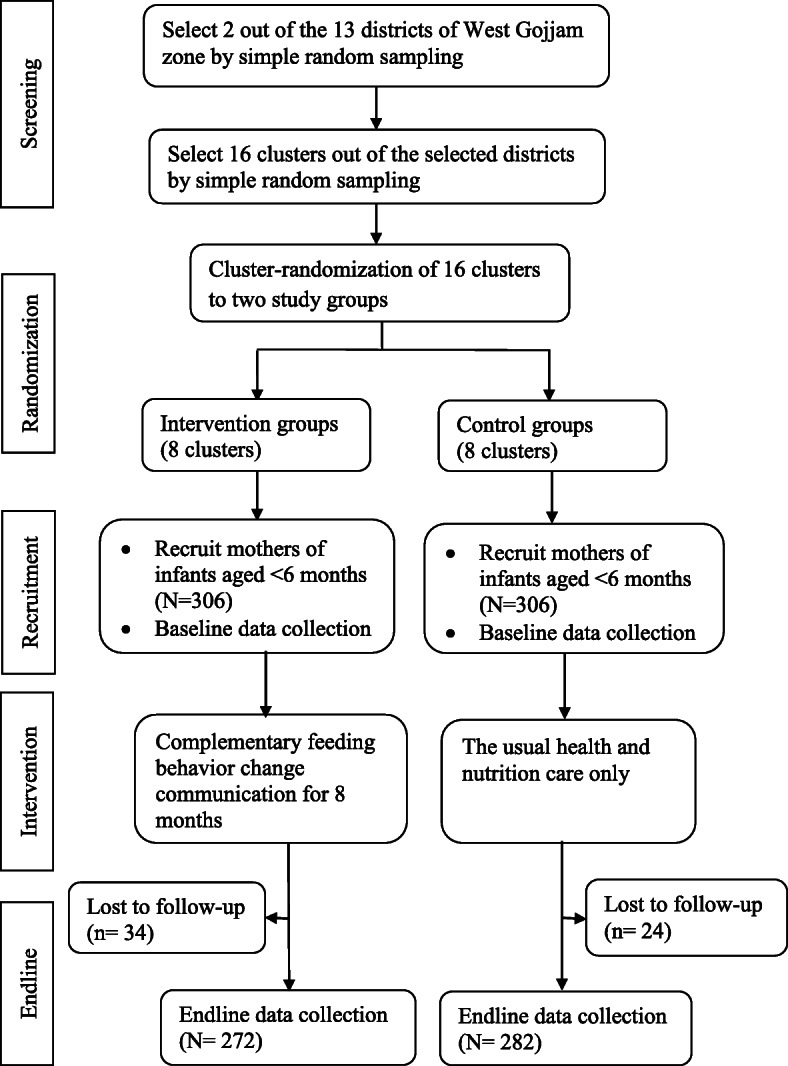
Methods: We conducted a cluster-randomized controlled trial in rural communities of West Gojjam Zone, Northwest Ethiopia from February 2017 to March 2018. A total of 16 geographic clusters were selected. Trial participants in the intervention group received complementary feeding behavior change intervention for 9 months whereas those in the control group received only the usual health care. Trained women development army leaders delivered the intervention. A pre-tested, structured interviewer-administered questionnaire was used for data collection. Generalized estimated equation (GEE) regression and survival analyses were used to test differences in time of initiation of complementary food between the study groups.
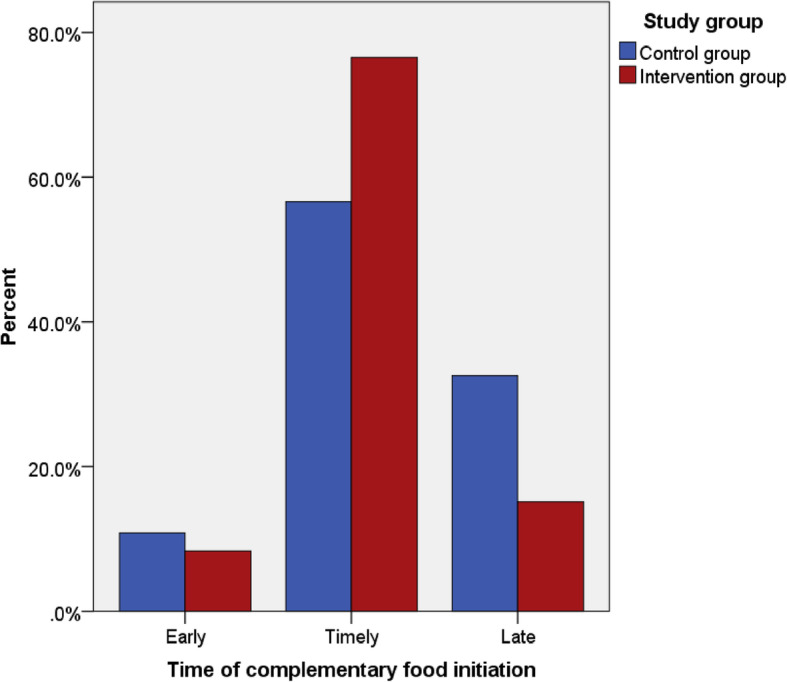
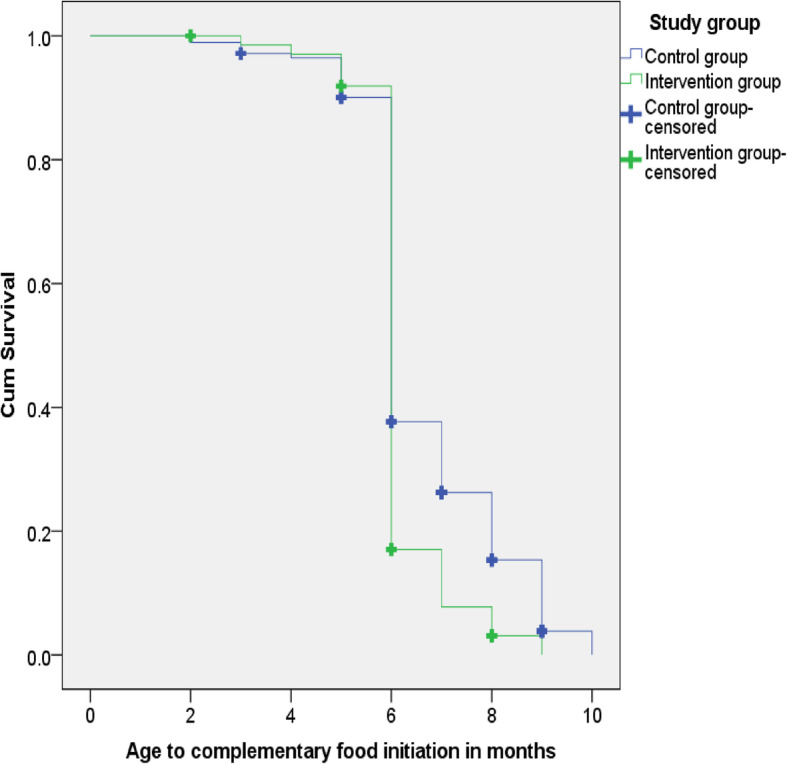
Results: The intervention significantly improved the likelihood of timely initiation of complementary food by 22 percentage points [RR: 2.6; 95% CI: 1.78-5.86], and reduced the risk of late initiations by 19 percentage points [RR: 2.8; 95% CI: 1.83-4.37]. The complementary food initiation survival curve for the control group after 6 months was constantly above the curve than for the intervention group. The median age at the introduction of complementary food for infants was 6 months in the intervention group, and 6.7 months in the control group and the difference was statistically significant (P-value < 0.001).
Conclusions: Complementary feeding behavior change communication improved the rate of timely initiation of complementary foods and reduced the risk of late initiations.
Trial registration: ClinicalTrials.gov , NCT03488680 . Registered 5 April 2018-Retrospectively registered, https://clinicaltrials.gov/ct2/show/NCT03488680 .
Keywords: Behavior change communication; Complementary feeding; Time of initiation of complementary food.
Conflict of interest statement
The authors declare that there are no competing interests.
Figures
References
-
- Yamauchi F. Early childhood nutrition. Econ Dev Cult Chang. 2008;56(3):657–682.
-
- WHO. Global strategy for infant and young child feeding. Fifthy-fourth world Heal Assem. 2001;(1):5. https://apps.who.int/iris/bitstream/10665/42590/1/9241562218.pdf. Accessed on 20 Nov 2019.
-
- WHO Guideline. Improving childhood development-Summary. 2020. www.who.int/maternal_child_adolescent/child/summary_guideline_improving_.... Accessed 02 Jan 2020.
-
- Lartey A. Maternal and child nutrition in Sub-Saharan Africa : Challenges and interventions Maternal and child nutrition in Sub-Saharan Africa: challenges and interventions. Nutr Soc. 2015;2:8–15. - PubMed
Publication types
MeSH terms
Associated data
LinkOut - more resources
Full Text Sources
Medical
Miscellaneous
