


Pain sensitivity in young adults with juvenile idiopathic arthritis: a quantitative sensory testing study
- PMID: 33153493
- PMCID: PMC7643261
- DOI: 10.1186/s13075-020-02345-2
Pain sensitivity in young adults with juvenile idiopathic arthritis: a quantitative sensory testing study
Abstract
Background: To study for the first-time, pain perception, pain sensitivity, and self-reported pain in young adults with long disease duration of juvenile idiopathic arthritis (JIA) compared with controls.
Methods: Children from Central Norway diagnosed with JIA between 1997 and 2004 were included consecutively in a population-based prospective study. Children with onset 1997-2000 were part of the Nordic JIA cohort. Controls were age- and sex-matched. In 2015-2017, study visits with investigator-blinded quantitative sensory testing (QST) comprising cold and warm detection thresholds (CDT/WDT), cold and heat pain thresholds (CPT/HPT), pressure pain threshold (PPT), and a suprathreshold heat pain test were performed. We constructed separate multilevel models for each variable of detection and pain thresholds with interaction between groups and site adjusted for the effect of age and sex.
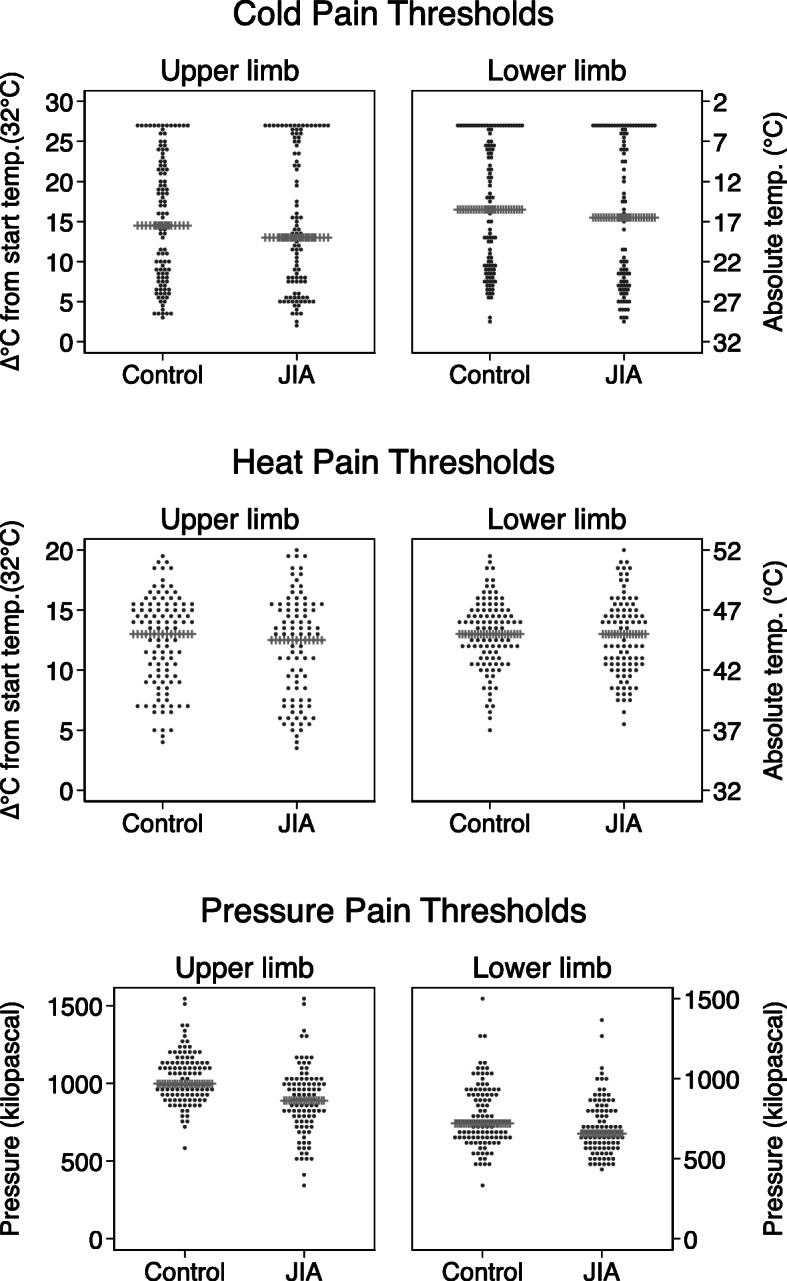
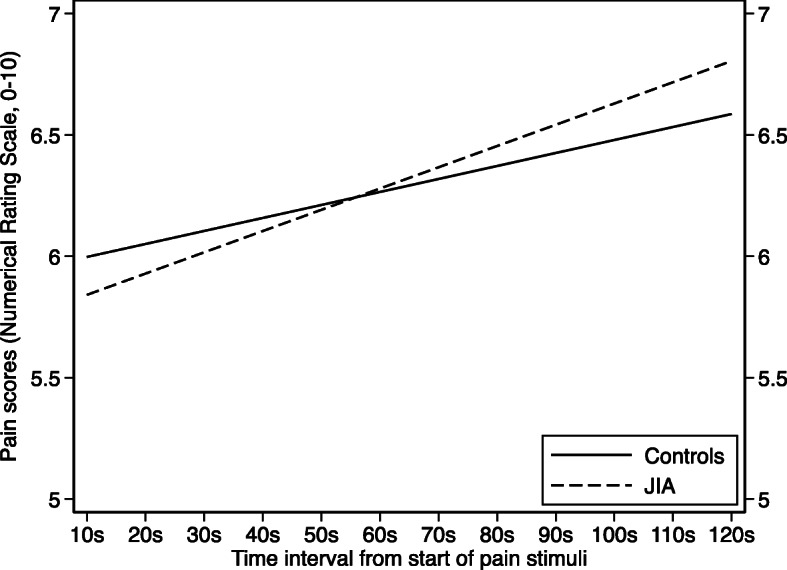
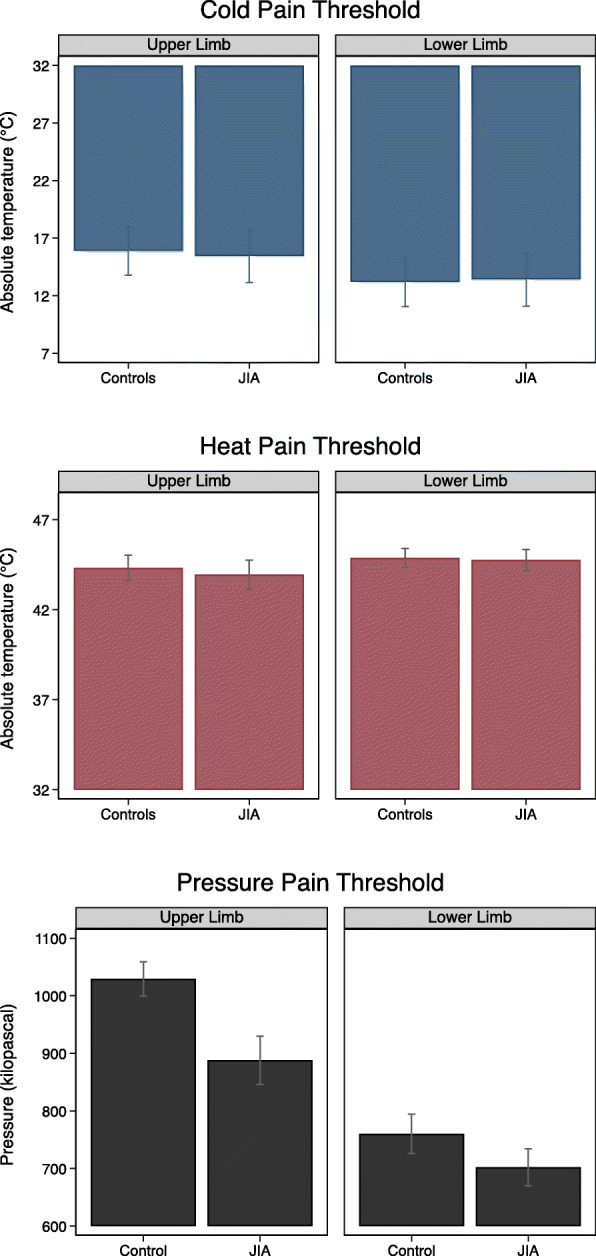
Results: Among 96 young adults with JIA, 71% were female, median age was 22.7 years, disease duration was 16.1 years, and 47% had oligoarticular disease. Among 109 controls, 71% were female, and median age was 23.5 years. Participants with JIA had lower pressure pain thresholds (PPTs) (95% CI) compared to controls, upper limb 888 (846,930) versus 1029 (999,1059) kPa and lower limb 702 (670,734) versus 760 (726,794) kPa. Participants with inactive disease had the lowest PPTs and cold pain thresholds (CPTs), compared to those in remission off medication and those with active disease. Minor differences were found regarding CDT/WDT and CPT/HPT in JIA compared to controls. The median (IQR) temperature needed to evoke pain = 6 on a 0-10 numeric rating scale (NRS) in the suprathreshold heat pain tests were lower in JIA than in controls (46 °C (45-47 °C) versus 47 °C (46-48 °C)). We found no associations between self-reported pain and pain thresholds.
Conclusions: Our results indicate for the first time that young adults with long disease duration of JIA may have altered pain perception and sensitivity compared to controls. A clinical implication may be the importance of early treatment to quickly achieve pain-free remission and avoid long-term pain sensitization.
Keywords: Juvenile idiopathic arthritis (JIA); Long-term outcomes; Pain perception; Pain sensitivity; Pain sensitization; Pain threshold; Quantitative sensory testing (QST); Self-reported pain; Young adults.
Conflict of interest statement
The authors declare that they have no competing interests.
Figures
References
-
- Berntson L, Andersson Gare B, Fasth A, Herlin T, Kristinsson J, Lahdenne P, et al. Incidence of juvenile idiopathic arthritis in the Nordic countries. A population based study with special reference to the validity of the ILAR and EULAR criteria. J Rheumatol. 2003;30(10):2275–2282. - PubMed
-
- Petty RE, Southwood TR, Manners P, Baum J, Glass DN, Goldenberg J, et al. International League of Associations for Rheumatology classification of juvenile idiopathic arthritis: second revision, Edmonton, 2001. J Rheumatol. 2004;31(2):390–392. - PubMed
-
- Gutierrez-Suarez R, Pistorio A, Cespedes Cruz A, Norambuena X, Flato B, Rumba I, et al. Health-related quality of life of patients with juvenile idiopathic arthritis coming from 3 different geographic areas. The PRINTO multinational quality of life cohort study. Rheumatology (Oxford) 2007;46(2):314–320. doi: 10.1093/rheumatology/kel218. - DOI - PubMed
Publication types
MeSH terms
LinkOut - more resources
Full Text Sources
Medical
