


The Impact of the COVID-19 Pandemic on Vascular Surgery Trainees in the United States
- PMID: 33157252
- PMCID: PMC7608023
- DOI: 10.1016/j.avsg.2020.09.045
The Impact of the COVID-19 Pandemic on Vascular Surgery Trainees in the United States
Abstract
Background: The impact of the coronavirus disease 19 (COVID-19) pandemic on health care workers has been substantial. However, the impact on vascular surgery (VS) trainees has not yet been determined. The goals of our study were to gauge the impact of COVID-19 on VS trainees' personal and professional life and to assess stressors, coping, and support structures involved in these trainees' response to the COVID-19 pandemic.
Methods: This was an anonymous online survey administered in April 12-24, 2020 during the surge phase of the global COVID-19 pandemic. It is a subset analysis of the cross-sectional Society for Vascular Surgery Wellness Committee Pandemic Practice, Anxiety, Coping, and Support Survey. The cohort surveyed was VS trainees, integrated residents and fellows, in the United States of America. Assessment of the personal impact of the pandemic on VS trainees and the coping strategies used by them was based on the validated Generalized Anxiety Disorder 7-item (GAD-7) scale and the validated 28-time Brief Coping Orientation to Problems Experienced inventory.
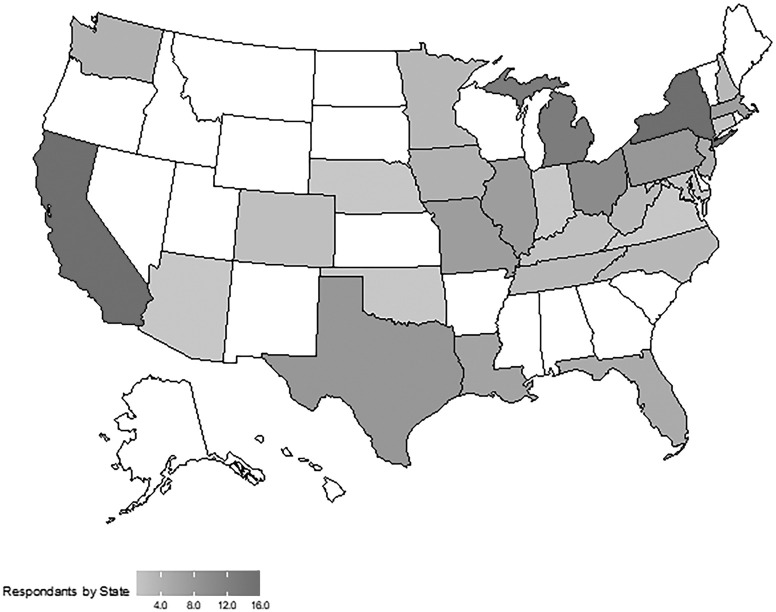
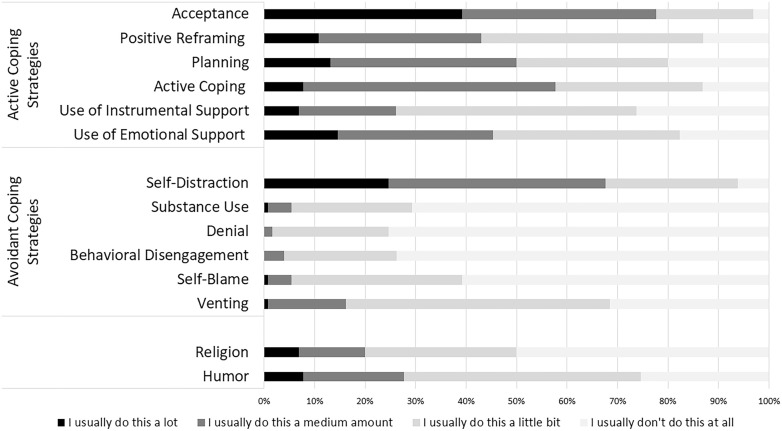
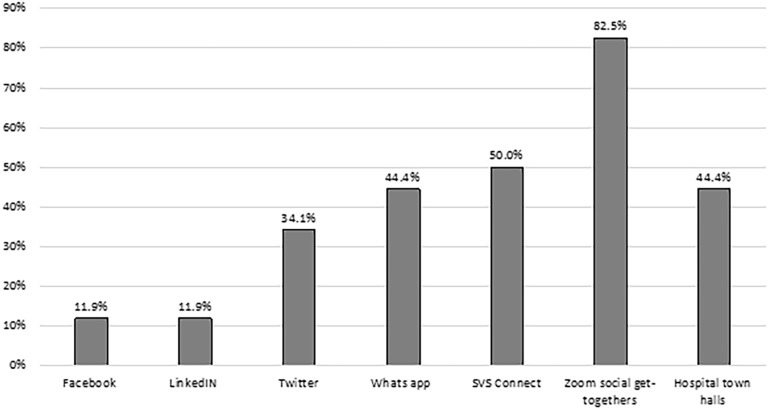
Results: A total of 145 VS trainees responded to the survey, with a 23% response rate (145/638). Significant changes were made to the clinical responsibilities of VS trainees, with 111 (91%) reporting cancellation of elective procedures, 101 (82%) with call schedule changes, 34 (24%) with duties other than related to VS, and 29 (24%) participation in outpatient care delivery. Over one-third (52/144) reported they had performed a procedure on a patient with confirmed COVID-19; 37 (25.7%) reported they were unaware of the COVID-19 status at the time. The majority continued to work after exposure (29/34, 78%). Major stressors included concerns about professional development, infection risk to family/friends, and impact of care delay on patients. The median score for GAD-7 was 4 (interquartile range 1-8), which corresponds to no or low self-reported anxiety levels. VS trainees employed mostly active coping and rarely avoidant coping mechanisms, and the majority were aware and used social media and online support systems. No significant difference was observed between integrated residents and fellows, or by gender.
Conclusions: The pandemic has had significant impact on VS trainees. Trainees reported significant changes to clinical responsibilities, exposure to COVID-19, and pandemic-related stressors but demonstrated healthy coping mechanisms with low self-reported anxiety levels. The VS community should maintain awareness of the impact of the pandemic on the professional and personal development of surgeons in training. We recommend adaptive evolution in training to accommodate the changing learning environment for trainees.
Copyright © 2020 Elsevier Inc. All rights reserved.
Figures

References
-
- Janko M.R., Smeds M.R. Burnout, depression, perceived stress, and self-efficacy in vascular surgery trainees. J Vasc Surg. 2019;69:1233–1242. - PubMed
MeSH terms
LinkOut - more resources
Full Text Sources
Medical
Miscellaneous
