


Interplay Between NLRP3 Inflammasome and Autophagy
- PMID: 33163006
- PMCID: PMC7583715
- DOI: 10.3389/fimmu.2020.591803
Interplay Between NLRP3 Inflammasome and Autophagy
Abstract
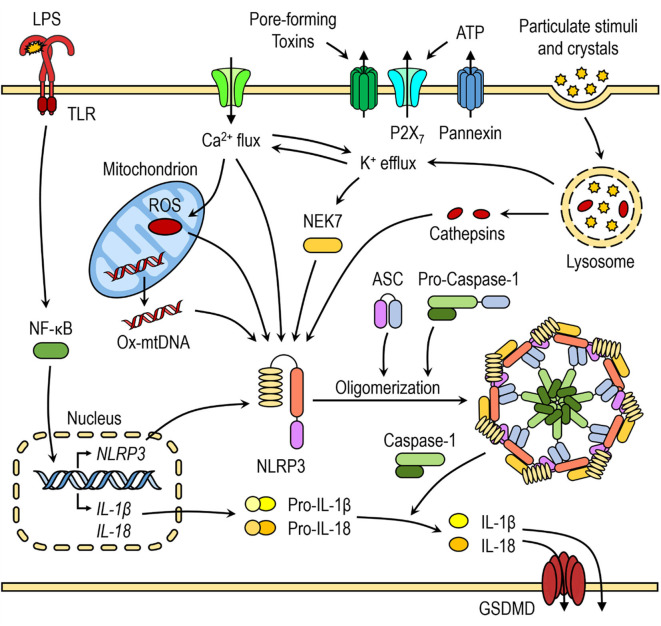
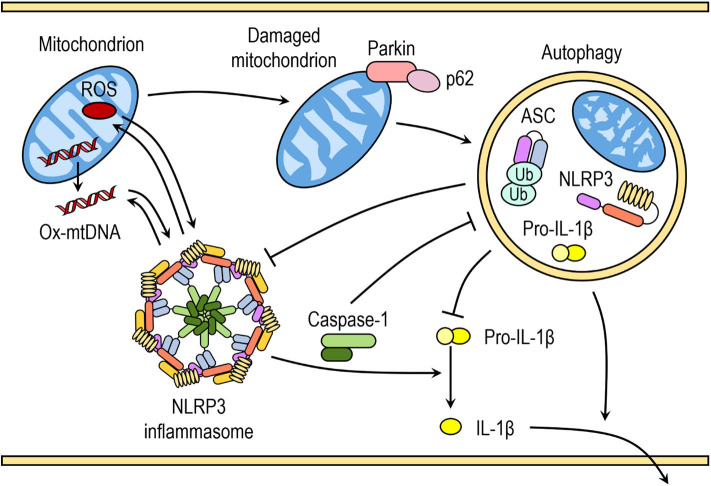
The NLRP3 inflammasome is cytosolic multi-protein complex that induces inflammation and pyroptotic cell death in response to both pathogen (PAMPs) and endogenous activators (DAMPs). Recognition of PAMPs or DAMPs leads to formation of the inflammasome complex, which results in activation of caspase-1, followed by cleavage and release of pro-inflammatory cytokines. Excessive activation of NLRP3 inflammasome can contribute to development of inflammatory diseases and cancer. Autophagy is vital intracellular process for recycling and removal of damaged proteins and organelles, as well as destruction of intracellular pathogens. Cytosolic components are sequestered in a double-membrane vesicle-autophagosome, which then fuses with lysosome resulting in degradation of the cargo. The autophagy dysfunction can lead to diseases with hyperinflammation and excessive activation of NLRP3 inflammasome and thus acts as a major regulator of inflammasomes. Autophagic removal of NLRP3 inflammasome activators, such as intracellular DAMPs, NLRP3 inflammasome components, and cytokines can reduce inflammasome activation and inflammatory response. Likewise, inflammasome signaling pathways can regulate autophagic process necessary for balance between required host defense inflammatory response and prevention of excessive and detrimental inflammation. Autophagy has a protective role in some inflammatory diseases associated with NLRP3 inflammasome, including gouty arthritis, familial Mediterranean fever (FMF), and sepsis. Understanding the interregulation between these two essential biological processes is necessary to comprehend the biological mechanisms and designing possible treatments for multiple inflammatory diseases.
Keywords: NLRP3 inflammasome; autophagy; inflammation; inflammatory diseases; mitophagy.
Copyright © 2020 Biasizzo and Kopitar-Jerala.
Figures
References
Publication types
MeSH terms
Substances
LinkOut - more resources
Full Text Sources
