


Current trends in access to treatment for hepatitis B in immigrants vs non-immigrants
- PMID: 33163191
- PMCID: PMC7603864
- DOI: 10.1093/gastro/goaa010
Current trends in access to treatment for hepatitis B in immigrants vs non-immigrants
Abstract
Background: Universal vaccination for hepatitis B virus (HBV) and migratory movements have changed the demographic characteristics of this disease in Spain and in Europe. Therefore, we evaluated the characteristics of the disease and the possible differences according to origin (immigrants vs non-immigrants) and access to treatment.
Methods: This is a multicenter cross-sectional study (June 2014 to May 2015) in which outpatients with a positive HBsAg were seen and followed in four Hepatology units. Demographic and clinical data and indication and access to treatment were collected in two different regions of Catalonia (Spain) where there are no barriers to treatment due to a comprehensive coverage under the National Health System.
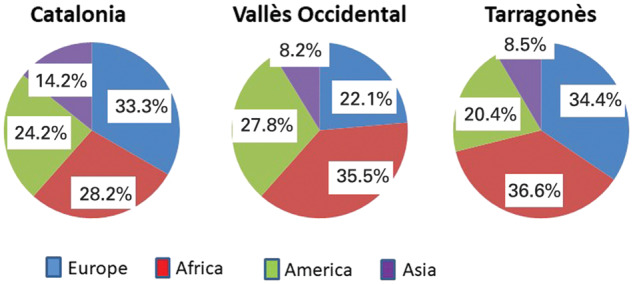
Results: A total of 951 patients were evaluated (48.1% men). Of these, 46.6% were immigrants (58.7% of them were born in Africa) and were significantly younger compared to non-immigrants. The proportions of patients with alcohol consumption, being overweight, and other indicators of metabolic co-morbidities were significantly higher in non-immigrants. Among the 937 patients receiving HBeAg examination, 91.7% were HBeAg-negative. Chronic HBeAg-positive infection was significantly higher in immigrants (3.9% vs 0.6%, P = 0.001) and chronic HBeAg-negative hepatitis was higher non-immigrants (31.7% vs 21.4%, P < 0.001). Not only was the proportion of patients who met treatment criteria significantly higher among non-immigrants (38.4% vs 29.2%, P = 0.003), but also the proportion of those with indication of effectively receiving therapy at the time of data collection (83.2% vs 57.8 %, P < 0.001).
Conclusions: The immigrant population with HBV is younger and has a lower prevalence of metabolic co-morbidities and a higher frequency of chronic HBeAg infection. Despite having access to care and an indication for treatment, some do not get adequately treated due to several factors including local adaptation that precludes access to treatment.
Keywords: access to treatment; hepatitis B; immigration; prevalence.
© The Author(s) 2020. Published by Oxford University Press and Sixth Affiliated Hospital of Sun Yat-sen University.
Figures


References
-
- Arístegui Fernández J, Díez-Domingo J, Bermúdez Marés et al. Vaccination against hepatitis B. Impact of vaccination programmes after 20 years of use in Spain. Is it time for a change? Enferm Infecc Microbiol Clin 2015;33:113–8. - PubMed
-
- Rodríguez-Tajes S, Dacal Y, Collazos C et al. Estudi de prevalença d’infecció pels virus hepatitis B i C a Catalunya. In: XXVI Congrés de la Societat Catalana de Digestiu, 2017, 13, http://www.scdigestologia.org/congressos/xxvicongres/index.php?page=prog....
-
- Solà R, Cruz De Castro E, Hombrados M et al. Prevalence of hepatitis B and hepatitis C viruses in different counties of Catalonia, Spain: cross-sectional study. Med Clin (Barc) 2002;119:90–5. - PubMed
LinkOut - more resources
Full Text Sources
Miscellaneous
