


Integrating family and friend support, information technology, and diabetes education in community-centric diabetes self-management
- PMID: 33164074
- PMCID: PMC7883992
- DOI: 10.1093/jamia/ocaa223
Integrating family and friend support, information technology, and diabetes education in community-centric diabetes self-management
Abstract
Objective: Diabetes self-management (DSM) education, social support, and information technology interventions can improve patient engagement and health. A major challenge is animating, integrating, and accessing resources in under-resourced, rural communities. Set in an island community in Hawai'i, this study piloted a program that integrated friend-and-family support, community health services, telehealth-enabled DSM education, and mobile technologies by activating the community's social capital to support the program.
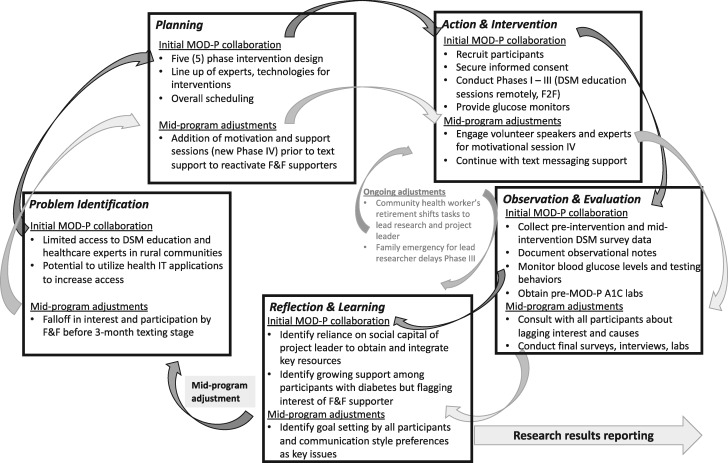
Materials and methods: An action research approach informed the design and implementation of a community-based DSM program that included: friends and family support, telehealth classes, personalized consultations, Bluetooth-enabled blood glucose monitors, and text messaging support. Outcomes were evaluated using biometric data, surveys, interviews, and participant observations.
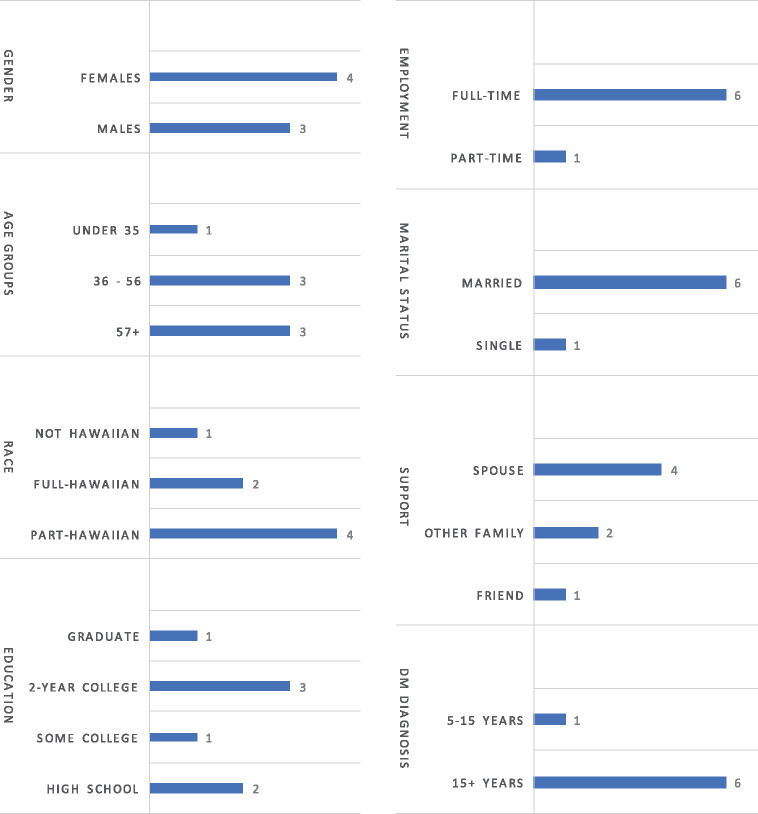
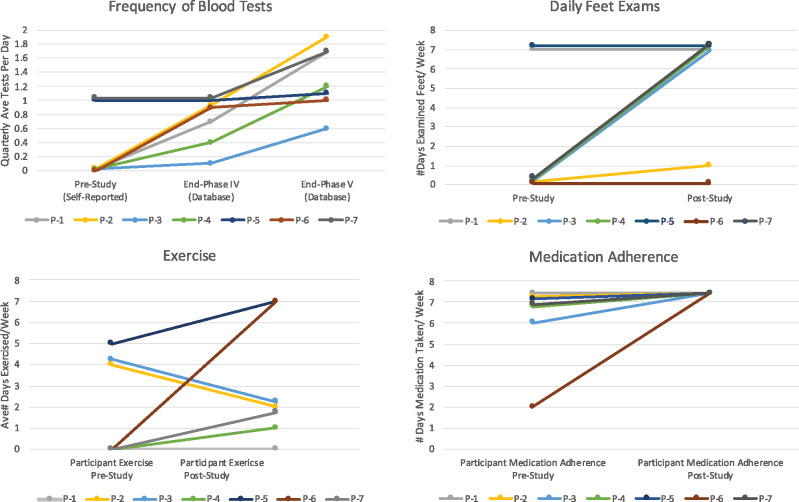
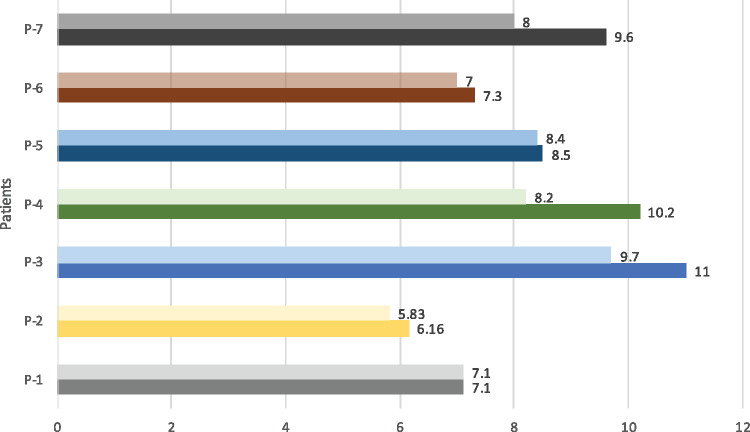
Results: The study spanned 9 months with 7 dyads, each with 1 individual with type 2 diabetes and a friend or family member. Six of the 7 participants with diabetes experienced reduced hemoglobin A1c percentages, with 3 reducing by more than 1%. The seventh participant maintained a hemoglobin A1c level within American Diabetes Association recommended ranges. DSM knowledge and self-care behaviors improved overall. Interviews and participant observations highlighted program strengths and social challenges associated with the interpersonal relationships between the members of the dyads.
Conclusions: A community-centric diabetes program can enhance understanding of diabetes etiology, DSM activities, and communication skills for effective disease management support in under-resourced rural communities. Social capital among community members, leveraged with health information technology, can catalyze and integrate limited health system resources for DSM and social support as a cost-effective strategy to develop community-centric chronic healthcare management initiatives.
Keywords: action research; diabetes self-management; health information technology intervention; social support; telehealth.
© The Author(s) 2020. Published by Oxford University Press on behalf of the American Medical Informatics Association. All rights reserved. For permissions, please email: journals.permissions@oup.com.
Figures
References
-
- Petersen F, Brown A, Pather S, Tucker WD.. Challenges for the adoption of ICT for diabetes self‐management in South Africa. Electron J Inf Syst Develop Countries 2019; 86 (5): e12113.
-
- Siminerio L, Ruppert K, Huber K, Toledo FGS.. Telemedicine for reach, education, access, and treatment (TREAT): linking telemedicine with diabetes self-management education to improve care in rural communities. Diabetes Educ 2014; 40 (6): 797–805. - PubMed
-
- Powers MA, Bardsley J, Cypress M, et al. Diabetes self-management education and support in type 2 diabetes. Diabetes Educ 2017; 43 (1): 40–53. - PubMed
Publication types
MeSH terms
LinkOut - more resources
Full Text Sources
Medical
