


Cre/LoxP-HBV plasmids generating recombinant covalently closed circular DNA genome upon transfection
- PMID: 33166564
- PMCID: PMC7779077
- DOI: 10.1016/j.virusres.2020.198224
Cre/LoxP-HBV plasmids generating recombinant covalently closed circular DNA genome upon transfection
Abstract
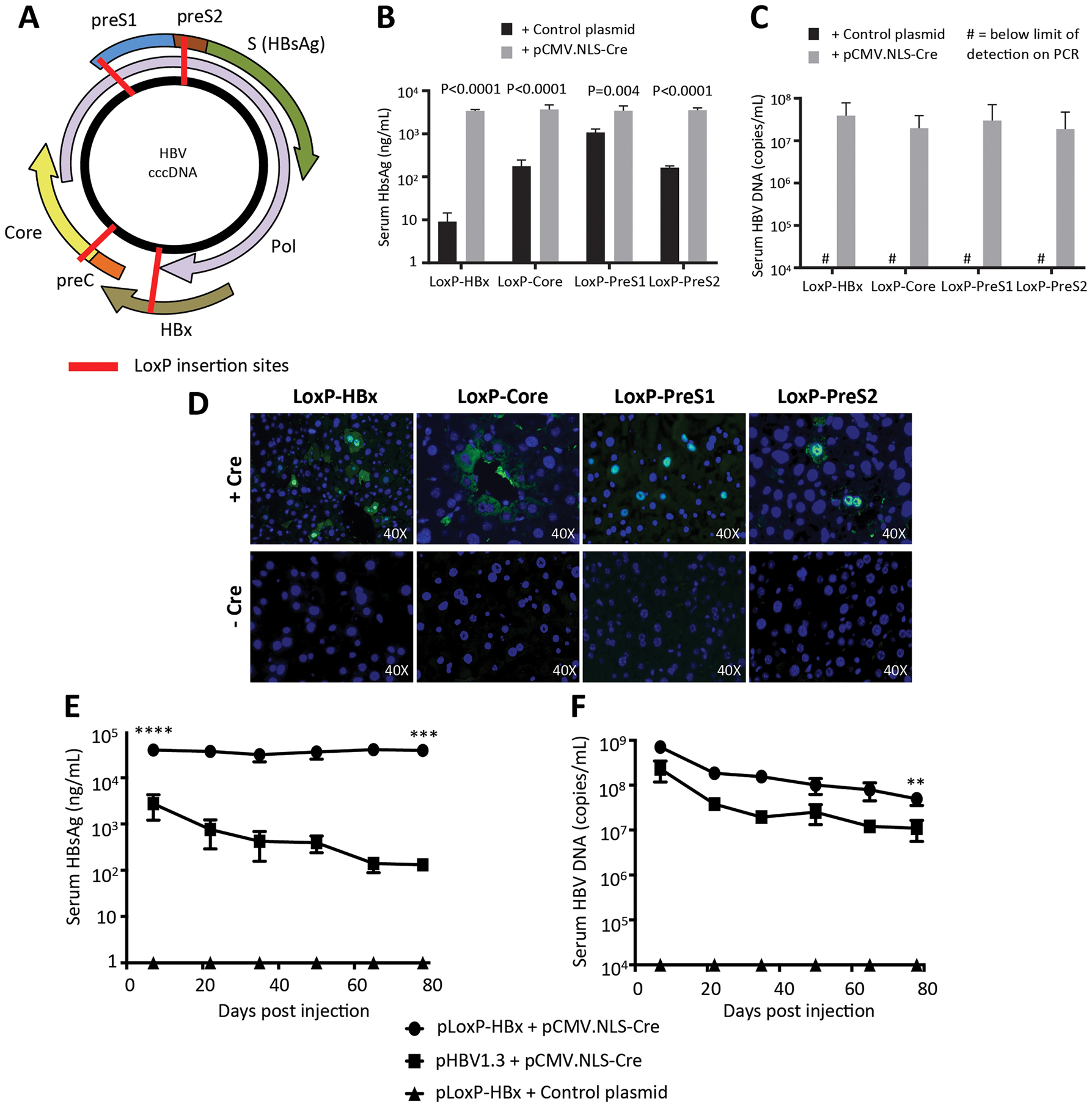
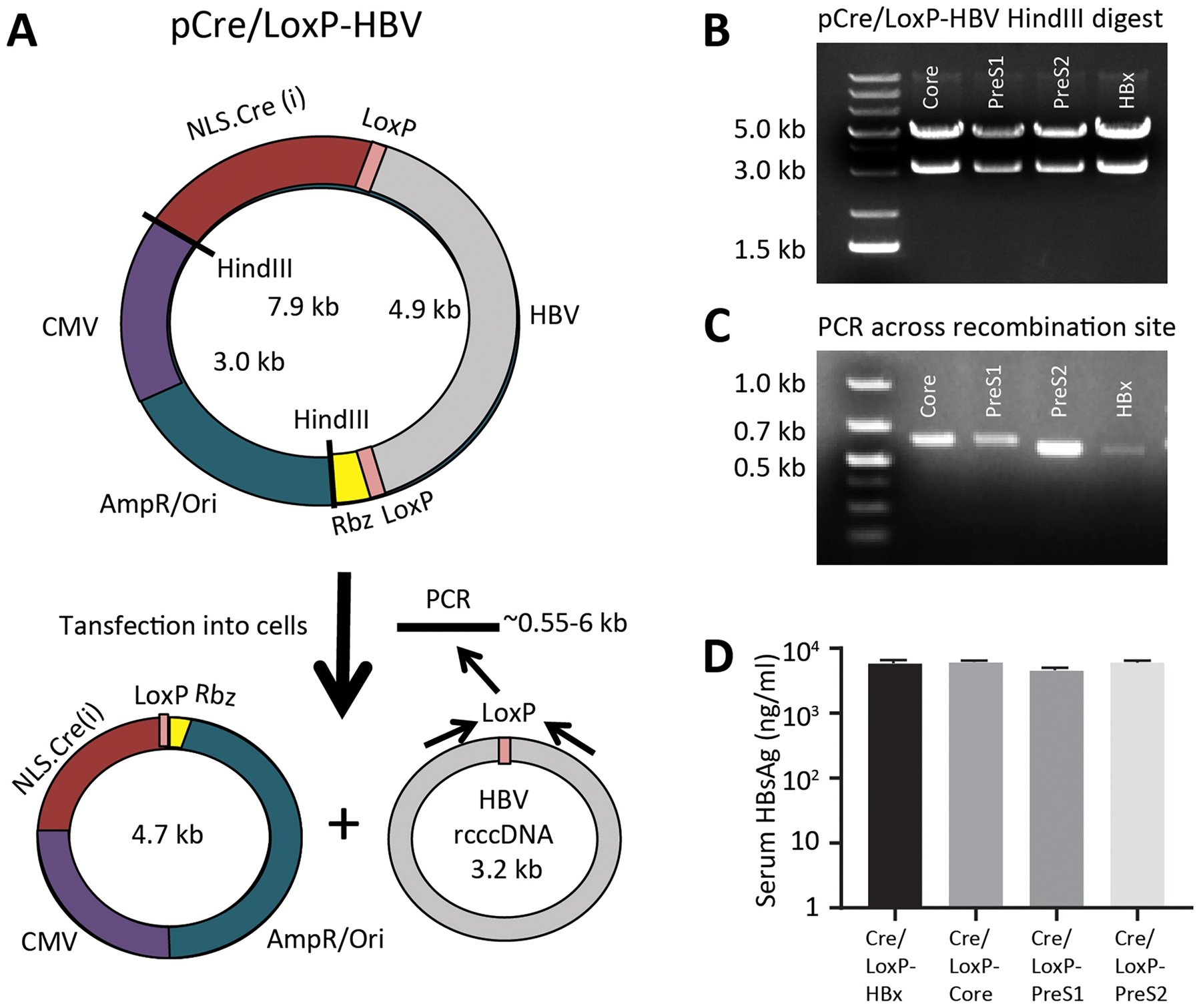
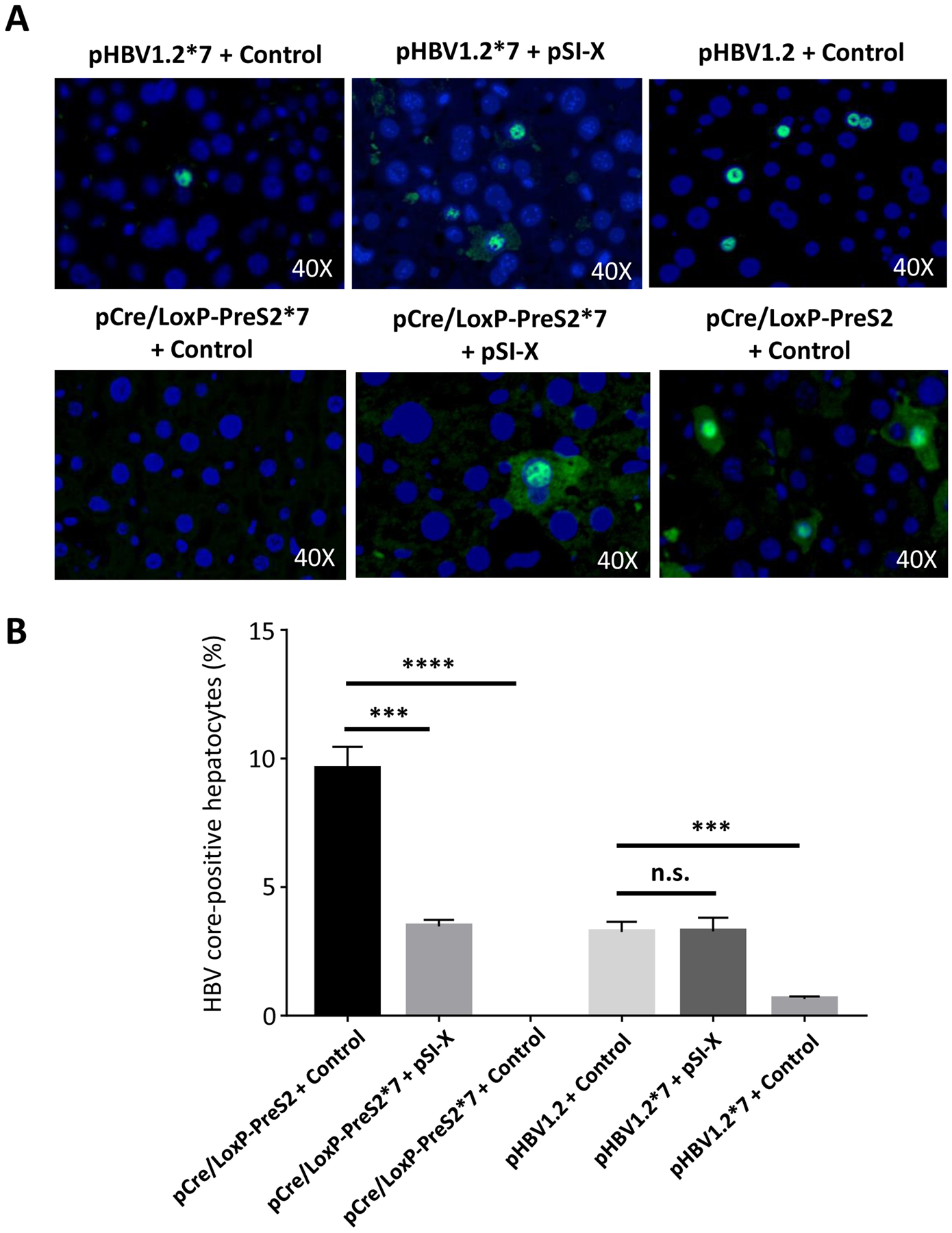
New therapies against hepatitis B virus (HBV) require the elimination of covalently closed circular DNA (cccDNA), the episomal HBV genome. HBV plasmids containing an overlength 1.3-mer genome and bacterial backbone (pHBV1.3) are used in many different models, but do not replicate the unique features of cccDNA. Since the stable cccDNA pool is a barrier to HBV eradication in patients, we developed a recombinant circular HBV genome (rcccDNA) to mimic the cccDNA using Cre/LoxP technology. We validated four LoxP insertion sites into the HBV genome using hydrodynamic tail vein injection into murine liver, demonstrating high levels of HBV surface antigen (HBsAg) and HBV DNA expression with rcccDNA formation. HBsAg expression from rcccDNA was >30,000 ng/mL over 78 days, while HBsAg-expression from pHBV1.3 plasmid DNA declined from 2753 ng/mL to 131 ng/mL over that time in immunodeficient mice (P < 0.001), reflective of plasmid DNA silencing. We then cloned Cre-recombinase in cis on the LoxP-HBV plasmids, achieving plasmid stability in bacteria with intron insertion into Cre and demonstrating rcccDNA formation after transfection in vitro and in vivo. These cis-Cre/LoxP-HBV plasmids were then used to create HBx-mutant and GFP reporter plasmids to further probe cccDNA biology and antiviral strategies against cccDNA. Overall, we believe these auto-generating rcccDNA plasmids will be of great value to model cccDNA for testing new therapies against HBV infection.
Keywords: Cre/LoxP; Drug discovery; HBV; cccDNA.
Copyright © 2020 Elsevier B.V. All rights reserved.
Conflict of interest statement
Declaration of competing interest
The authors disclose no potential conflicts of interest.
Figures

References
-
- Billioud G, Kruse RL, Carrillo M, Whitten-Bauer C, Gao D, Kim A, Chen L, McCaleb ML, Crosby JR, Hamatake R, Hong Z, Garaigorta U, Swayze E, Bissig K-D, Wieland S, 2016. In vivo reduction of hepatitis B virus antigenemia and viremia by antisense oligonucleotides. Journal of Hepatology 64, 781–789. doi:10.1016/j.jhep.2015.11.032 - DOI - PubMed
-
- Chen Z-Y, He C-Y, Ehrhardt A, Kay MA, 2003. Minicircle DNA vectors devoid of bacterial DNA result in persistent and high-level transgene expression in vivo. Mol Ther 8, 495–500. - PubMed
Publication types
MeSH terms
Substances
Grants and funding
LinkOut - more resources
Full Text Sources
Other Literature Sources
Medical
Research Materials
Miscellaneous
