


Predictors of the failure of conservative treatment in patients with a thoracolumbar burst fracture
- PMID: 33168095
- PMCID: PMC7654172
- DOI: 10.1186/s13018-020-02044-3
Predictors of the failure of conservative treatment in patients with a thoracolumbar burst fracture
Abstract
Background: There is a controversy about the management of patients with a thoracolumbar burst fracture. Despite the success of the conservative treatment in most of the cases, some patients failed the conservative treatment. The present study aimed to evaluate risk factors for the need for surgery during the follow-up period in these patients.
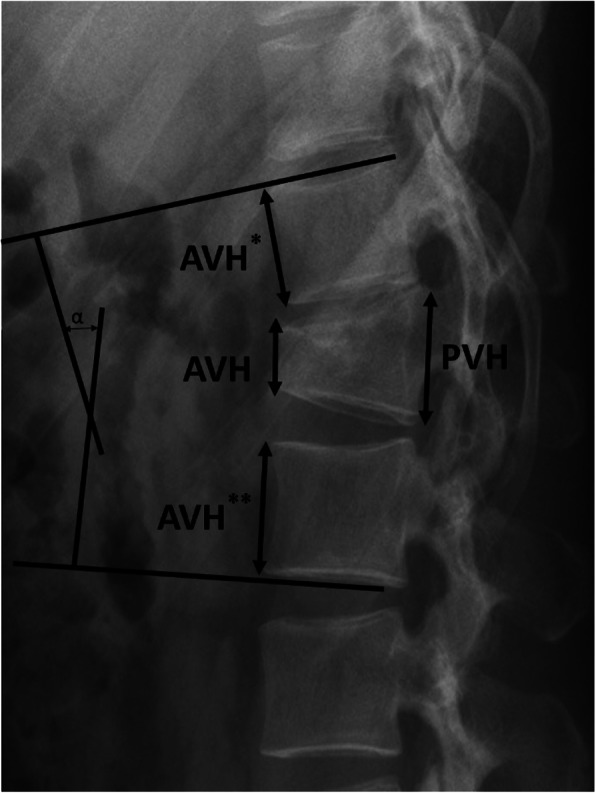
Methods: We retrospectively evaluated 67 patients with a traumatic thoracolumbar burst fracture who managed conservatively at our center between May 2014 and May 2019. Suggested variables as potential risk factors for the failure of conservative treatment including age, gender, body mass index (BMI), smoking, diabetes, vertebral body compression rate (VBCR), percentage of anterior height compression (PAHC), Cobb angle, interpedicular distance (IPD), canal compromise, and pain intensity as visual analog scale (VAS) were compared between patients with successful conservative treatment and those with failure of non-operative management.
Results: There were 41 males (61.2%) and 26 females (38.8%) with the mean follow-up time of 15.52 ± 5.30 months. Overall, 51 patients (76.1%) successfully completed conservative treatment. However, 16 cases (23.9%) failed the non-operative management. According to the binary logistic regression analysis, only age (risk ratio [RR], 2.21; 95% confidence interval [95%], 1.78-2.64; P = 0.019) and IPD (RR 1.97; 95% CI 1.61-2.33; P = 0.005) were the independent risk factors for the failure of the non-operative management.
Conclusions: Our results showed that older patients and those with greater interpedicular distance are at a higher risk for failure of the conservative treatment. As a result, a closer follow-up should be considered for them.
Keywords: Burst fracture; Conservative treatment; Risk factors; Thoracolumbar.
Conflict of interest statement
The authors declare that they have no competing interests.
Figures

References
-
- Aligizakis A, Katonis P, Stergiopoulos K, Galanakis I, Karabekios S, Hadjipavlou A. Functional outcome of burst fractures of the thoracolumbar spine managed non-operatively, with early ambulation, evaluated using the load sharing classification. Acta Orthop Belg. 2002;68(3):279–287. - PubMed
-
- Vaccaro AR, Wilson JR, Fisher CG. The Three-Column Spine and Its Significance in the Classification of Acute Thoracolumbar Spine Injuries. 50 Landmark Papers Every Spine Surgeon Should Know: CRC Press; 2018. p. 65–8.
Publication types
MeSH terms
LinkOut - more resources
Full Text Sources
Medical
Research Materials
