


Parental Vaccine Hesitancy and Childhood Influenza Vaccination
- PMID: 33168671
- PMCID: PMC8097955
- DOI: 10.1542/peds.2020-007609
Parental Vaccine Hesitancy and Childhood Influenza Vaccination
Abstract
Objectives: To quantify the prevalence of parental vaccine hesitancy (VH) in the United States and examine the association of VH with sociodemographics and childhood influenza vaccination coverage.
Methods: A 6-question VH module was included in the 2018 and 2019 National Immunization Survey-Flu, a telephone survey of households with children age 6 months to 17 years.
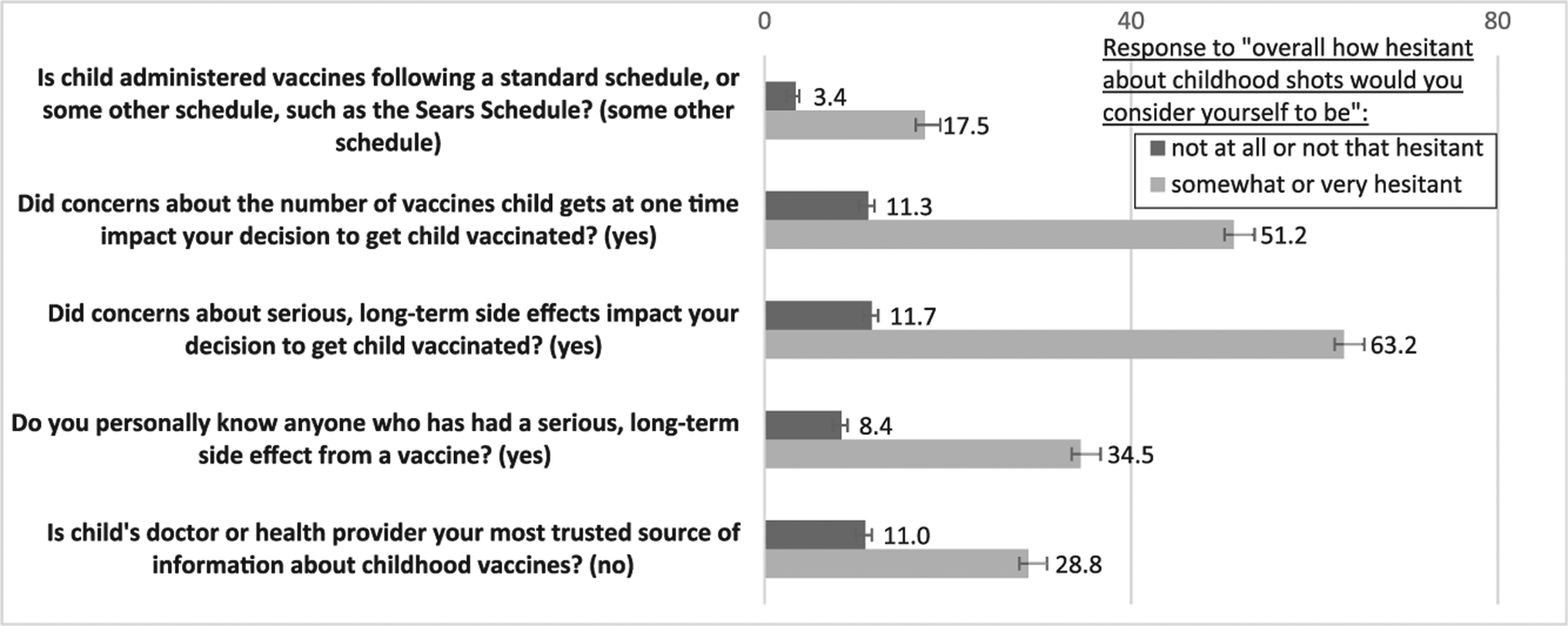
Results: The percentage of children having a parent reporting they were "hesitant about childhood shots" was 25.8% in 2018 and 19.5% in 2019. The prevalence of concern about the number of vaccines a child gets at one time impacting the decision to get their child vaccinated was 22.8% in 2018 and 19.1% in 2019; the prevalence of concern about serious, long-term side effects impacting the parent's decision to get their child vaccinated was 27.3% in 2018 and 21.7% in 2019. Only small differences in VH by sociodemographic variables were found, except for an 11.9 percentage point higher prevalence of "hesitant about childhood shots" and 9.9 percentage point higher prevalence of concerns about serious, long-term side effects among parents of Black compared with white children. In both seasons studied, children of parents reporting they were "hesitant about childhood shots" had 26 percentage points lower influenza vaccination coverage compared with children of parents not reporting hesitancy.
Conclusions: One in 5 children in the United States have a parent who is vaccine hesitant, and hesitancy is negatively associated with childhood influenza vaccination. Monitoring VH could help inform immunization programs as they develop and target methods to increase vaccine confidence and vaccination coverage.
Copyright © 2020 by the American Academy of Pediatrics.
Conflict of interest statement
POTENTIAL CONFLICT OF INTEREST: The authors have indicated they have no potential conflicts of interest to disclose.
Figures


References
-
- Coombes R Europe steps up action against vaccine hesitancy as measles outbreaks continue. BMJ. 2017;359: j4803. - PubMed
-
- Bedford H, Attwell K, Danchin M, Marshall H, Corben P, Leask J. Vaccine hesitancy, refusal and access barriers: the need for clarity in terminology. Vaccine. 2018;36(44):6556–6558 - PubMed
MeSH terms
Substances
Grants and funding
LinkOut - more resources
Full Text Sources
Medical
