Review
. 2021 Mar;22(3):215-235.
doi: 10.1038/s41580-020-00303-z. Epub 2020 Nov 9.

A framework for understanding the functions of biomolecular condensates across scales

Affiliations
Review

A framework for understanding the functions of biomolecular condensates across scales

Andrew S Lyon et al. Nat Rev Mol Cell Biol. 2021 Mar.

Abstract

Biomolecular condensates are found throughout eukaryotic cells, including in the nucleus, in the cytoplasm and on membranes. They are also implicated in a wide range of cellular functions, organizing molecules that act in processes ranging from RNA metabolism to signalling to gene regulation. Early work in the field focused on identifying condensates and understanding how their physical properties and regulation arise from molecular constituents. Recent years have brought a focus on understanding condensate functions. Studies have revealed functions that span different length scales: from molecular (modulating the rates of chemical reactions) to mesoscale (organizing large structures within cells) to cellular (facilitating localization of cellular materials and homeostatic responses). In this Roadmap, we discuss representative examples of biochemical and cellular functions of biomolecular condensates from the recent literature and organize these functions into a series of non-exclusive classes across the different length scales. We conclude with a discussion of areas of current interest and challenges in the field, and thoughts about how progress may be made to further our understanding of the widespread roles of condensates in cell biology.


Conflict of interest statement

Competing interests:

MKR is a co-founder of the biotechnology company Faze Medicines.

Figures
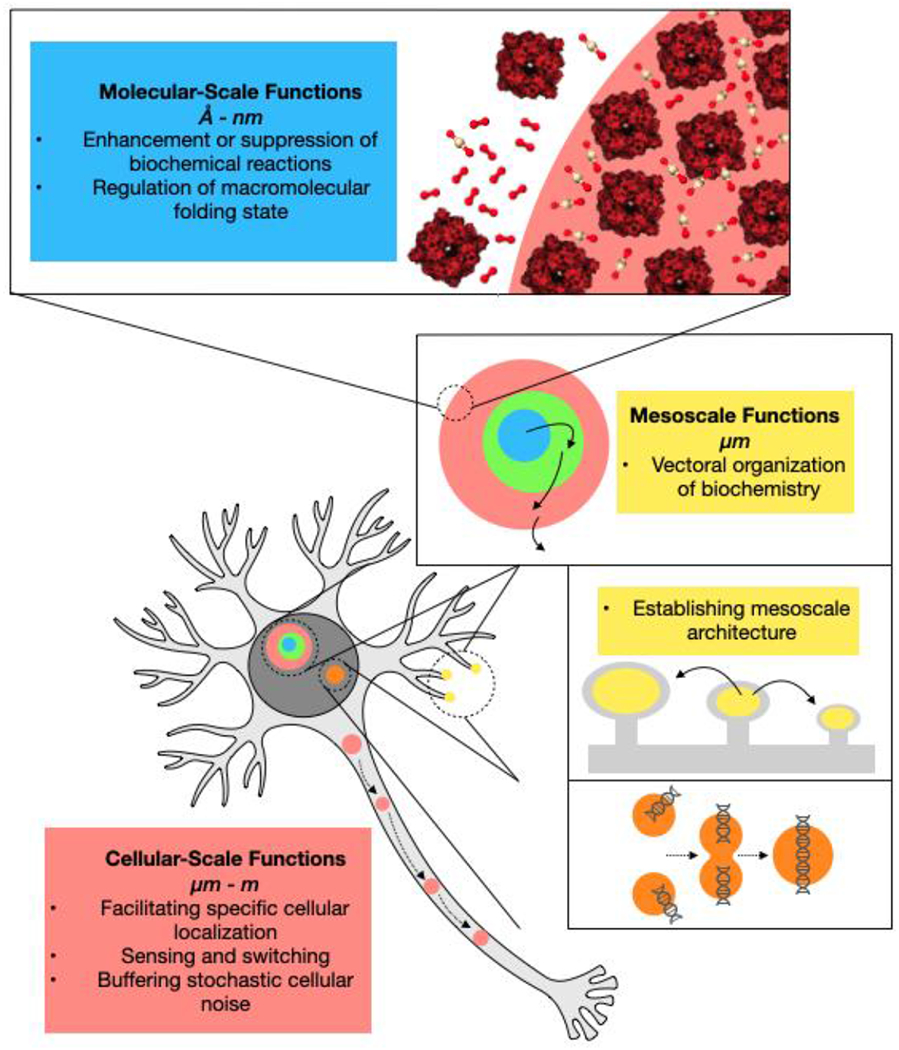
Figure 1 |
Figure 1 |. Overview of biomolecular condensate functions across scales
The functions of biomolecular condensates operate on multiple length scales, ranging from atomic or molecular-level enhancement or suppression or biochemical reaction rates to cellular localization, which in principle operates on meter length scales in cells such as mammalian neurons. A condensate may have functions on more than one length scale, for instance participating in mesoscale vectoral organization of biochemistry while also enhancing reaction rates via mass action due to increased concentration of substrates and/or enzymes within condensates.
Figure 2 |
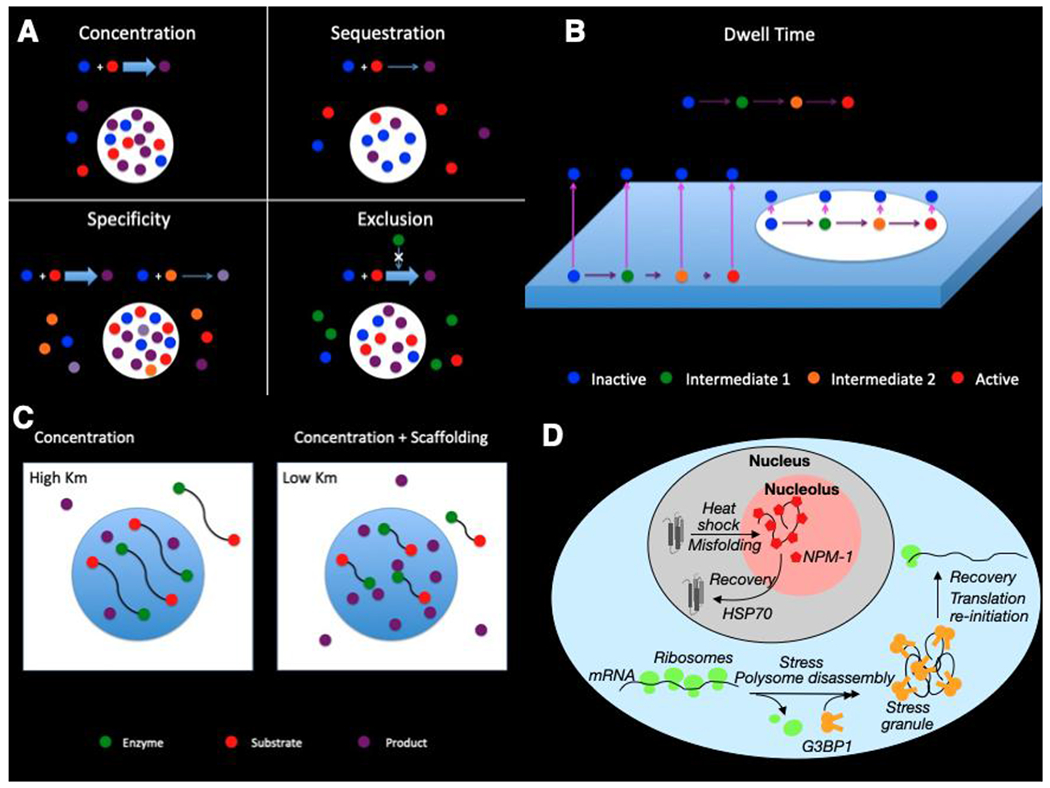
Figure 2 |. Molecular scale functions of biomolecular condensates
A. Concentration of enzyme (E) and substrate (S) can be enhancing or inhibiting depending upon which are enriched in the condensates. Enrichment of both enzyme (blue) and substrate (red) into condensates results in a substantial increase in product (purple) within the condensate, with unchanged or decreased activity in the surrounding bulk. Enrichment of only enzyme (blue), for example, will result in higher condensate activity but lower bulk activity due to depletion. The overall activity decreases due to the relatively small condensate volume being unable to compensate for the loss of activity everywhere else. If there is more than one substrate competing for the same enzyme, selective enrichment of one substrate in the condensate promotes reaction specificity. In this scenario, substrate 1 (red) is enriched while substrate 2 (orange) is not, resulting in preferential activity toward the former. Product 1 (purple) is higher in the condensate and lower in the bulk, as in A, whereas product 2 (light purple) is lower everywhere. If there is an inhibitor (green) that is excluded, concentration of enzyme (blue) and substrate (red) within condensates gives a bigger increase than in A due to the combined effects of higher enzyme and substrate and decreased inhibitor. B. Concentration-independent mechanisms such as dwell time and scaffolding can also enhance reaction rates. For slow reactions, decreasing the rate at which enzyme (red) diffuses away from the membrane increases the probability of a productive reaction (yellow). Concentration-independent mechanisms such as dwell time and scaffolding can also enhance reaction rates. For slow reactions, decreasing the rate at which enzyme (red) diffuses away from the membrane increases the probability of a productive reaction (yellow). Pink arrows represent diffusion off the membrane, and purple arrows represent reaction flux to the next step C. Molecular organization can increase product (yellow) by closely tethering enzyme (red) and substrate (green). If tethering is sufficiently close, this can result in an apparent decrease in Km, accelerating the reaction under otherwise equivalent conditions. D. Nuclear proteins unfold upon heat shock and are recruited into the granular component of the nucleolus, where interactions with NPM-1 (red pentagons) maintain misfolded proteins in a state where refolding can occur aided by molecular chaperones including HSP70. In the cytoplasm, stress causes polysome disassembly, leading to formation of stress granules by G3BP1 and other proteins, preventing base-pairing and aberrant RNA aggregation.
Figure 3 |
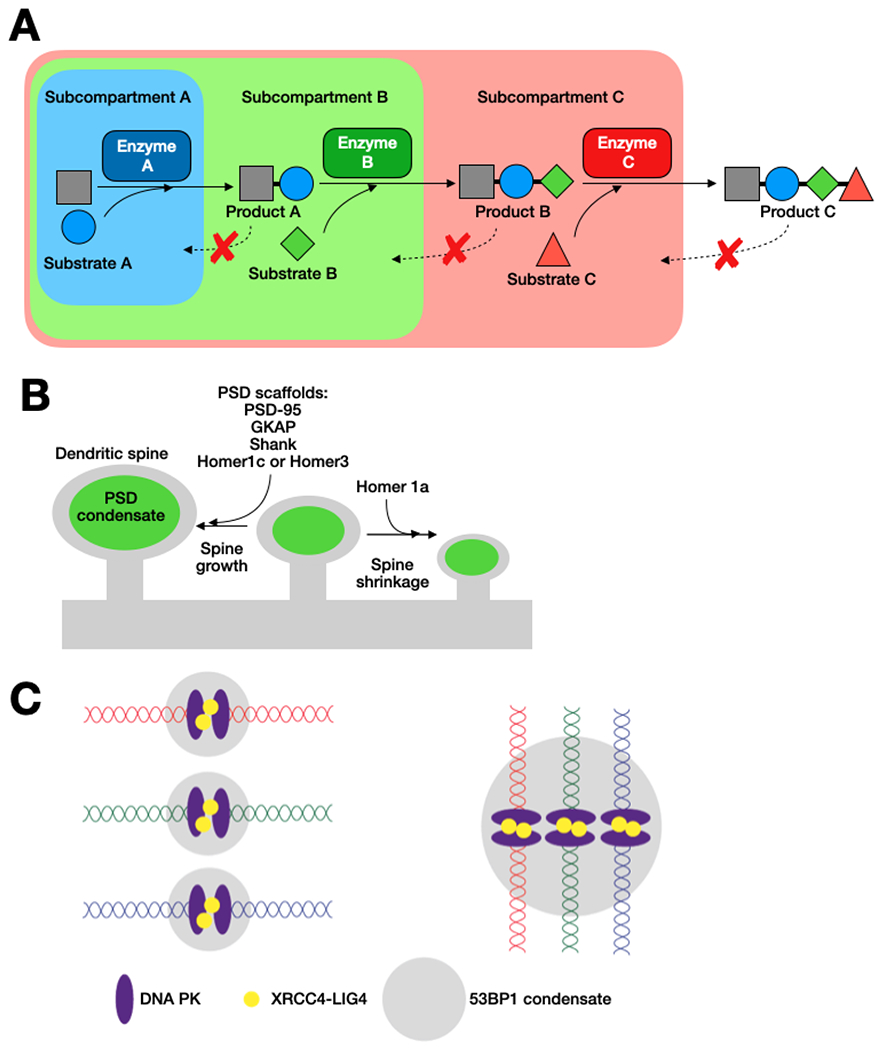
Figure 3 |. Mesoscale functions of biomolecular condensates
A. In condensates with more than one subcompartment, differential enrichment of enzymes in different subcompartments can lead to vectoral modification of substrates if substrate molecules are enriched in a given phase, but reaction products are excluded from the phase,. B. Size-scaling of dendritic spines dictated by growth of the PSD condensate, composed of PSD-95, GKAP, Shank, and Homer1c or Homer 3. Homer1a causes dispersal of the PSD condensate, potentially causing shrinkage of the dendritic spine. C. Representation of architectural role of 53BP1 condensate in DNA damage repair by non-homologous end joining, an example of how condensate formation and fusion can shape genomic architecture to facilitate joining of potentially distant DNA ends. 53BP1 promotes stabilization of the break and facilitates recruitment of repair components. Binding of the DNA ends by DNA PK recruits the XRCC4/LIG4 complex promote religation,.
Figure 4 |
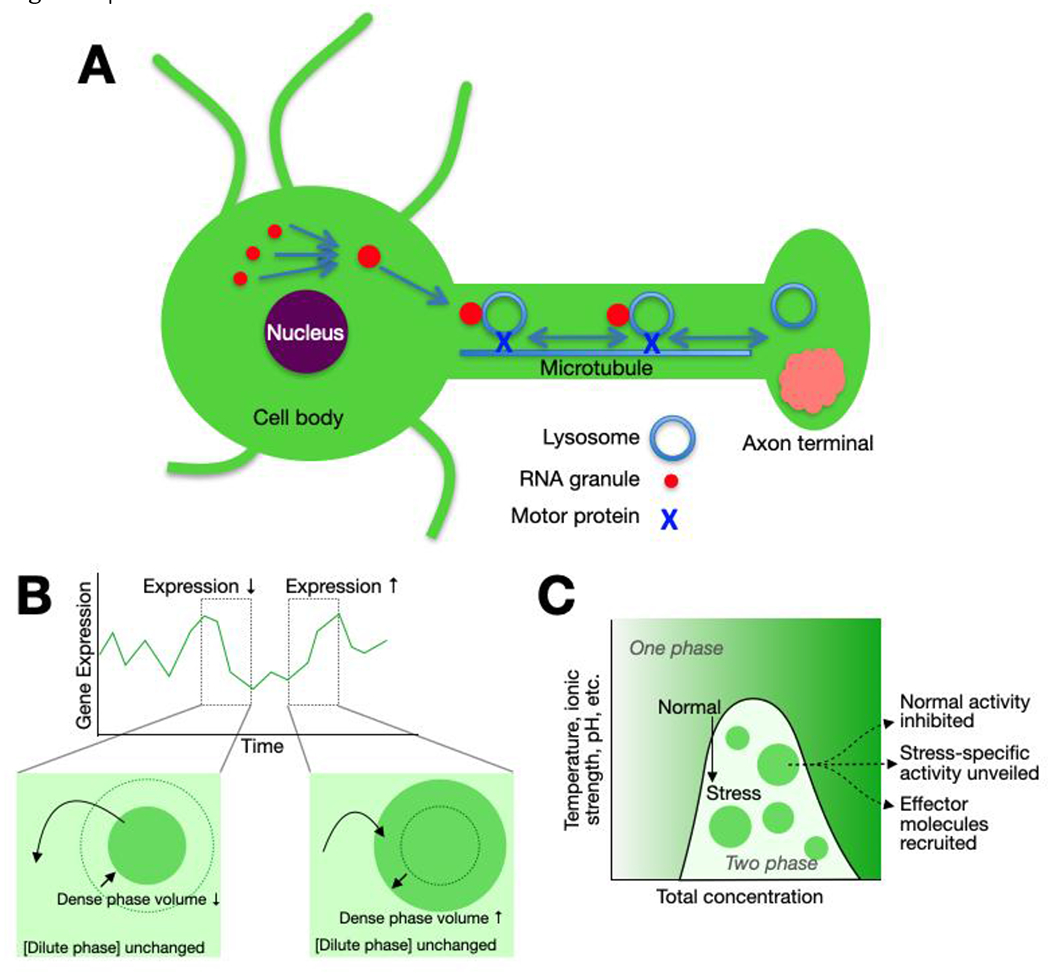
Figure 4 |. Cellular scale mechanisms of biomolecular condensate functions
A. Localization of neuronal RNA granules via hitchhiking on lysosomal traffic. RNA granules formed in the cell body following transcription are tethered to a lysosome via the protein ANXA11, facilitating transport along microtubules to the site of translation in the axon (or dendrite), where RNAs are released for subsequent translation. B. Condensates formed via LLPS can integrate information about macromolecule concentration over the entire cellular volume to buffer stochastic fluctuations in gene expression. In the two-phase regime, transient fluctuations in protein concentration are buffered by transfer of molecules into or out of the dense phase, changing the dense phase volume while leaving the dilute phase concentration unchanged. C. Condensate formation integrates information at a cellular scale by coupling changes in the environment to the transition from the one-phase to two-phase regimes and can mediate activation of appropriate homeostatic responses,.

References

    1. Elbaum-Garfinkle S et al. The disordered P granule protein LAF-1 drives phase separation into droplets with tunable viscosity and dynamics. Proceedings of the National Academy of Sciences of the United States of America 112, 7189–7194, doi:10.1073/pnas.1504822112 (2015). - DOI - PMC - PubMed
    1. Banjade S & Rosen MK Phase transitions of multivalent proteins can promote clustering of membrane receptors. eLife 3 (2014). - PMC - PubMed
    1. Li P et al. Phase transitions in the assembly of multivalent signalling proteins. Nature 483, 336–340, doi:10.1038/nature10879 (2012). - DOI - PMC - PubMed
    1. Banani SF, Lee HO, Hyman AA & Rosen MK Biomolecular condensates: organizers of cellular biochemistry. Nat Rev Mol Cell Biol 18, 285–298, doi:10.1038/nrm.2017.7 (2017). - DOI - PMC - PubMed
    1. Kato M et al. Cell-free Formation of RNA Granules: Low Complexity Sequence Domains Form Dynamic Fibers within Hydrogels. Cell 149, 753–767, doi:10.1016/j.cell.2012.04.017 (2012). - DOI - PMC - PubMed

Publication types