Multisystem Inflammatory Syndrome in Children Related to COVID-19: the First Case in Korea
- PMID: 33169560
- PMCID: PMC7653165
- DOI: 10.3346/jkms.2020.35.e391
Multisystem Inflammatory Syndrome in Children Related to COVID-19: the First Case in Korea
Abstract
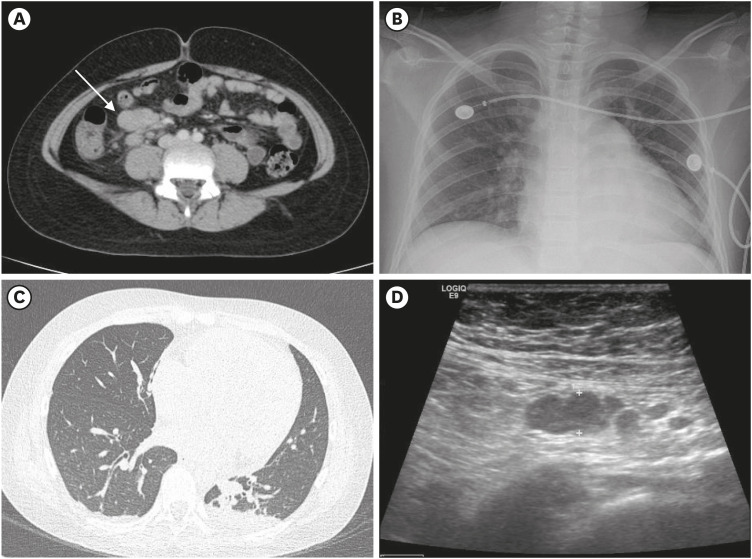
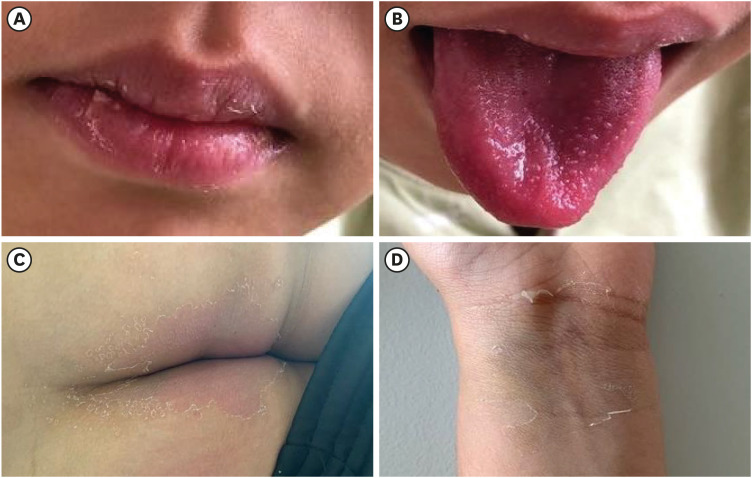
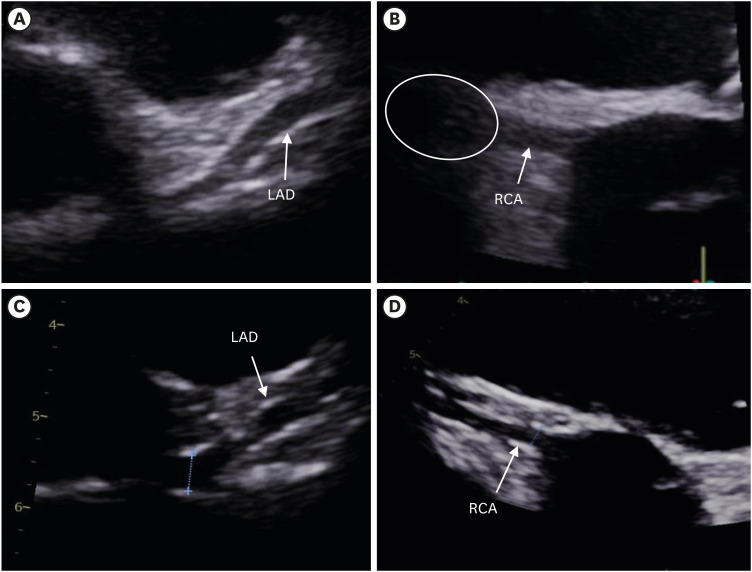
Since mid-April 2020, cases of multisystem inflammatory syndrome in children (MIS-C) associated with coronavirus disease 2019 that mimics Kawasaki disease (KD) have been reported in Europe and North America. However, no cases have been reported in Korea. We describe an 11-year old boy with fever, abdominal pain, and diarrhea who developed hypotension requiring inotropes in intensive care unit. His blood test revealed elevated inflammatory markers, thrombocytopenia, hypoalbuminemia, and coagulopathy. Afterward, he developed signs of KD such as conjunctival injection, strawberry tongue, cracked lip, and coronary artery dilatation, and parenchymal consolidation without respiratory symptoms. Microbiological tests were all negative including severe acute respiratory syndrome coronavirus 2 (SARS-CoV-2) reverse transcription polymerase chain reaction. However, serum immunoglobulin G against SARS-CoV-2 was positive in repeated tests using enzyme-linked immunosorbent assay and fluorescent immunoassay. He was recovered well after intravenous immunoglobulin administration and discharged without complication on hospital day 13. We report the first Korean child who met all the criteria of MIS-C with features of incomplete KD or KD shock syndrome.
Keywords: COVID-19; Intravenous Immunoglobulin; Kawasaki Disease; Kawasaki Disease Shock Syndrome; Multisystem Inflammatory Syndrome in Children.
© 2020 The Korean Academy of Medical Sciences.
Conflict of interest statement
The authors have no potential conflicts of interest to disclose.
Figures
References
-
- World Health Organization. Coronavirus disease (COVID-19) pandemic. [Updated 2020]. [Accessed May 12, 2020]. https://www.who.int/emergencies/diseases/novel-coronavirus-2019.
-
- Morand A, Urbina D, Fabre A. COVID-19 and Kawasaki like disease: the known-known, the unknown-known and the unknown-unknown. Preprints (Basel) 2020
Publication types
MeSH terms
Substances
Supplementary concepts
LinkOut - more resources
Full Text Sources
Miscellaneous