A predictive model for the severity of COVID-19 in elderly patients
- PMID: 33170150
- PMCID: PMC7695402
- DOI: 10.18632/aging.103980
A predictive model for the severity of COVID-19 in elderly patients
Abstract
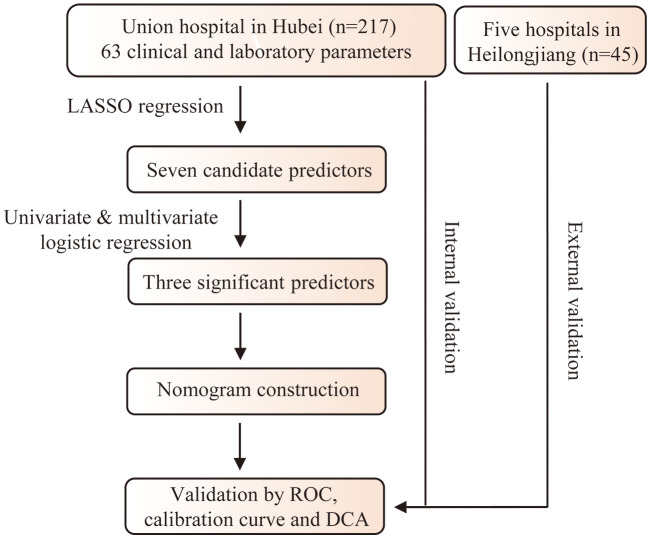
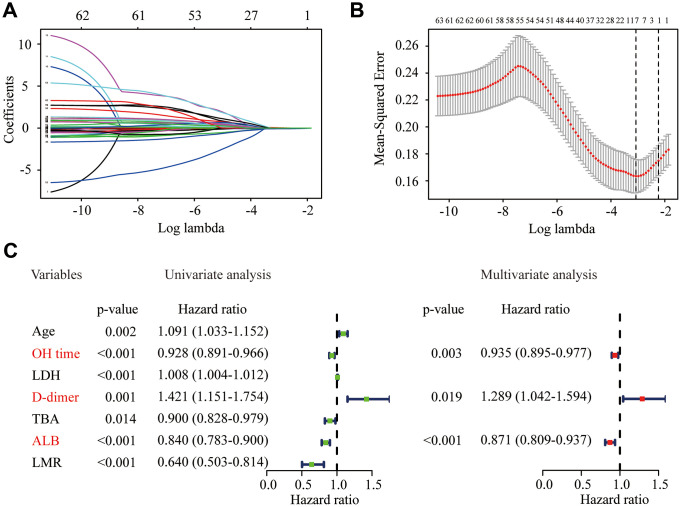
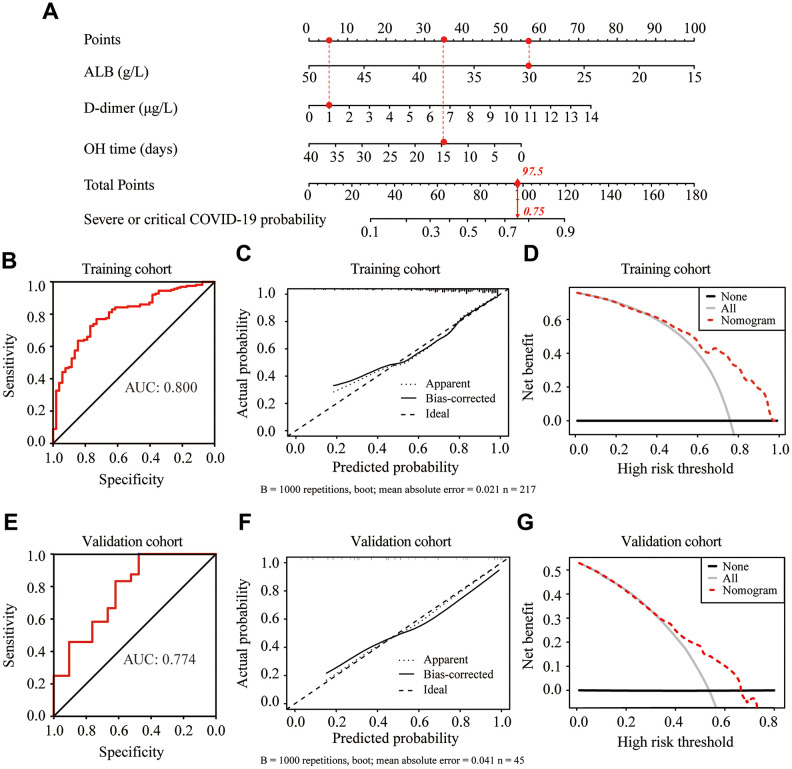
Elderly patients with coronavirus disease 2019 (COVID-19) are more likely to develop severe or critical pneumonia, with a high fatality rate. To date, there is no model to predict the severity of COVID-19 in elderly patients. In this study, patients who maintained a non-severe condition and patients who progressed to severe or critical COVID-19 during hospitalization were assigned to the non-severe and severe groups, respectively. Based on the admission data of these two groups in the training cohort, albumin (odds ratio [OR] = 0.871, 95% confidence interval [CI]: 0.809 - 0.937, P < 0.001), d-dimer (OR = 1.289, 95% CI: 1.042 - 1.594, P = 0.019) and onset to hospitalization time (OR = 0.935, 95% CI: 0.895 - 0.977, P = 0.003) were identified as significant predictors for the severity of COVID-19 in elderly patients. By combining these predictors, an effective risk nomogram was established for accurate individualized assessment of the severity of COVID-19 in elderly patients. The concordance index of the nomogram was 0.800 in the training cohort and 0.774 in the validation cohort. The calibration curve demonstrated excellent consistency between the prediction of our nomogram and the observed curve. Decision curve analysis further showed that our nomogram conferred significantly high clinical net benefit. Collectively, our nomogram will facilitate early appropriate supportive care and better use of medical resources and finally reduce the poor outcomes of elderly COVID-19 patients.
Keywords: COVID-19; elderly patients; nomogram; severity.
Conflict of interest statement
Figures
References
-
- Bedford J, Enria D, Giesecke J, Heymann DL, Ihekweazu C, Kobinger G, Lane HC, Memish Z, Oh MD, Sall AA, Schuchat A, Ungchusak K, Wieler LH, and WHO Strategic and Technical Advisory Group for Infectious Hazards. COVID-19: towards controlling of a pandemic. Lancet. 2020; 395:1015–18. 10.1016/S0140-6736(20)30673-5 - DOI - PMC - PubMed
-
- WHO. WHO Virtual press conference on COVID-19 (March 11, 2020), 16th Mar 2020.
-
- WHO. WHO Virtual press conference on COVID-19 (March 27, 2020), 27th Mar 2020.
Publication types
MeSH terms
LinkOut - more resources
Full Text Sources
Medical