


Emerging therapeutic targets for schizophrenia: a framework for novel treatment strategies for psychosis
- PMID: 33170748
- PMCID: PMC7855878
- DOI: 10.1080/14728222.2021.1849144
Emerging therapeutic targets for schizophrenia: a framework for novel treatment strategies for psychosis
Abstract
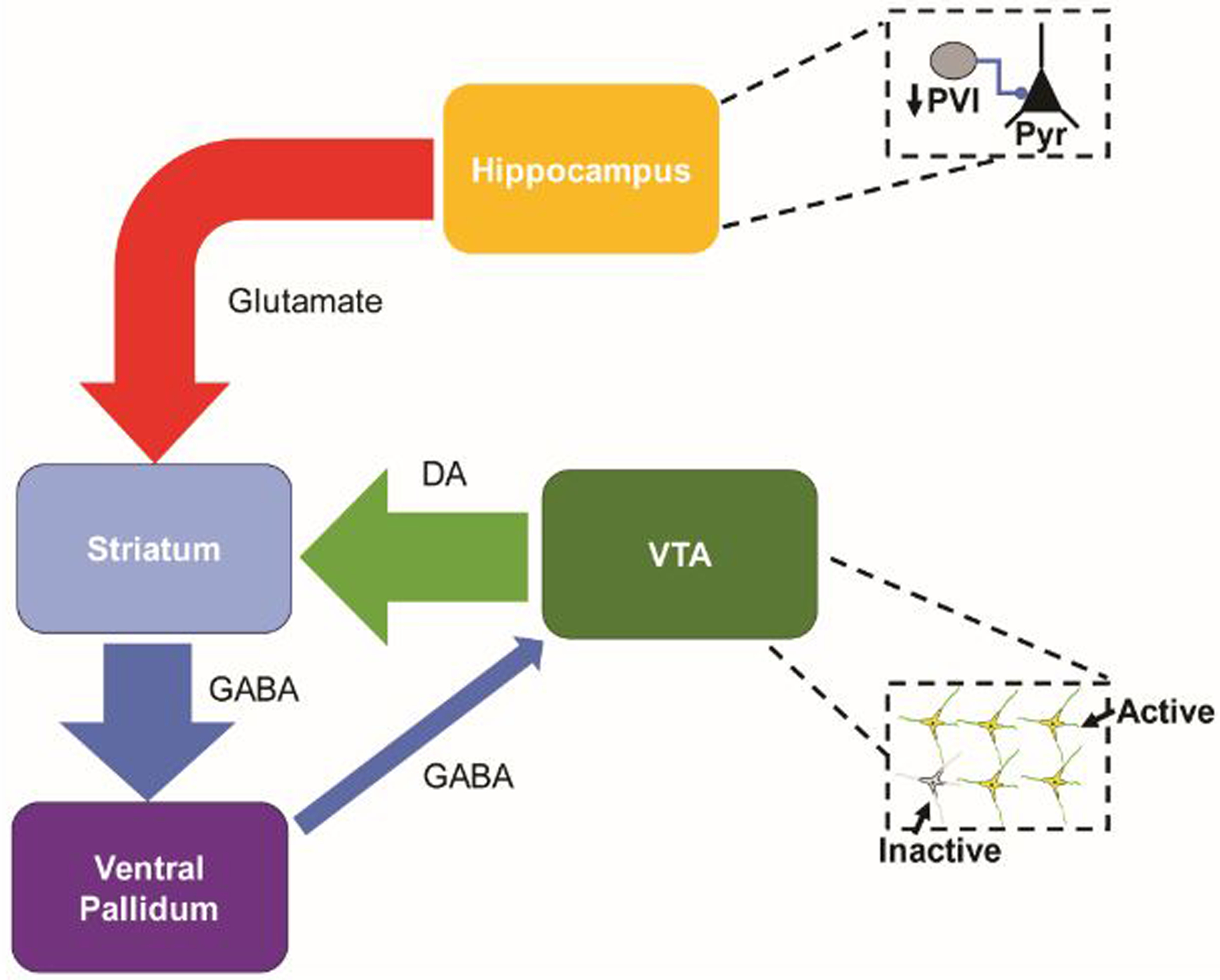
Introduction: Antipsychotic drugs are central to the treatment of schizophrenia, but their limitations necessitate improved treatment strategies. Multiple lines of research have implicated glutamatergic dysfunction in the hippocampus as an early source of pathophysiology in schizophrenia. Novel compounds have been designed to treat glutamatergic dysfunction, but they have produced inconsistent results in clinical trials. Areas covered: This review discusses how the hippocampus is thought to drive psychotic symptoms through its influence on the dopamine system. It offers the reader an evaluation of proposed treatment strategies including direct modulation of GABA or glutamate neurotransmission or reducing the deleterious impact of stress on circuit development. Finally, we offer a perspective on aspects of future research that will advance our knowledge and may create new therapeutic opportunities. PubMed was searched for relevant literature between 2010 and 2020 and related studies. Expert opinion: Targeting aberrant excitatory-inhibitory neurotransmission in the hippocampus and its related circuits has the potential to alleviate symptoms and reduce the risk of transition to psychosis if implemented as an early intervention. Longitudinal multimodal brain imaging combined with mechanistic theories generated from animal models can be used to better understand the progression of hippocampal-dopamine circuit dysfunction and heterogeneity in treatment response.
Keywords: Schizophrenia; antipsychotic; d2; dopamine; early intervention; gaba; glutamate; hippocampus.
Conflict of interest statement
Declaration of Interest
AA Grace has received consulting fees from Alkermes, Lundbeck, Takeda, Roche, Lyra, Concert, and research funding from Lundbeck. The authors have no other relevant affiliations or financial involvement with any organization or entity with a financial interest in or financial conflict with the subject matter or materials discussed in the manuscript. This includes employment, consultancies, honoraria, stock ownership or options, expert testimony, grants or patents received or pending, or royalties.
Figures
References
-
- Hegarty JD, Baldessarini RJ, Tohen M, Waternaux C, Oepen G. One hundred years of schizophrenia: a meta-analysis of the outcome literature. American Journal of psychiatry. 1994;151(10):1409–16. - PubMed
-
- Harrow M, Jobe T, Faull R. Does treatment of schizophrenia with antipsychotic medications eliminate or reduce psychosis? A 20-year multi-follow-up study. Psychological Medicine. 2014;44(14):3007–16. - PubMed
-
- Zipursky RB, Menezes NM, Streiner DL. Risk of symptom recurrence with medication discontinuation in first-episode psychosis: a systematic review. Schizophrenia Research. 2014;152(2–3):408–14. - PubMed
Publication types
MeSH terms
Substances
Grants and funding
LinkOut - more resources
Full Text Sources
Medical
