


Thermal and Structural Analysis of Epoxidized Jatropha Oil and Alkaline Treated Kenaf Fiber Reinforced Poly(Lactic Acid) Biocomposites
- PMID: 33171889
- PMCID: PMC7694484
- DOI: 10.3390/polym12112604
Thermal and Structural Analysis of Epoxidized Jatropha Oil and Alkaline Treated Kenaf Fiber Reinforced Poly(Lactic Acid) Biocomposites
Abstract
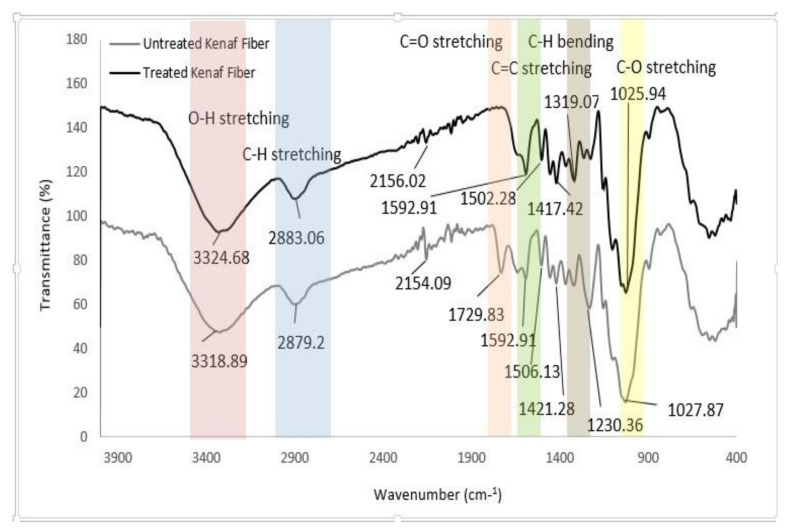
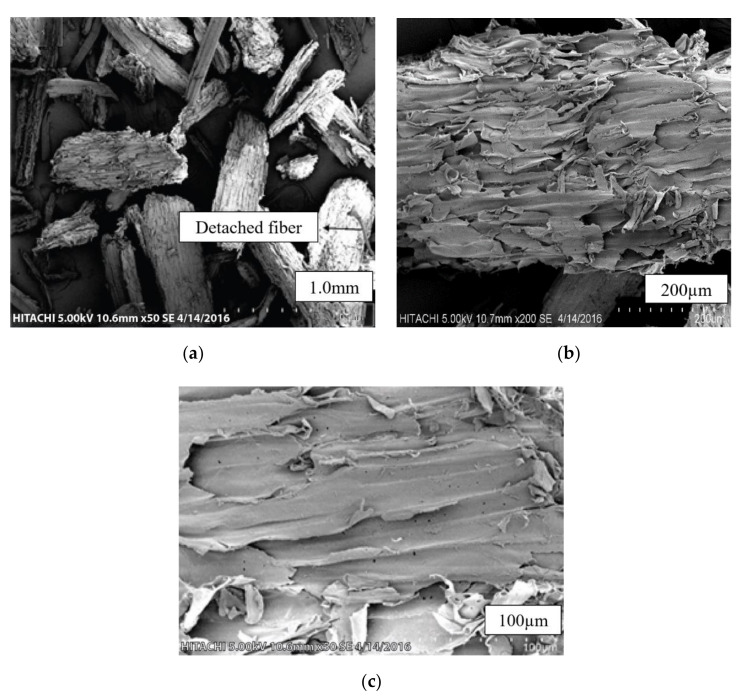
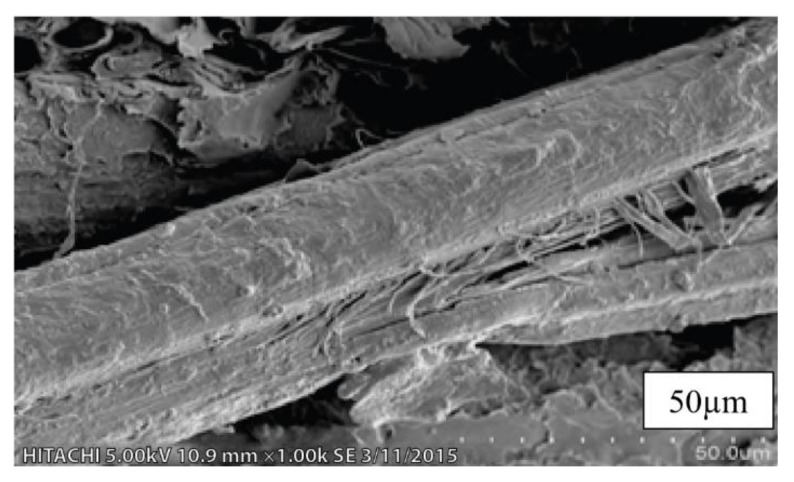
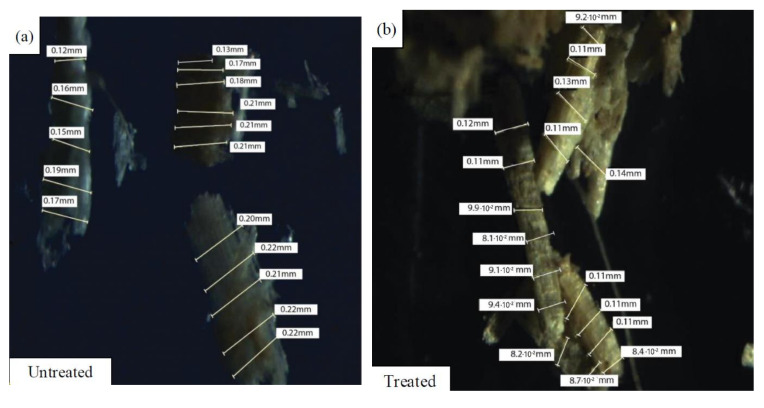
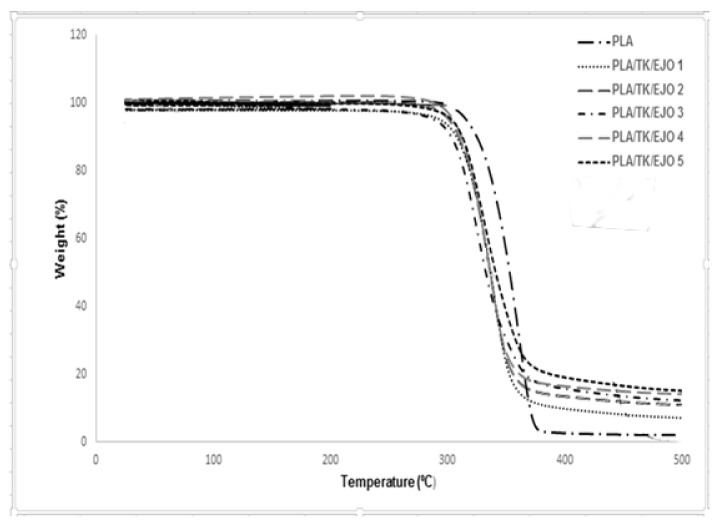
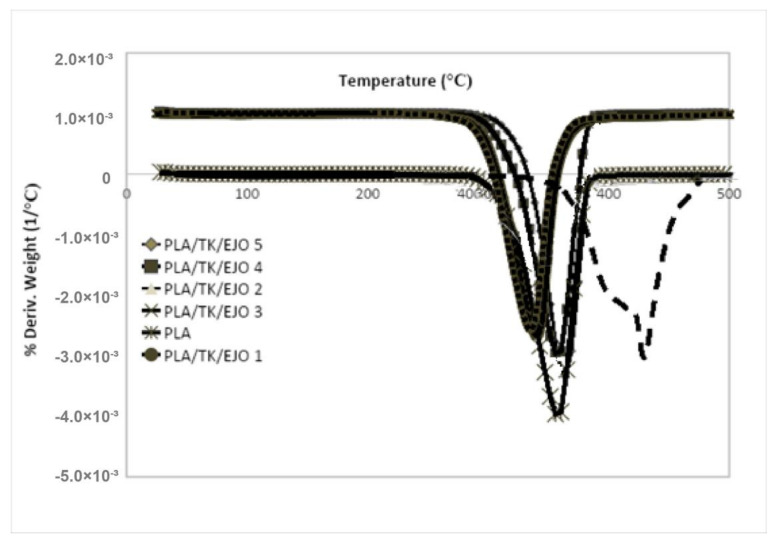
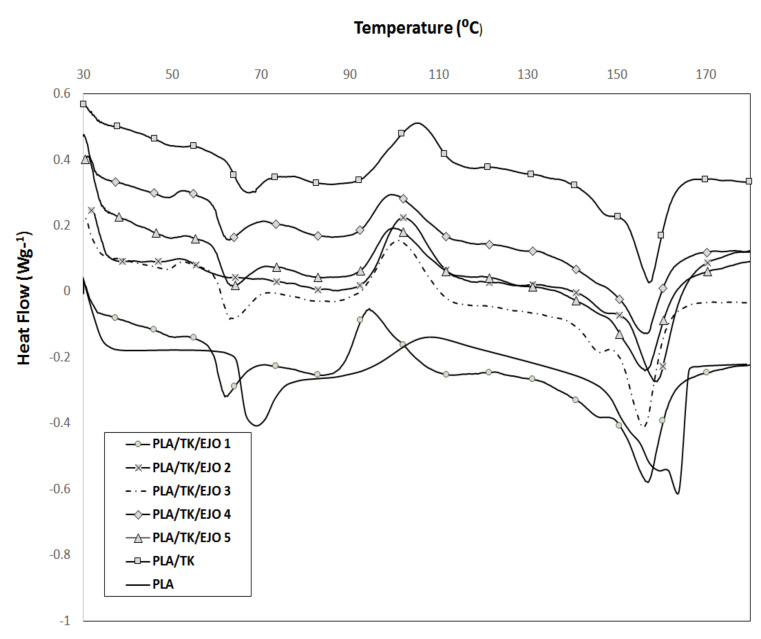
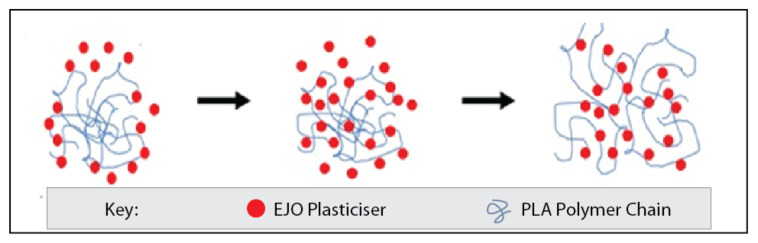
New environmentally friendly plasticized poly(lactic acid) (PLA) kenaf biocomposites were obtained through a melt blending process from a combination of epoxidized jatropha oil, a type of nonedible vegetable oil material, and renewable plasticizer. The main objective of this study is to investigate the effect of the incorporation of epoxidized jatropha oil (EJO) as a plasticizer and alkaline treatment of kenaf fiber on the thermal properties of PLA/Kenaf/EJO biocomposites. Kenaf fiber was treated with 6% sodium hydroxide (NaOH) solution for 4 h. The thermal properties of the biocomposites were analyzed using a differential scanning calorimetry (DSC) and thermogravimetric analysis (TGA). It must be highlighted that the addition of EJO resulted in a decrease of glass transition temperature which aided PLA chain mobility in the blend as predicted. TGA demonstrated that the presence of treated kenaf fiber together with EJO in the blends reduced the rate of decomposition of PLA and enhanced the thermal stability of the blend. The treatment showed a rougher surface fiber in scanning electron microscopy (SEM) micrographs and had a greater mechanical locking with matrix, and this was further supported with Fourier-transform infrared spectroscopy (FTIR) analysis. Overall, the increasing content of EJO as a plasticizer has improved the thermal properties of PLA/Kenaf/EJO biocomposites.
Keywords: DSC; FTIR; SEM; TGA; alkaline treatment; epoxidized jatropha oil; kenaf; poly(lactic acid).
Conflict of interest statement
The authors declare no conflict of interest.
Figures

References
-
- Stevens E.S. Green Plastics: An Introduction to the New Science of Biodegradable Plastics. Princeton University Press; Princeton, NJ, USA: 2002.
-
- Ray S.S., Bousmina M. Biodegradable polymers and their layered silicate nanocomposites: In greening the 21st century materials world. Prog. Mater. Sci. 2005;50:962–1079. doi: 10.1016/j.pmatsci.2005.05.002. - DOI
-
- Kamarudin S.H., Abdullah L.C., Aung M.M., Ratnam C.T. Mechanical and physical properties of kenaf-reinforced poly (lactic acid) plasticized with epoxidized jatropha oil. BioResources. 2019;14:9001–9020. doi: 10.15376/biores.14.4.9001-9020. - DOI
-
- Elsawy M.A., Kim K.H., Park J.W., Deep A. Hydrolytic degradation of polylactic acid (PLA) and its composites. Renew. Sustain. Energy Rev. 2017;79:1346–1352. doi: 10.1016/j.rser.2017.05.143. - DOI
LinkOut - more resources
Full Text Sources
