


Fluid escapes to the "third space" during anesthesia, a commentary
- PMID: 33174218
- PMCID: PMC7983898
- DOI: 10.1111/aas.13740
Fluid escapes to the "third space" during anesthesia, a commentary
Abstract
Background: The "third fluid space" is a concept that has caused much confusion for more than half a century, dividing anesthesiologists into believers and non-believers.
Aim: To challenge the existence of the "third fluid space" based on analysis of crystalloid fluid kinetics.
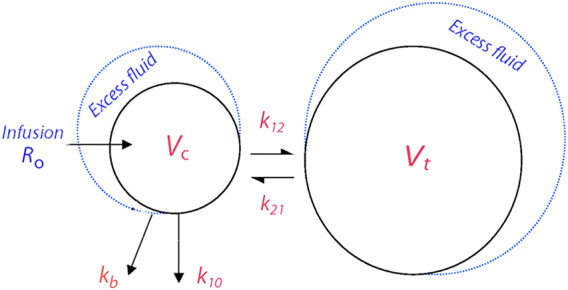
Methods: Data on hemodilution patterns from 157 infusion experiments performed in volunteers and from 85 patients undergoing surgery under general anesthesia were studied by population volume kinetic analysis. Elimination of infused crystalloid fluid from the kinetic model could occur either as urine or "third space" accumulation. The latter fluid volume remained in the body, but without equilibrating with the plasma within the 3-4 h of the experiment.
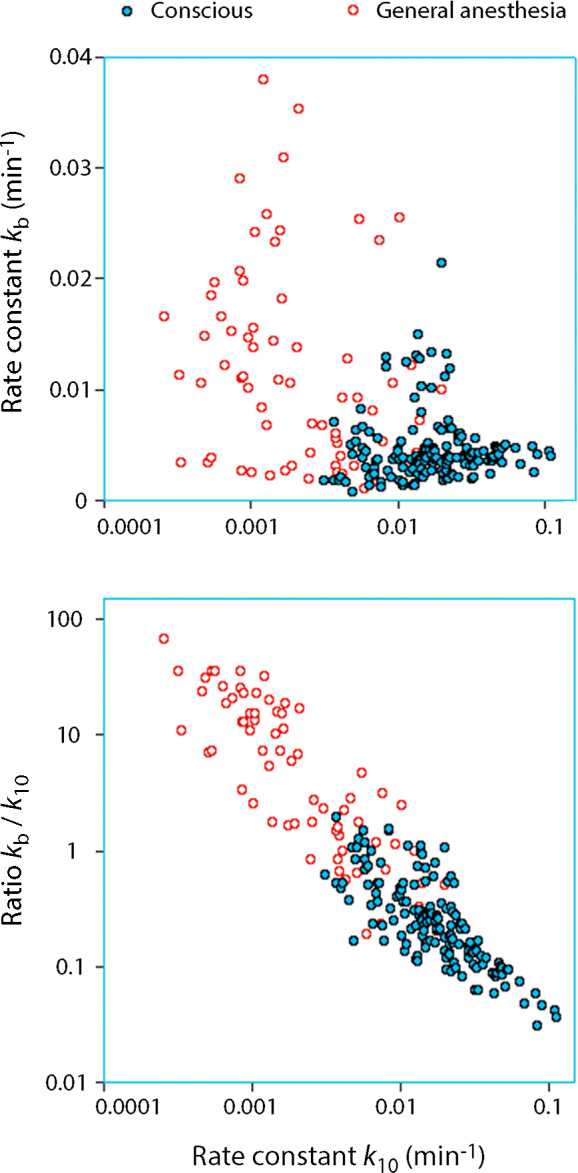
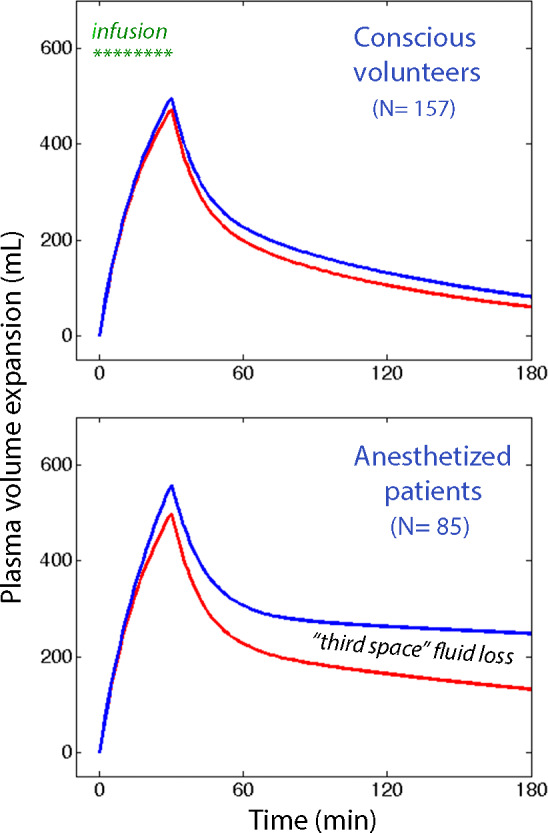
Results: The rate constant for "third space" loss of fluid accounted for 20% of the elimination in conscious volunteers and for 75% during general anesthesia and surgery. The two elimination constants showed a reciprocal relationship, resulting in that "third-space" losses increase when urinary excretion is restricted. The effect on the plasma volume was smaller than indicated by these figures because fluid distributed to the extravascular space continuously redistributed to the plasma. Worked-out examples show that one-third of an infused crystalloid volume has been confined to the "third space" after 3 h of surgery. When equilibration with the plasma eventually occurs, which is necessary for excretion of the fluid, is not known.
Conclusion: During anesthesia and surgery one third of the infused crystalloid fluid is at least temporarily unavailable for excretion, which probably contributes to postoperative weight increase and edema.
© 2020 The Authors. Acta Anaesthesiologica Scandinavica published by John Wiley & Sons Ltd on behalf of Acta Anaesthesiologica Scandinavica Foundation.
Figures
References
-
- Hahn RG. Adverse effects of crystalloid and colloid fluids. Anaesthesiol Intensive Ther. 2017;49:303‐308. - PubMed
-
- Nisanevich V, Felsenstein I, Almogy G, Weissman C, Einav S, Matot I. Effect of intraoperative fluid management on outcome after intraabdominal surgery. Anesthesiol. 2005;103:25‐32. - PubMed
-
- Varadhan KK, Lobo DN. Symposium 3: a meta‐analysis of randomised controlled trials of intravenous fluid therapy in major elective open abdominal surgery: getting the balance right. Proc Nutr Soc. 2010;69:488‐498. - PubMed
-
- Wuethrich PY, Burkhard FC, Thalmann GN, Stueber F, Studer UE. Restrictive deferred hydration combined with preemptive norepinephrine infusion during radical cystectomy reduces postoperative complications and hospitalization time. Anesthesiol. 2014;120:365‐377. - PubMed
LinkOut - more resources
Full Text Sources
