Optimized use of Oxford Nanopore flowcells for hybrid assemblies
- PMID: 33174830
- PMCID: PMC7725331
- DOI: 10.1099/mgen.0.000453
Optimized use of Oxford Nanopore flowcells for hybrid assemblies
Abstract
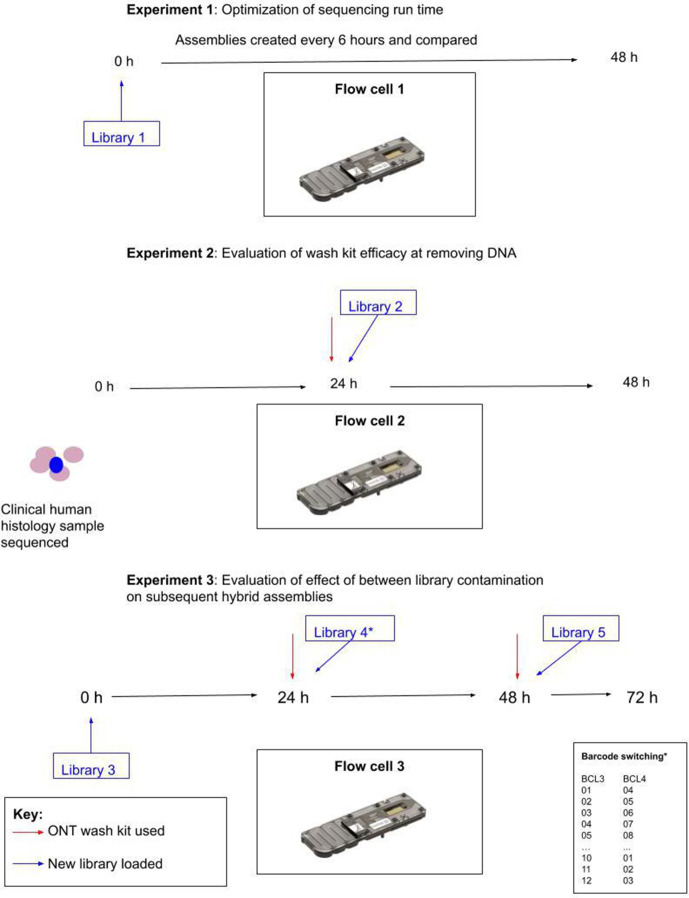
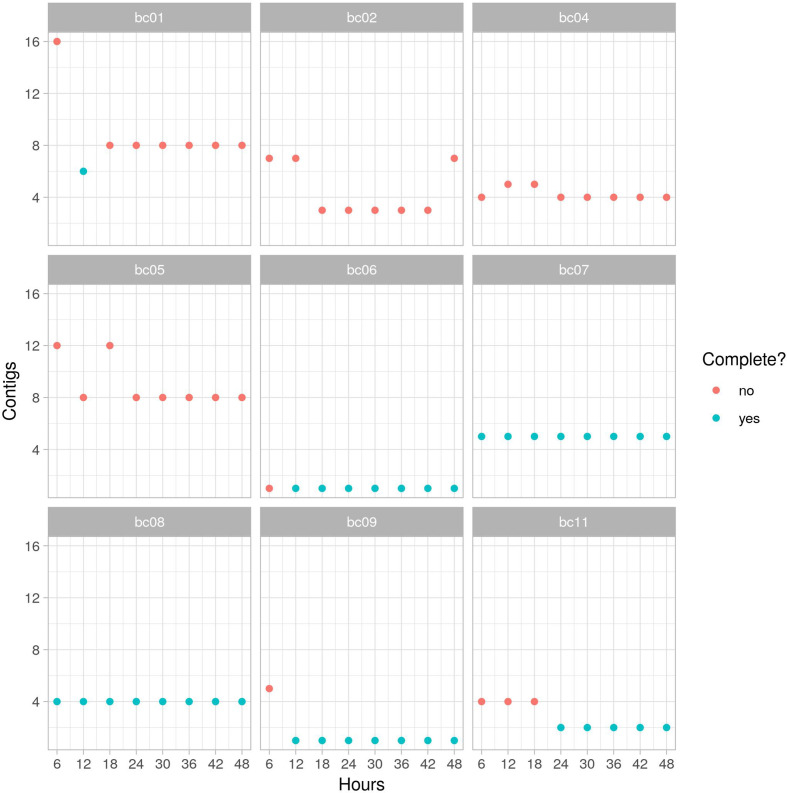
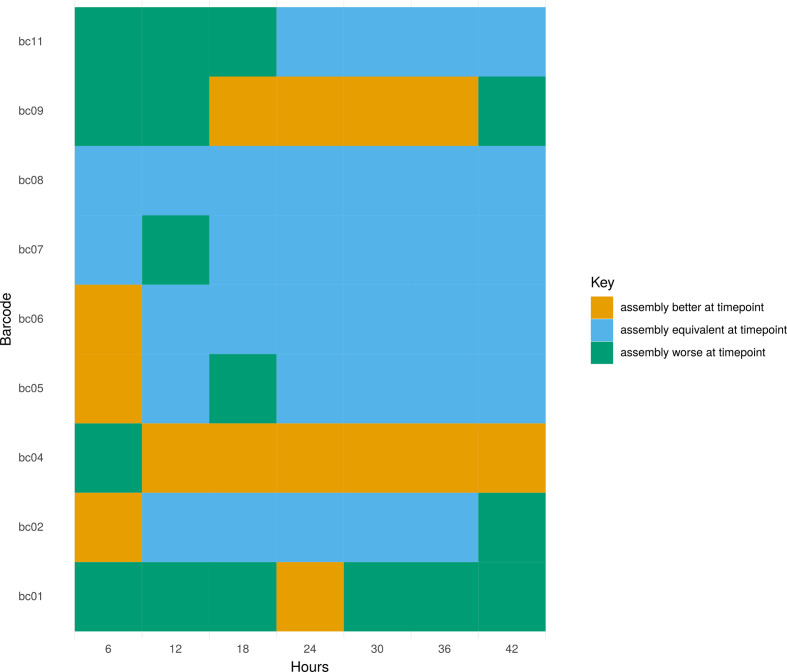
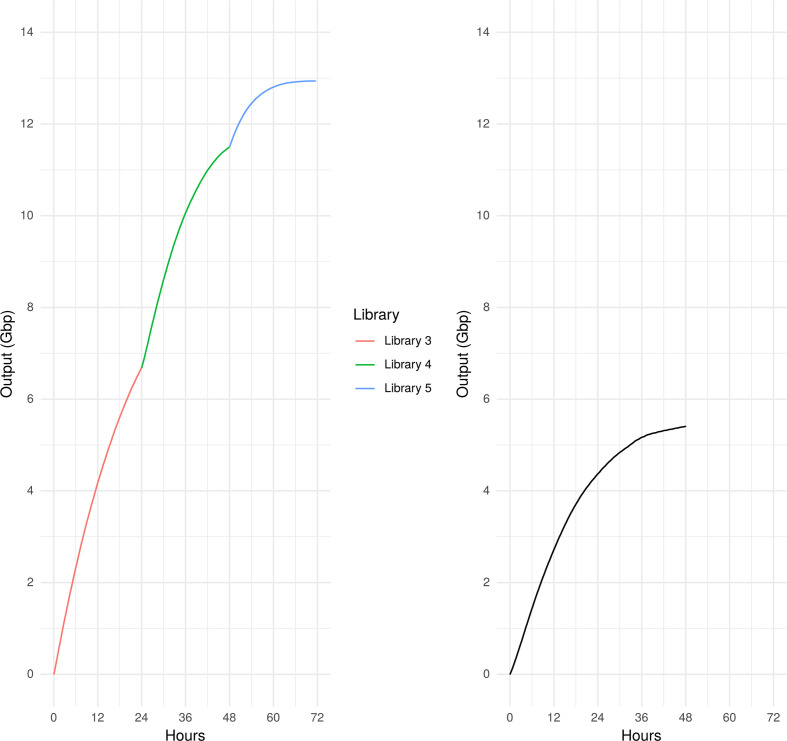
Hybrid assemblies are highly valuable for studies of Enterobacteriaceae due to their ability to fully resolve the structure of mobile genetic elements, such as plasmids, which are involved in the carriage of clinically important genes (e.g. those involved in antimicrobial resistance/virulence). The widespread application of this technique is currently primarily limited by cost. Recent data have suggested that non-inferior, and even superior, hybrid assemblies can be produced using a fraction of the total output from a multiplexed nanopore [Oxford Nanopore Technologies (ONT)] flowcell run. In this study we sought to determine the optimal minimal running time for flowcells when acquiring reads for hybrid assembly. We then evaluated whether the ONT wash kit might allow users to exploit shorter running times by sequencing multiple libraries per flowcell. After 24 h of sequencing, most chromosomes and plasmids had circularized and there was no benefit associated with longer running times. Quality was similar at 12 h, suggesting that shorter running times are likely to be acceptable for certain applications (e.g. plasmid genomics). The ONT wash kit was highly effective in removing DNA between libraries. Contamination between libraries did not appear to affect subsequent hybrid assemblies, even when the same barcodes were used successively on a single flowcell. Utilizing shorter run times in combination with between-library nuclease washes allows at least 36 Enterobacteriaceae isolates to be sequenced per flowcell, significantly reducing the per-isolate sequencing cost. Ultimately this will facilitate large-scale studies utilizing hybrid assembly, advancing our understanding of the genomics of key human pathogens.
Keywords: Enterobacteriaceae; Nanopore sequencing; bacterial genomics; hybrid assembly; long-read assembly.
Conflict of interest statement
The authors declare that there are no conflicts of interest
Figures
References
-
- George S, Pankhurst L, Hubbard A, Votintseva A, Stoesser N, et al. Resolving plasmid structures in Enterobacteriaceae using the MinION nanopore sequencer: assessment of MinION and MinION/Illumina hybrid data assembly approaches. Microb Genom. 2017;3:e000118. doi: 10.1099/mgen.0.000118. - DOI - PMC - PubMed
Publication types
MeSH terms
Substances
Associated data
Grants and funding
LinkOut - more resources
Full Text Sources
Other Literature Sources