


Metabolic rate and resource depletion in the tick Ixodes ricinus in response to temperature
- PMID: 33175292
- PMCID: PMC7736019
- DOI: 10.1007/s10493-020-00568-1
Metabolic rate and resource depletion in the tick Ixodes ricinus in response to temperature
Abstract
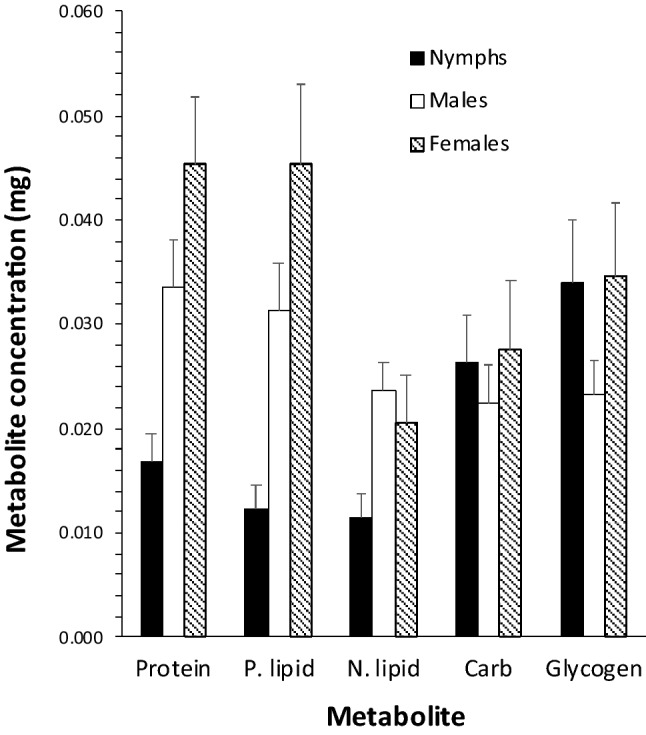
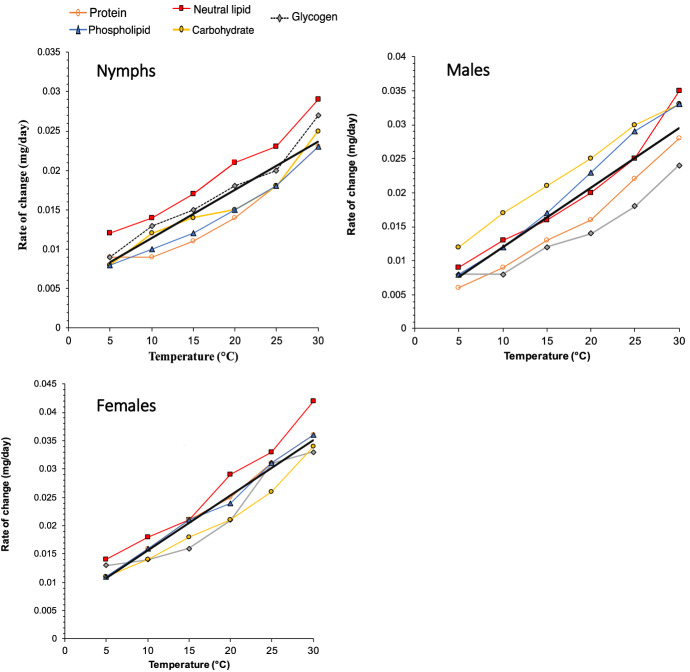
Understanding the effects of temperature on the metabolic activity and the rate of depletion of energy reserves by Ixodes ricinus can represent an important contribution to explaining patterns of tick activity and the likely impacts of environmental change on tick and tick-borne disease risk. Here, a cohort of I. ricinus nymphs, males, and females was collected and placed into incubators at temperatures of between 5 and 30 °C. The protein, carbohydrate, total lipid, neutral lipid, and glycogen levels were measured for nymphs for up to 70 days and adults up to 42 days. In nymphs, at day 0, glycogen was the most abundant metabolite followed by carbohydrate, with relatively low concentrations of protein and lipids. For males, the concentrations of different metabolites were relatively similar. In contrast, for females, concentrations of glycogen and carbohydrate were relatively low compared to those of protein and neutral lipids. Significant exponential declines in metabolite concentrations of all metabolites were detected over time for all life-cycle stages and at all temperatures. Nymphs generally showed lower rates of resource depletion than adults at all temperatures. The lower thresholds for metabolic activity were estimated to be between -10 and -5 °C. The Q10 values, which describe the thermal sensitivity of metabolic rate, were estimated to be relatively low (1.5 for nymphs, 1.71 for males, and 1.63 for females) compared to insects where they are typically around 2.5 (range: 1.5-3), and this is considered to be an adaptation to increase survival during the extended inter-feed intervals.
Keywords: Blood-feeding; Climate change; Ixodes; Metabolite; Temperature threshold.
Figures
References
-
- Belozerov VN. Diapause and quiescence as two main kinds of dormancy and their significance in life cycles of mites and ticks (Chelicerata: Arachnida: Acari) Part 2. Parasitiformes. Acarina. 2009;17:3–32.
MeSH terms
LinkOut - more resources
Full Text Sources
Medical
