


Molecular identification of Actinomadura madurae isolated from a patient originally from Algeria; observations from a case report
- PMID: 33176717
- PMCID: PMC7656693
- DOI: 10.1186/s12879-020-05552-z
Molecular identification of Actinomadura madurae isolated from a patient originally from Algeria; observations from a case report
Abstract
Background: Mycetoma is a chronic granulomatous subcutaneous infection caused by anaerobic pseudofilamentous bacteria or fungi. It is commonly prevalent in tropical and subtropical countries. Men are more susceptible to the disease due to greater participation in agricultural works. Mycetoma commonly involves lower extremities, wherein untreated cases lead to aggressive therapeutic choices, such as amputation of the affected body organs and consequently lifelong disability.
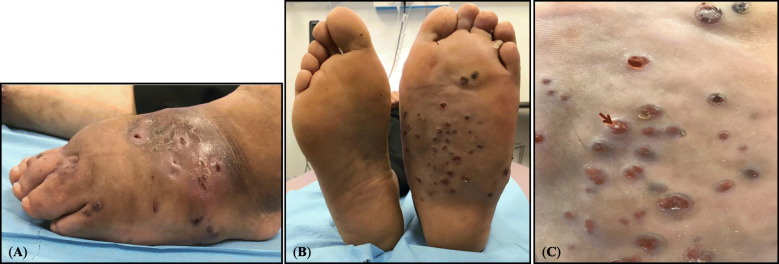
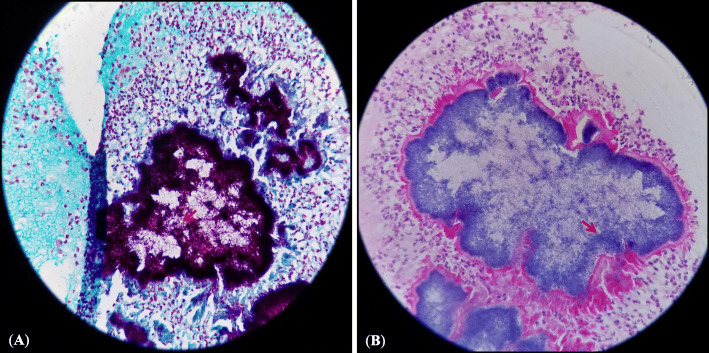
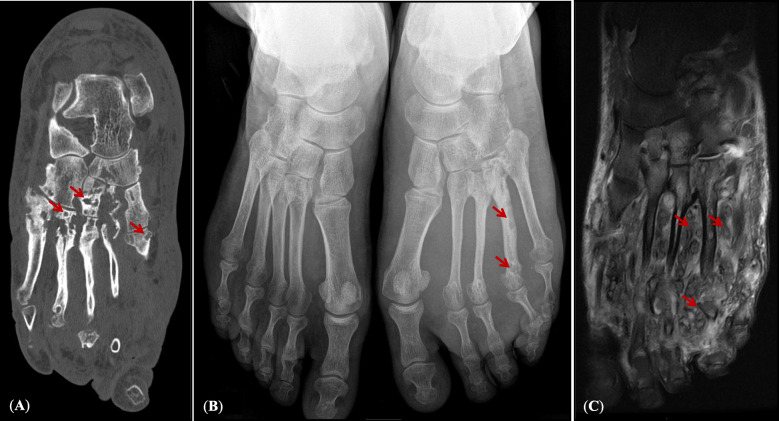
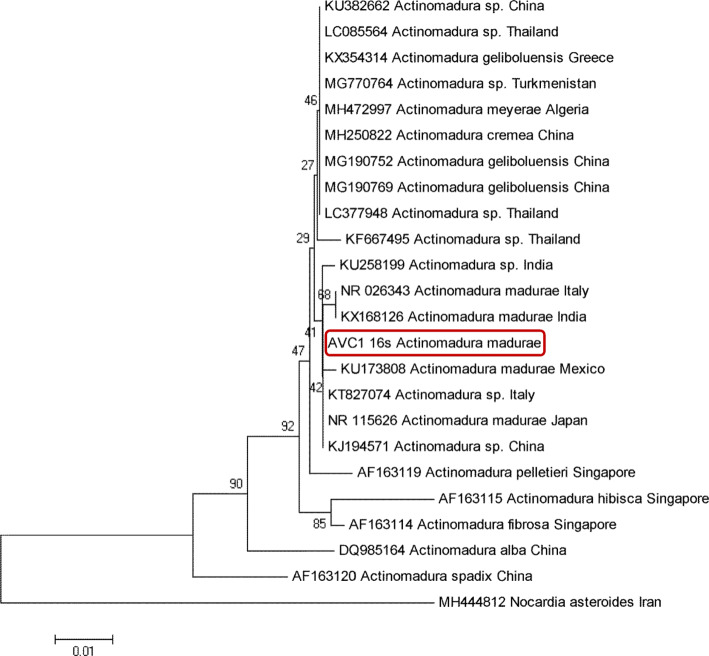
Case presentation: In this report, we present the rare case of a 58-year-old man, originally from Algeria with a left foot chronic tumefaction of 5 years. In the initial clinical examination, mycetoma was diagnosed based on tumefaction and the presence of multiple sinuses with the emission of white grains. The latter was observed via direct examination. The histopathological analysis demonstrated an actinomycetoma caused by bacteria, as the etiological agent. Imaging showed a bone involvement with osteolysis at the levels of 2nd to 4th metatarsal diaphysis. The mycological and bacterial cultures were both negative. For an accurate diagnosis, the obtained grains were subjected to molecular analysis, targeting the 16S-rDNA gene. Molecular identification yielded Actinomadura madurae as the causal agent, and 800/160 mg of trimethoprim/sulfamethoxazole was prescribed twice a day for 1 year, as a treatment.
Conclusion: Considering low information about this disease, especially in non-endemic areas, it is of high importance to enhance the knowledge and awareness of clinicians and healthcare providers, in particular in the countries with immigration issues.
Keywords: Actinomycetoma; Imaging; case report; Madura foot; Molecular identification; White grains.
Conflict of interest statement
The authors declare that they have no competing interests.
Figures
References
Publication types
MeSH terms
Substances
Supplementary concepts
LinkOut - more resources
Full Text Sources
Medical
