


Association between mental health comorbidity and health outcomes in type 2 diabetes mellitus patients
- PMID: 33177607
- PMCID: PMC7658226
- DOI: 10.1038/s41598-020-76546-9
Association between mental health comorbidity and health outcomes in type 2 diabetes mellitus patients
Abstract
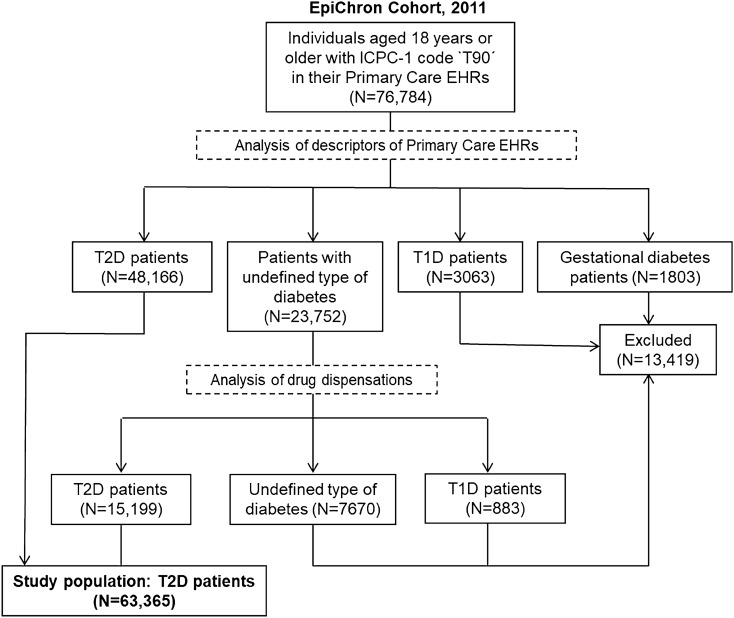
Type 2 diabetes mellitus (T2D) is often accompanied by chronic diseases, including mental health problems. We aimed at studying mental health comorbidity prevalence in T2D patients and its association with T2D outcomes through a retrospective, observational study of individuals of the EpiChron Cohort (Aragón, Spain) with prevalent T2D in 2011 (n = 63,365). Participants were categorized as having or not mental health comorbidity (i.e., depression, anxiety, schizophrenia, and/or substance use disorder). We performed logistic regression models, controlled for age, sex and comorbidities, to analyse the likelihood of 4-year mortality, 1-year all-cause hospitalization, T2D-hospitalization, and emergency room visit. Mental health comorbidity was observed in 19% of patients. Depression was the most frequent condition, especially in women (20.7% vs. 7.57%). Mortality risk was higher in patients with mental health comorbidity (odds ratio 1.24; 95% confidence interval 1.16-1.31), especially in those with substance use disorder (2.18; 1.84-2.57) and schizophrenia (1.82; 1.50-2.21). Mental health comorbidity also increased the likelihood of all-cause hospitalization (1.16; 1.10-1.23), T2D-hospitalization (1.51; 1.18-1.93) and emergency room visit (1.26; 1.21-1.32). These results suggest that T2D healthcare management should include specific strategies for the early detection and treatment of mental health problems to reduce its impact on health outcomes.
Conflict of interest statement
The authors declare no competing interests.
Figures
References
-
- International Diabetes Federation. IDF Diabetes Atlas, 9th ed. https://www.diabetesatlas.org/en/resources/ (2020).
