


Alginate- and Gelatin-Coated Apple Pieces as Carriers for Bifidobacterium animalis subsp. lactis DSM 10140
- PMID: 33178152
- PMCID: PMC7597366
- DOI: 10.3389/fmicb.2020.566596
Alginate- and Gelatin-Coated Apple Pieces as Carriers for Bifidobacterium animalis subsp. lactis DSM 10140
Abstract
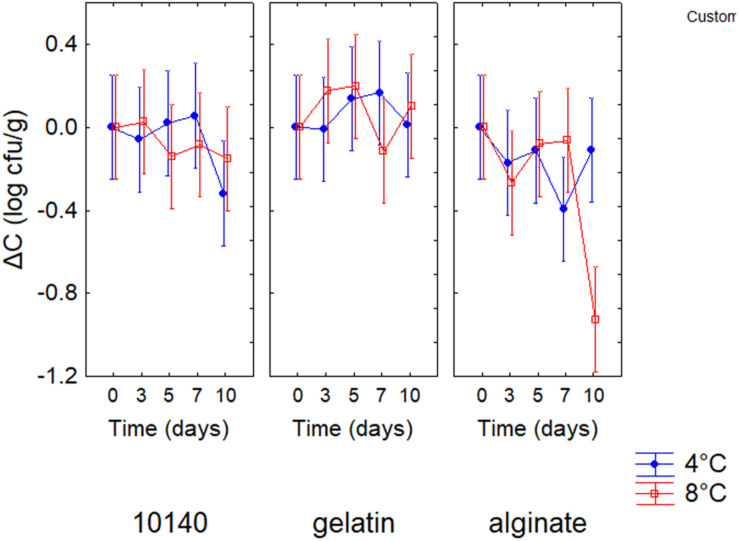
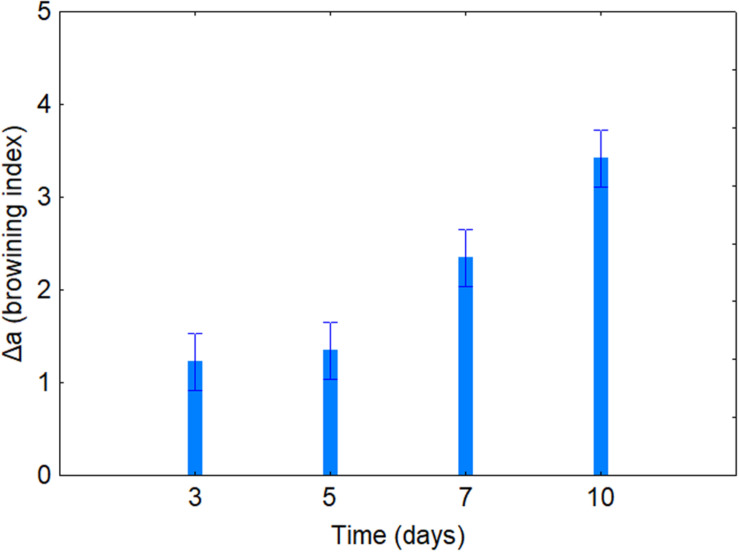
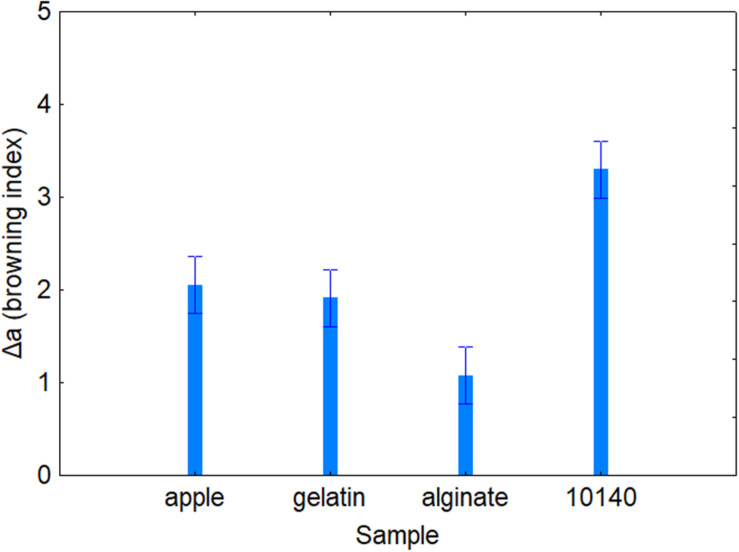
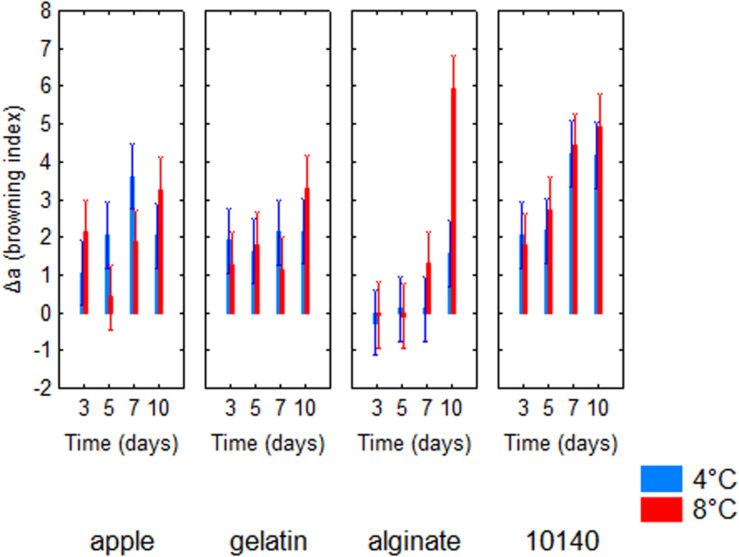
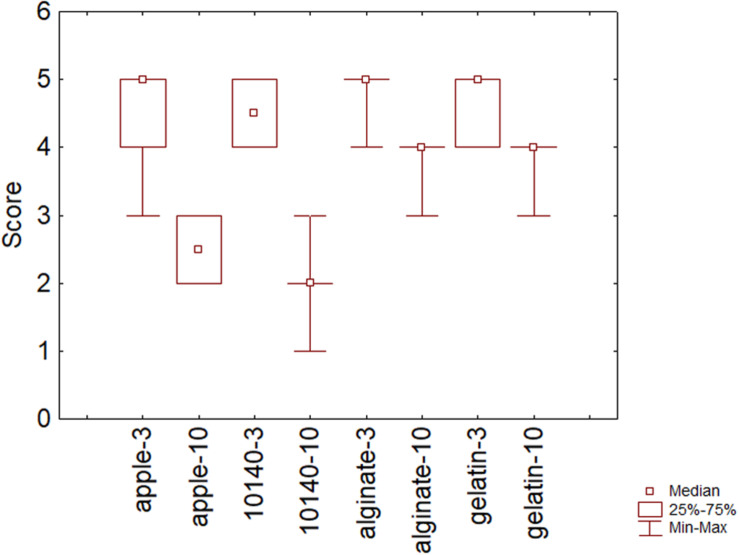
Fruit and vegetables are considered good natural supports for microorganisms; however, probiotics could cause negative changes on some organoleptic and sensory traits. Thus, the main topic of this paper was the design of coated apple chips as carriers for probiotics with a high level of sensory traits. The research was divided into two steps. First, four functional strains (Limosilactobacillus reuteri DSM 20016, Bifidobacterium animalis subsp. lactis DSM 10140, and Lactiplantibacillus plantarum c16 and c19) were immobilized on apple pieces through dipping of fruit chips in probiotic suspensions for different contact times (from 15 to 30 min) and stored at 4°C for 12 days. Periodically, the viable count was assessed. As a result of this step, a contact time of 15 min was chosen because it assured an optimal deposition of microorganisms. In the second step, apple pieces inoculated with B. animalis subsp. lactis DSM 10140 were coated with alginate and gelatin and stored at 4 and 8°C for 10 days; pH, microbiological counts, color (browning index), and sensory scores were evaluated. Bifidobacterium animalis DSM 10140 exerted a negative effect on apple chips and cause a significant browning; however, the use of coating counteracted this phenomenon. In fact, coated chips showed higher sensory scores and lower browning index. In addition, gelatin showed better performances in terms of probiotic viability, because at 8°C, a significant viability loss of B. animalis DSM 10140 (1.2 log cfu/g) was found on alginate-coated chips. Gelatin-coated apple pieces with B. animalis subsp. lactis DSM 10140 could be an attractive functional food for a wide audience, although further investigations are required on in vivo effects of this product after consumption.
Keywords: alginate; apples; carriers; edible coatings; gelatin; probiotics.
Copyright © 2020 Campaniello, Bevilacqua, Speranza, Sinigaglia and Corbo.
Figures
References
-
- Aguilar-Méndez M. A., San Martín-Martínez E., Tomás S. A., Cruz-Orea A., Jaime-Fonseca M. R. (2008). Gelatine-starch films: physicochemical properties and their application in extending the post-harvest shelf life of avocado (Persea americana). J. Sci. Food Agric. 88 185–193. 10.1002/jsfa.3068 - DOI
-
- Altieri C., Campaniello D., Speranza B., Sinigaglia M., Corbo M. R., Bevilacqua A. (2019). Immobilization of Saccharomyces cerevisiae on apple pieces to produce cider. Fermentation 5:74 10.3390/fermentation5030074 - DOI
-
- Bevilacqua A., Altieri C., Corbo M. R., Sinigaglia M., Ouoba L. I. I. (2010). Characterization of lactic acid bacteria isolated from italian bella di cerignola table olives: selection of potential multifunctional starter cultures. J. Food Sci. 75 M536–M544. - PubMed
-
- Bevilacqua A., Campaniello D., Corbo M. R., Maddalena L., Sinigaglia M. (2013). Suitability of Bifidobacterium spp. and Lactobacillus plantarum as probiotics intended for fruit juices containing citrus extracts. J. Food Sci. 78 1764–1771. - PubMed
LinkOut - more resources
Full Text Sources
Molecular Biology Databases
Research Materials
