


Plant Growth-Promoting Rhizobacteria Isolated from Degraded Habitat Enhance Drought Tolerance of Acacia (Acacia abyssinica Hochst. ex Benth.) Seedlings
- PMID: 33178283
- PMCID: PMC7646561
- DOI: 10.1155/2020/8897998
Plant Growth-Promoting Rhizobacteria Isolated from Degraded Habitat Enhance Drought Tolerance of Acacia (Acacia abyssinica Hochst. ex Benth.) Seedlings
Abstract
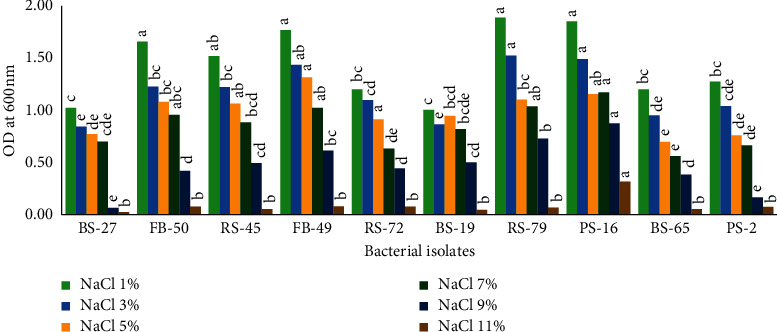
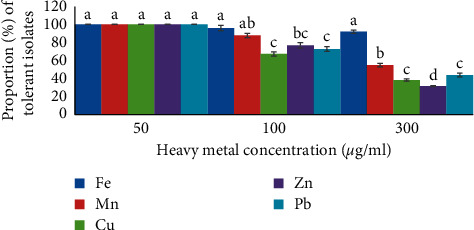
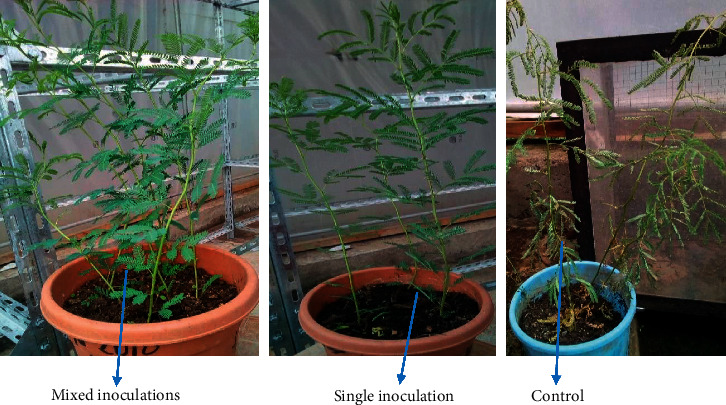
Drought stress (DS) is the most impacting global phenomenon affecting the ecological balance of a particular habitat. The search for potential plant growth-promoting rhizobacteria (PGPR) capable of enhancing plant tolerance to drought stress is needed. Thus, this study was initiated to evaluate the effect of inoculating Acacia abyssinica seedlings with PGPR isolated from rhizosphere soil of Ethiopia to enhance DS tolerance. The strains were selected based on in vitro assays associated with tolerance to drought and other beneficial traits such as salinity, acidity, temperature, heavy metal tolerances, biofilm formation, and exopolysaccharide (EPS) production. The strains with the best DS tolerance ability were selected for the greenhouse trials with acacia plants. The results indicate that out of 73 strains, 10 (14%) were completely tolerant to 40% polyethylene glycol. Moreover, 37% of the strains were strong biofilm producers, while 66 (90.41%) were EPS producers with a better production in the medium containing sucrose at 28 ± 2°C and pH 7 ± 0.2. Strains PS-16 and RS-79 showed tolerance to 11% NaCl. All the strains were able to grow in wider ranges of pH (4-10) and temperature (15-45°C) and had high tolerance to heavy metals. The inoculated bacterial strains significantly (p ≤ 0.05) increased root and shoot length and dry biomass of acacia plants. One of the strains identified as P. fluorescens strain FB-49 was outstanding in enhancing DS tolerance compared to the single inoculants and comparable to consortia. Stress-tolerant PGPR could be used to enhance acacia DS tolerance after testing other phytobeneficial traits.
Copyright © 2020 Alemayehu Getahun et al.
Conflict of interest statement
The authors declare that there are no conflicts of interest.
Figures
References
-
- Kahil M. T., Dinar A., Albiac J. Modeling water scarcity and droughts for policy adaptation to climate change in arid and semiarid regions. Journal of Hydrology. 2015;522:95–109. doi: 10.1016/j.jhydrol.2014.12.042. - DOI
LinkOut - more resources
Full Text Sources
