Alcohol-Responsive Hyperkinetic Movement Disorders-a Mechanistic Hypothesis
- PMID: 33178485
- PMCID: PMC7597582
- DOI: 10.5334/tohm.560
Alcohol-Responsive Hyperkinetic Movement Disorders-a Mechanistic Hypothesis
Abstract
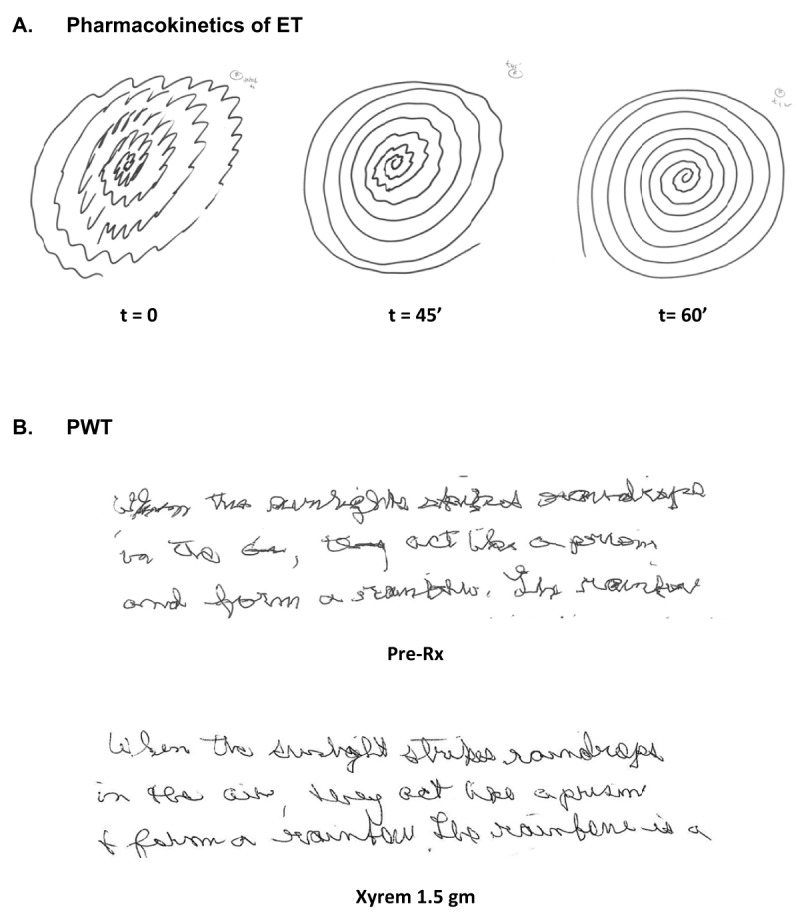
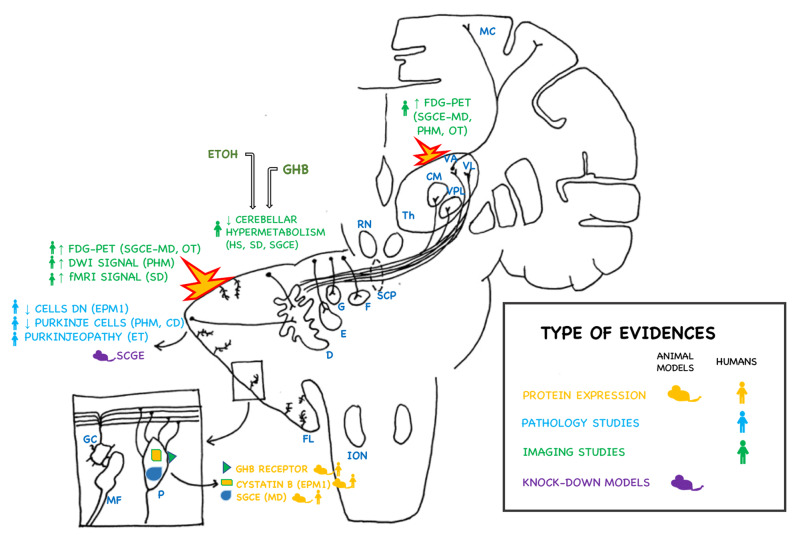
Patients with essential tremor, vocal tremor, torticollis, myoclonus-dystonia and posthypoxic myoclonus often benefit in a surprisingly rapid and robust manner from ingestion of a modest amount of alcohol (ethanol). Despite considerable investigation, the mechanism of ethanol's ability to produce this effect remains a mystery. In this paper, we review the pharmacology of ethanol and its analogue GHB (or sodium oxybate), summarize the published literature of alcohol-responsive hyperkinetic movement disorders, and demonstrate videos of patients we have treated over the last fifteen years with either an ethanol challenge or with chronic sodium oxybate therapy. We then propose a novel explanation for this phenomenon-namely, that ingestion of modest doses of ethanol (or sodium oxybate) normalizes the aberrant motor networks underling these disorders. We propose that alcohol and its analogues improve clinical symptoms and their physiologic correlate by restoring the normal firing pattern of the major outflow pathways of the cerebellum (the Purkinje cells and deep cerebellar nuclei), We present evidence to support this hypothesis in animal models and in affected patients, and suggest future investigations to test this model.
Keywords: GHB; alcohol; dystonia; myoclonus; sodium oxybate; tremor.
Copyright: © 2020 The Author(s).
Conflict of interest statement
The authors have no competing interests to declare.
Figures
References
Publication types
MeSH terms
Substances
Supplementary concepts
LinkOut - more resources
Full Text Sources
Medical