


DNA Methylation Associated With Diabetic Kidney Disease in Blood-Derived DNA
- PMID: 33178681
- PMCID: PMC7593403
- DOI: 10.3389/fcell.2020.561907
DNA Methylation Associated With Diabetic Kidney Disease in Blood-Derived DNA
Abstract
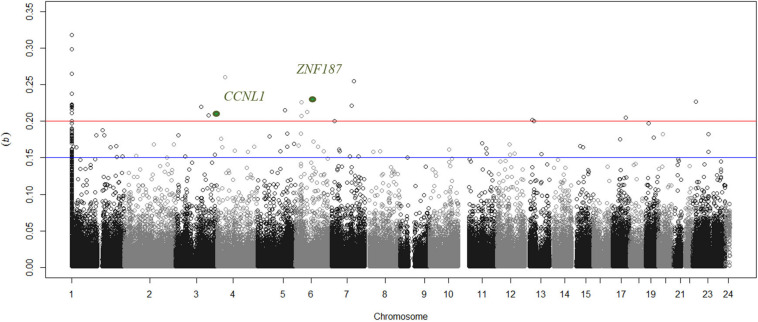
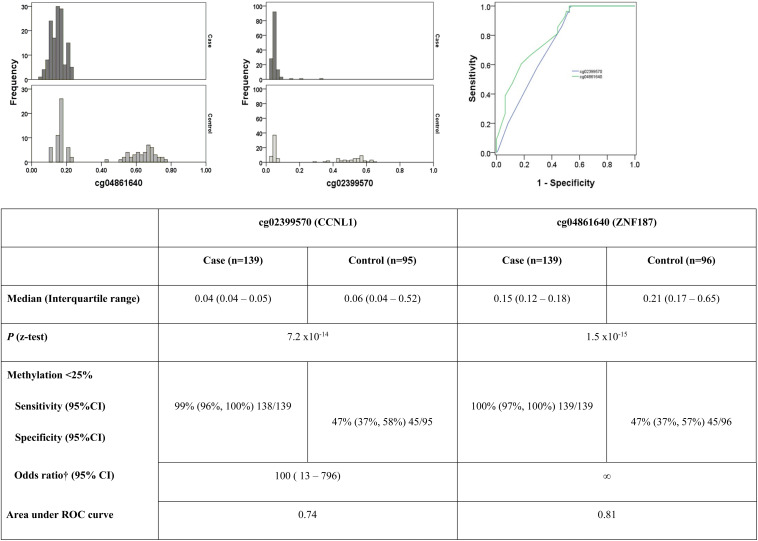
A subset of individuals with type 1 diabetes will develop diabetic kidney disease (DKD). DKD is heritable and large-scale genome-wide association studies have begun to identify genetic factors that influence DKD. Complementary to genetic factors, we know that a person's epigenetic profile is also altered with DKD. This study reports analysis of DNA methylation, a major epigenetic feature, evaluating methylome-wide loci for association with DKD. Unique features (n = 485,577; 482,421 CpG probes) were evaluated in blood-derived DNA from carefully phenotyped White European individuals diagnosed with type 1 diabetes with (cases) or without (controls) DKD (n = 677 samples). Explicitly, 150 cases were compared to 100 controls using the 450K array, with subsequent analysis using data previously generated for a further 96 cases and 96 controls on the 27K array, and de novo methylation data generated for replication in 139 cases and 96 controls. Following stringent quality control, raw data were quantile normalized and beta values calculated to reflect the methylation status at each site. The difference in methylation status was evaluated between cases and controls; resultant P-values for array-based data were adjusted for multiple testing. Genes with significantly increased (hypermethylated) and/or decreased (hypomethylated) levels of DNA methylation were considered for biological relevance by functional enrichment analysis using KEGG pathways. Twenty-two loci demonstrated statistically significant fold changes associated with DKD and additional support for these associated loci was sought using independent samples derived from patients recruited with similar inclusion criteria. Markers associated with CCNL1 and ZNF187 genes are supported as differentially regulated loci (P < 10-8), with evidence also presented for AFF3, which has been identified from a meta-analysis and subsequent replication of genome-wide association studies. Further supporting evidence for differential gene expression in CCNL1 and ZNF187 is presented from kidney biopsy and blood-derived RNA in people with and without kidney disease from NephroSeq. Evidence confirming that methylation sites influence the development of DKD may aid risk prediction tools and stimulate research to identify epigenomic therapies which might be clinically useful for this disease.
Keywords: association; diabetes; epigenetic; kidney; methylation; renal.
Copyright © 2020 Smyth, Patterson, Swan, Maxwell and McKnight.
Figures
References
-
- Andersson E. A., Harder M. N., Pilgaard K., Pisinger C., Stancakova A., Kuusisto J., et al. (2011). The birth weight lowering C-allele of rs900400 near LEKR1 and CCNL1 associates with elevated insulin release following an oral glucose challenge. PLoS One 6:e27096. 10.1371/journal.pone.0027096 - DOI - PMC - PubMed
-
- Aranyi T., Susztak K. (2019). Cytosine methylation studies in patients with diabetic kidney disease. Curr. Diab. Rep. 19:91. - PubMed
Grants and funding
LinkOut - more resources
Full Text Sources
Other Literature Sources
Miscellaneous
