A pilot protocol and review of triple neuroprotection with targeted hypothermia, controlled induced hypertension, and barbiturate infusion during emergency carotid endarterectomy for acute stroke after failed tPA or beyond 24-hour window of opportunity
- PMID: 33178807
- PMCID: PMC7607101
- DOI: 10.21037/atm-2020-cass-14
A pilot protocol and review of triple neuroprotection with targeted hypothermia, controlled induced hypertension, and barbiturate infusion during emergency carotid endarterectomy for acute stroke after failed tPA or beyond 24-hour window of opportunity
Abstract
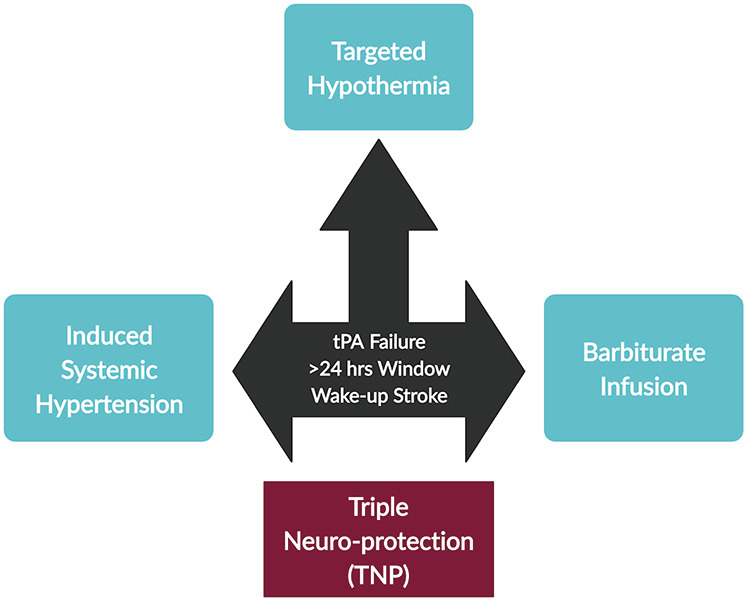
An alternative to tissue plasminogen activator (tPA) failure has been a daunting challenge in ischemic stroke management. As tPA is time-dependent, delays can occur in definitive treatment while passively waiting to observe a clinical response to intravenous thrombolysis. Until today, uncertainty exists in the management strategy of wake-up stroke patients or those presenting beyond the therapeutic tPA window. Clinical dilemmas in these situations can prolong the transitional period of inertia, resulting in an adverse neurological outcome. We propose and review an innovative approach called triple neuro-protection (TNP), which encompasses three technical domains-targeted hypothermia, systemic induced hypertension, and barbiturates infusion, to protect the brain during carotid endarterectomy after failed tPA and/or beyond the 24-hour therapeutic mechanical thrombectomy window. This proposal assimilates discussion on the clinical evidence of the individual domains of TNP with our own clinical experience with TNP. Our first TNP was successfully employed in a 55-year-old man in 2015 while performing emergency carotid endarterectomy after he was referred to us 72 hours post tPA failure. The patient had a successful clinical outcome despite being in therapeutic inertia with 90-99% ipsilateral carotid stenosis and contralateral occlusion on presentation. In the last five years, we have safely used TNP in 25 selected cases with favourable clinical outcomes.
Keywords: Triple neuroprotection; barbiturates; induced hypertension; ischemia; review; stroke; therapeutic hypothermia.
2020 Annals of Translational Medicine. All rights reserved.
Conflict of interest statement
Conflicts of Interest: All authors have completed the ICMJE uniform disclosure form (available at http://dx.doi.org/10.21037/atm-2020-cass-14). The series “Carotid Artery Stenosis and Stroke: Prevention and Treatment Part I” was commissioned by the editorial office without any funding or sponsorship. The authors have no other conflicts of interest to declare.
Figures
References
-
- Saver JL, Goyal M, Bonafe A, et al. Solitaire™ with the Intention for Thrombectomy as Primary Endovascular Treatment for Acute Ischemic Stroke (SWIFT PRIME) trial: protocol for a randomized, controlled, multicenter study comparing the Solitaire revascularization device with IV tPA with IV tPA alone in acute ischemic stroke. Int J Stroke 2015;10:439-48. 10.1111/ijs.12459 - DOI - PMC - PubMed
-
- Molina CA, Chamorro A, Rovira A, et al. REVASCAT: a randomized trial of revascularization with SOLITAIRE FR® device vs. best medical therapy in the treatment of acute stroke due to anterior circulation large vessel occlusion presenting within eight-hours of symptom onset. Int J Stroke 2015;10:619-26. 10.1111/ijs.12157 - DOI - PubMed
Publication types
LinkOut - more resources
Full Text Sources
Research Materials