


Coronavirus disease 2019 (COVID-19) mortality and neighborhood characteristics in Chicago
- PMID: 33181262
- PMCID: PMC7678719
- DOI: 10.1016/j.annepidem.2020.10.011
Coronavirus disease 2019 (COVID-19) mortality and neighborhood characteristics in Chicago
Abstract
Purpose: To describe coronavirus disease 2019 (COVID-19) mortality in Chicago during the spring of 2020 and identify at the census-tract level neighborhood characteristics that were associated with higher COVID-19 mortality rates.
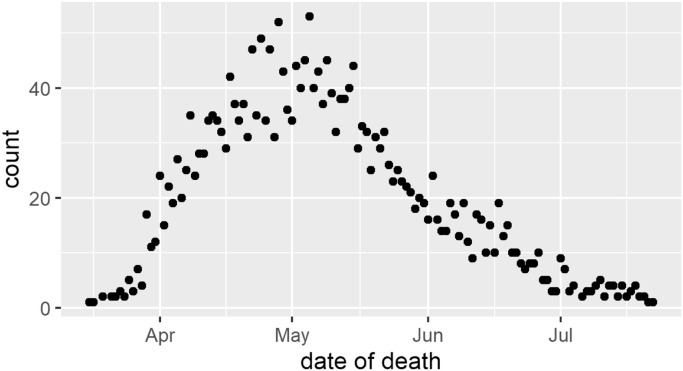
Methods: Using Poisson regression and regularized linear regression (elastic net), we evaluated the association between neighborhood characteristics and COVID-19 mortality rates in Chicago through July 22 (2514 deaths across 795 populated census tracts).
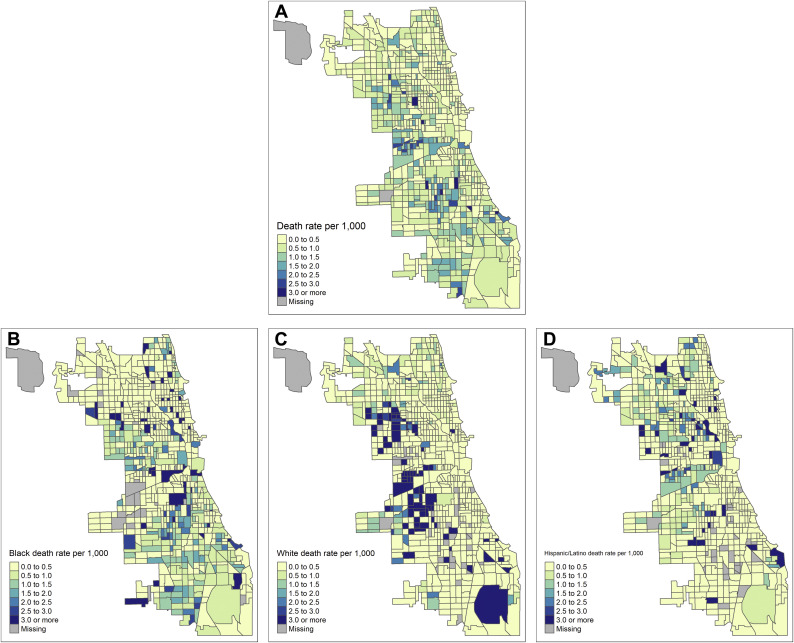
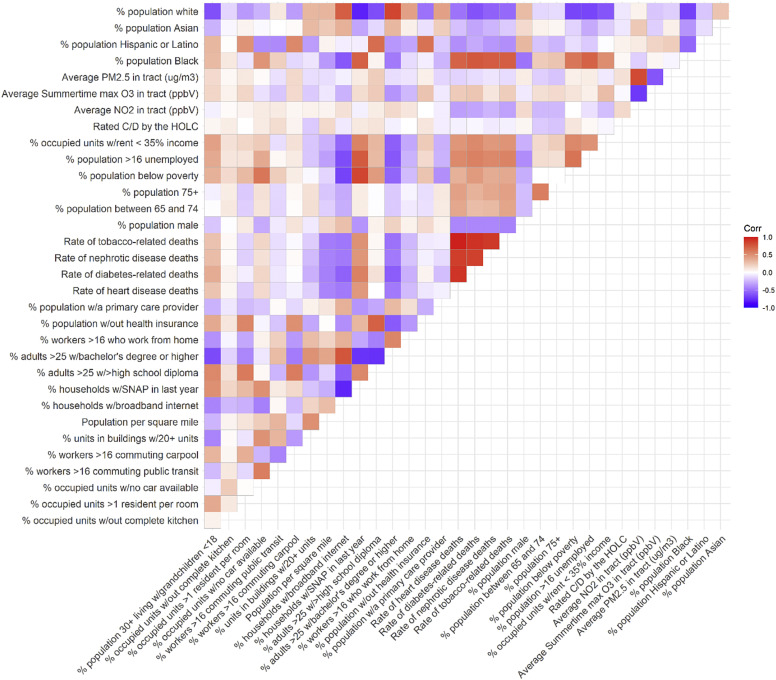
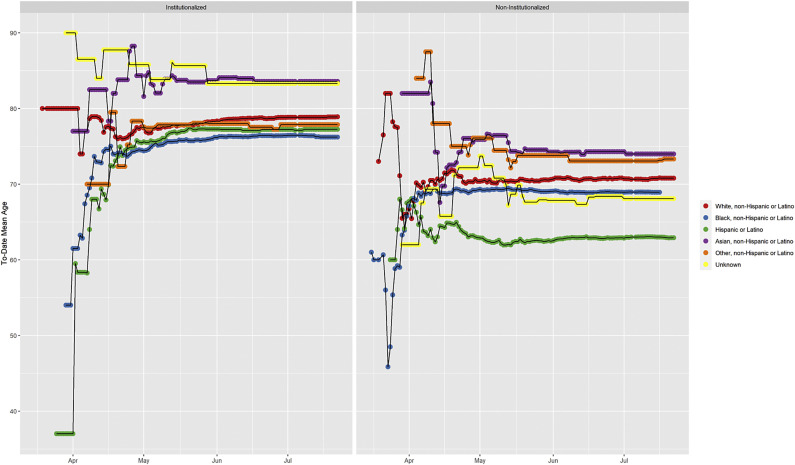
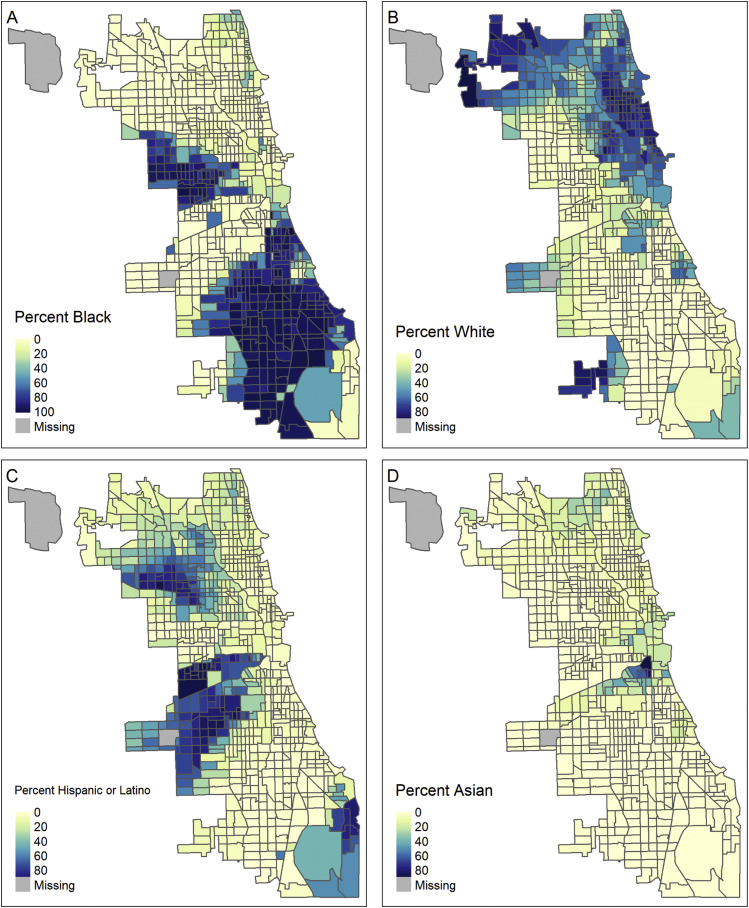
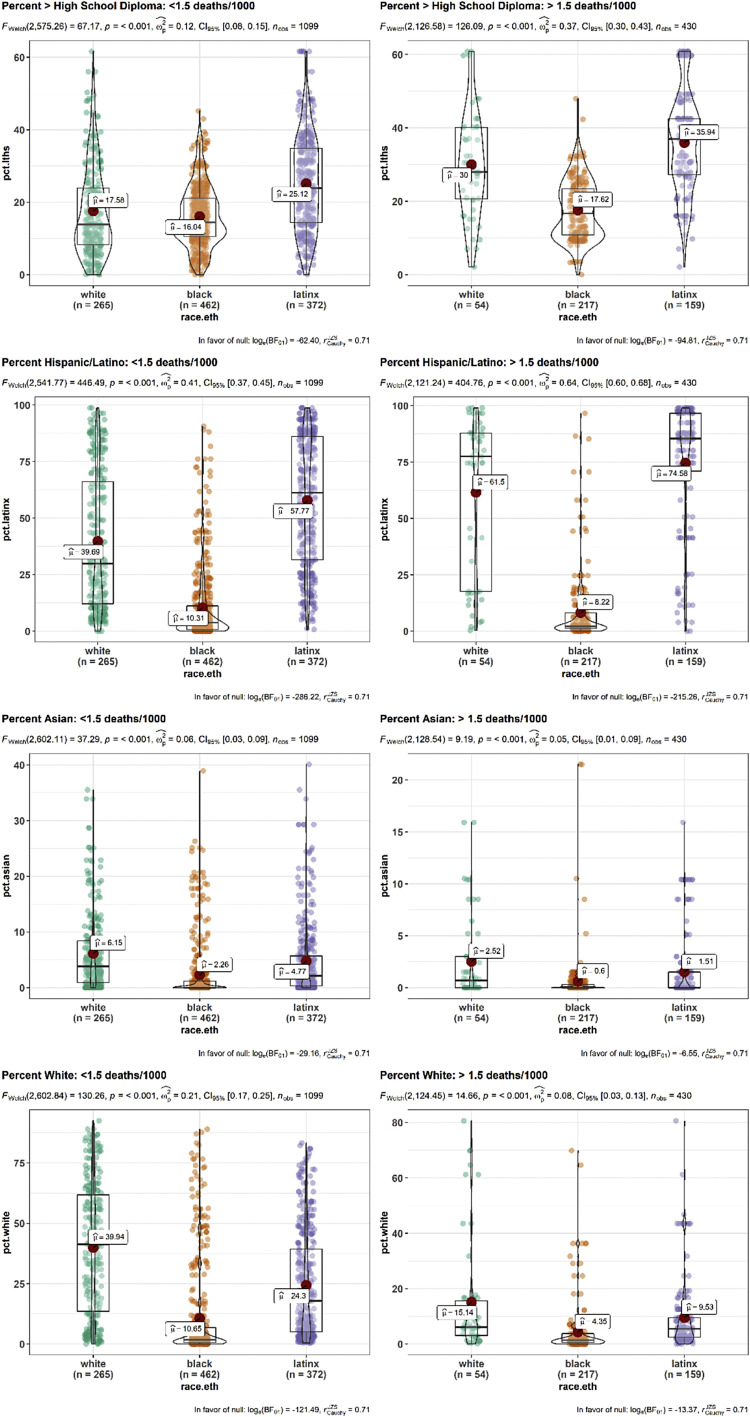
Results: Black residents (31% of the population) accounted for 42% of COVID-19 deaths. Deaths among Hispanic/Latino residents occurred at a younger age (63 years, compared with 71 for white residents). Regarding residential setting, 52% of deaths among white residents occurred inside nursing homes, compared with 35% of deaths among black residents and 17% among Hispanic/Latino residents. Higher COVID-19 mortality was seen in neighborhoods with heightened barriers to social distancing and low health insurance coverage. Neighborhoods with a higher percentage of white and Asian residents had lower COVID-19 mortality. The associations differed by race, suggesting that neighborhood context may be most tightly linked to COVID-19 mortality among white residents.
Conclusions: We describe communities that may benefit from supportive services and identify traits of communities that may benefit from targeted campaigns for prevention and testing to prevent future deaths from COVID-19.
Keywords: Built environment; COVID-19; Health disparities; Prevention; Social determinants of health.
Copyright © 2020 Elsevier Inc. All rights reserved.
Figures

References
-
- WHO Director-General’s opening remarks at the media briefing on COVID-19 - 11 March 2020. https://www.who.int/dg/speeches/detail/who-director-general-s-opening-re... [accessed 07.02.20]
-
- STAT’s Covid-19 Drugs, Vaccines Tracker. STAT 2020. https://www.statnews.com/2020/04/27/drugs-vaccines-tracker/ [accessed 09.28.20]
-
- Home. Johns Hopkins Coronavirus Resource Center. https://coronavirus.jhu.edu/ [accessed 04.21.20]
MeSH terms
LinkOut - more resources
Full Text Sources
Other Literature Sources
Medical
